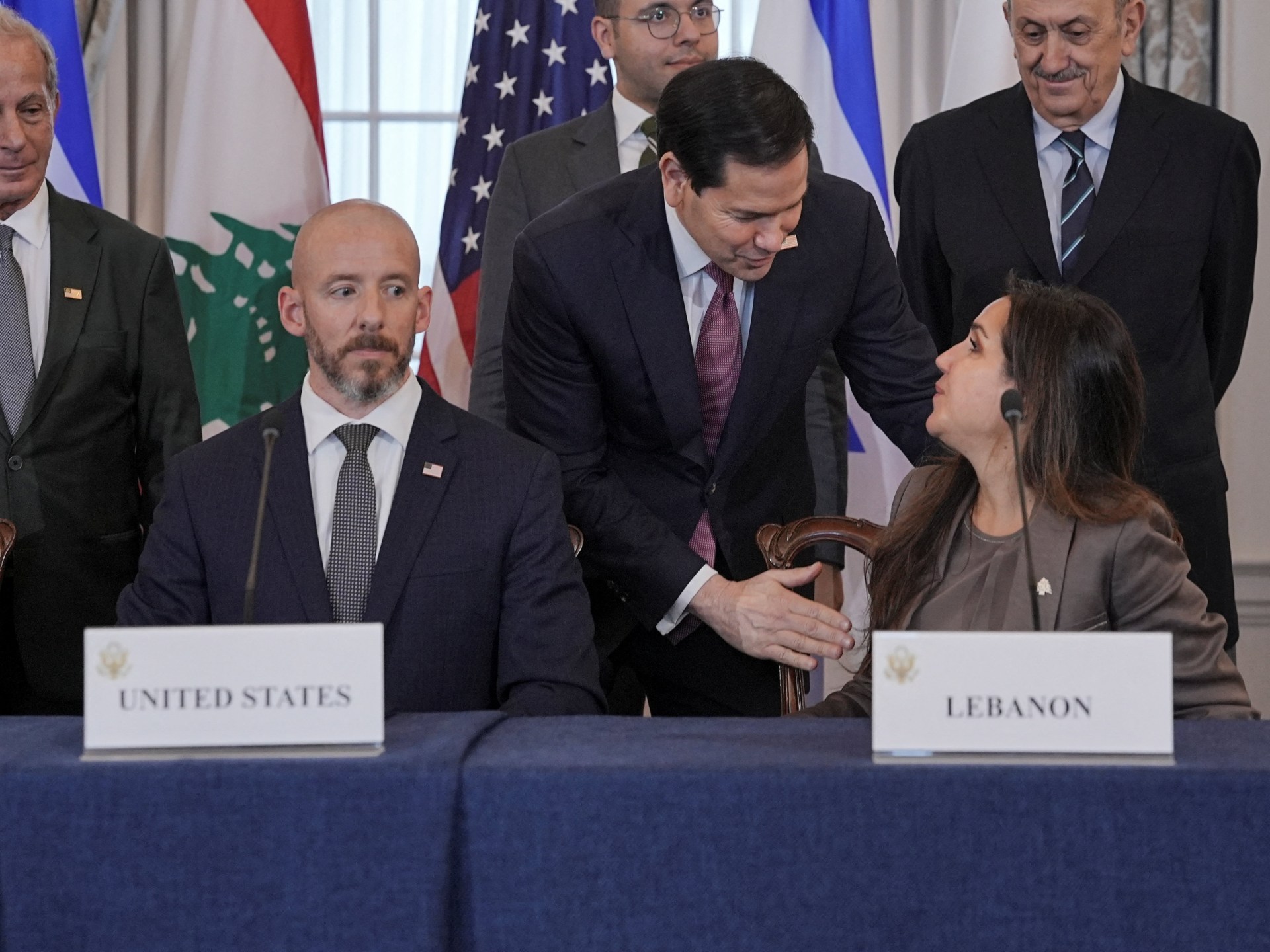

At the signing ceremony for the framework agreement between Israel and Lebanon in Washington on Friday, United States Secretary of State Marco Rubio described the deal as “the beginning of the beginning”.
“There is a lot of work ahead,” Rubio said. “Today is the first step. The first step is sometimes the hardest one.”
- list 1 of 3Hezbollah demands Israel leave Lebanon ‘unconditionally’ amid talks in US
- list 2 of 3US announces framework agreement between Israel and Lebanon
- list 3 of 3Iran slams the GCC and the US for ‘interventionist’ statement: What we know
end of list
The US had brokered the direct talks, which began in April, and it is also a signatory to what is officially a trilateral agreement.
But the wording of the agreement has not been officially published, and Israel continues to occupy a large area of southern Lebanon.
Israel, meanwhile, also appears to be signalling that it will continue its attacks in the country if it deems them necessary.
The country has been at war with the pro-Iranian Lebanese group Hezbollah since October 2023, with varying levels of intensity, and has killed more than 4,000 people in Lebanon since March.
What do we know about the contents of the agreement?
Rubio said in a statement that the deal “establishes a clear and structured process to restore Lebanon’s sovereignty, disarm [Hezbollah] and dismantle its terrorist infrastructure, and enable Israel to return to its borders once that threat to its citizens is removed”.
“It also creates a trilateral Military Coordination Group for Lebanon … allowing the two sides to implement this Framework,” he added.
Meanwhile, Lebanese Prime Minister Nawaf Salam wrote on social media that the agreement “aims to achieve Israel’s withdrawal from all Lebanese territories”.
Advertisement
But he added that the deal was essentially a continuation of past agreements and United Nations resolutions that stipulate that the Lebanese military maintains authority over all parts of Lebanon — a challenge to both Israel and Hezbollah.
News reports have emerged, revealing further details from the framework agreement.
The Israeli newspaper Haaretz said that Israel had agreed to withdraw from two areas in southern Lebanon. One of the areas is north of the “Yellow Line”, a military zone Israel controls that stretches roughly 10 kilometres into Lebanon, and the other is inside the Yellow Line.
The news outlet Axios also reported similar details. It identified the areas as “pilot projects” where the Lebanese army would deploy once Israeli forces withdraw from that area.
Al Jazeera has not been able to confirm those details, but the Reuters news agency said that Israeli and Lebanese officials had denied the reports.
What is the military situation in Lebanon?
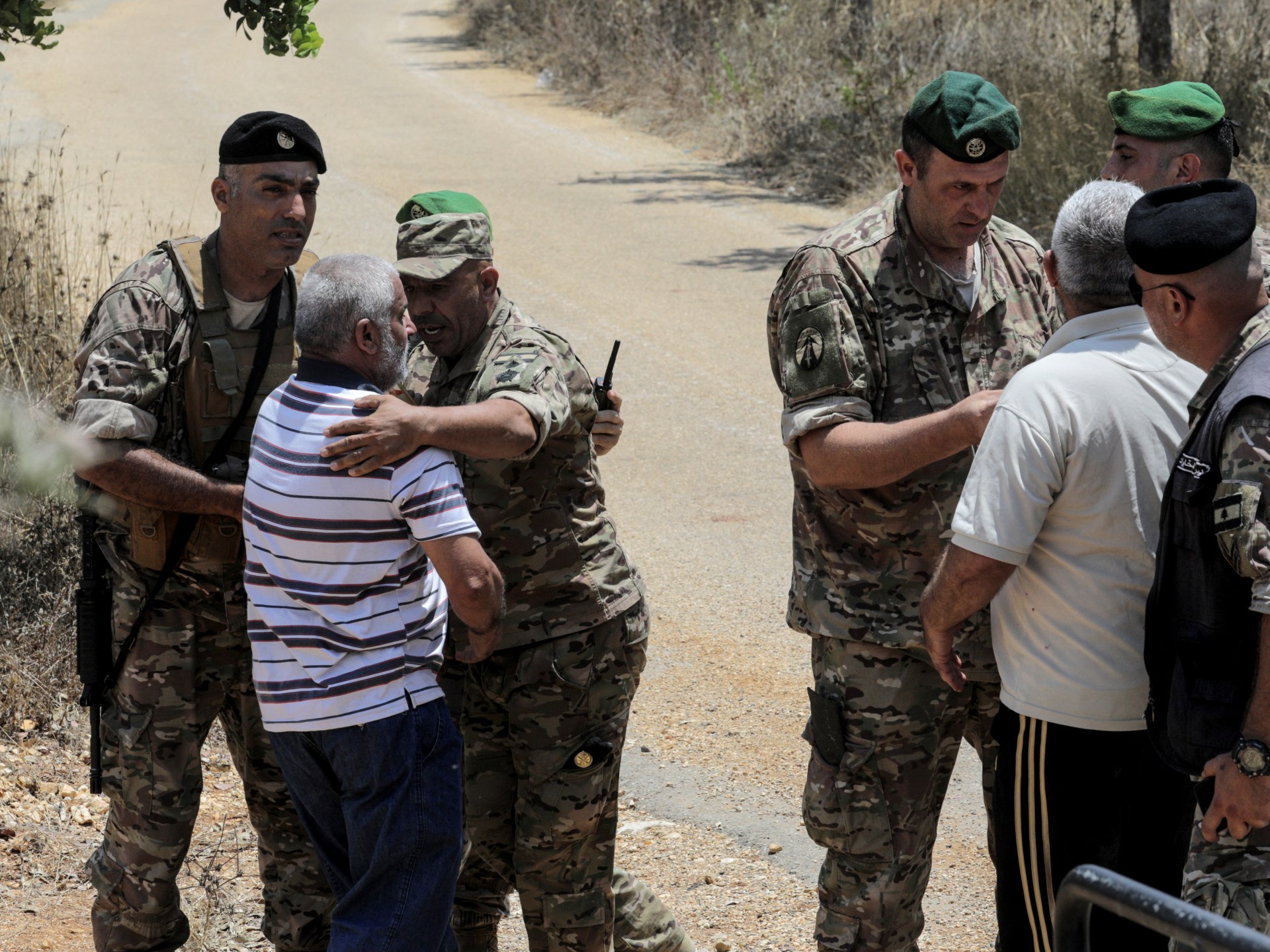
Israel has destroyed villages and towns across southern Lebanon, where it has focused most of its attacks.
It has also struck the Lebanese capital Beirut and the eastern Bekaa Valley in recent weeks, claiming to target Hezbollah.
A ceasefire agreed during previous Israel-Lebanon talks in Washington has led to a partial de-escalation in the fighting, but Israel has not fully stopped its attacks and continues to occupy approximately one-fifth of Lebanon.
On Friday, the day the framework agreement was signed, an Israeli air raid reportedly killed two people in the town of Mayfadoun, and Israel also conducted air strikes in the town of Nabatieh al-Fawqa. The Israeli military also dropped leaflets demanding residents leave in the town of al-Mansouri.
Hezbollah and Israeli fighters have also continued to fight periodically.
However, a Lebanese military source has denied to Al Jazeera that Israel has taken control of the Ali al-Taher heights area of southern Lebanon, insisting that there had been no Israeli advance.
Ultimately, this is a bifurcated question: Israel is in conflict with both the Lebanese state and Hezbollah.
While Israel and Lebanon are neighbours, they have been in a state of war since 1948, when Israel was formed on historic Palestine.
Israel has since conducted several wars against Lebanon, and it occupied parts of southern Lebanon between 1982 and 2000.
Israeli Prime Minister Benjamin Netanyahu has framed the war on Lebanon as being about protecting northern Israel from attack. He insists that the current deal will not see Israeli forces withdraw from Lebanon “as long as Hezbollah is not disarmed and as long as there is a threat to the State of Israel”.
Advertisement
For his part, Lebanese President Joseph Aoun said that the framework agreement was the “first step on the path towards Lebanon restoring its sovereignty over all its territory”.
He also called it “the beginning of the path for displaced people to return to their liberated towns under the sovereignty of the Lebanese state”.
Hezbollah was not present for the talks in Washington, DC. And yet, it also has a say in any deal, even if it isn’t present at the negotiating table.
The group has insisted that Israel must leave Lebanon unconditionally, and Secretary-General Naim Qassem has said that there should be “no normalisation” with Israel.
Hezbollah’s position is that Israel cannot be trusted and that it has to keep its weapons to fight Israel if the Lebanese army is unable to. A Hezbollah member of parliament, Hassan Fadlallah, said that any attempt by the Lebanese army to enforce a Washington-brokered agreement would lead to “civil war”.
Meanwhile, Israeli officials — including Finance Minister Bezalel Smotrich — have suggested that Israel could be staying in Lebanon for the long term.
“We are there until Hezbollah disarms, and I think also beyond that, because we need defendable borders,” Smotrich said earlier this week.
Related News
Cuba suffers second island-wide blackout in a week amid Trump fuel blockade
Zelenskyy replaces Ukraine military chief after protests
Ukrainian drone attacks on Russia kill at least 8, wound dozens