Publisher of US military newspaper resigns over differences with government
 19 August 2026
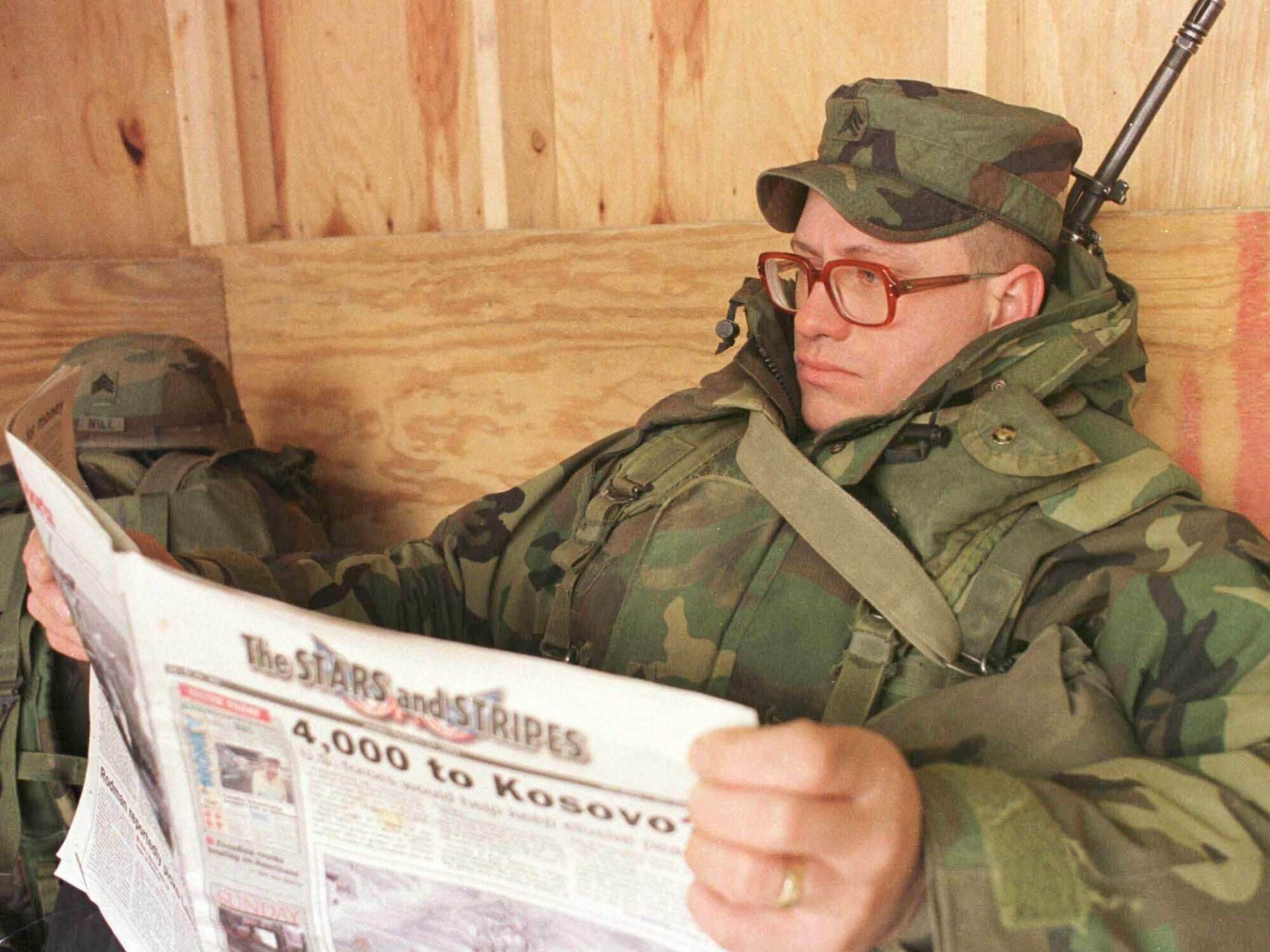

The longtime publisher of Stars and Stripes, a newspaper focused on the United States military, has resigned amid what he described as disagreements with the leadership of the Defence Department.
Max D Lederer Jr announced his retirement in a memo to staff on Tuesday, as well as in an interview with Stars and Stripes.
- list 1 of 3Democrats call for USS Lincoln probe, question US Navy’s readiness
- list 2 of 3Trump vows to find ‘leakers’ after reports of depleted Iran war munitions
- list 3 of 3Hegseth cautions that ICC may investigate US boat strikes in Latin America
end of list
The memo suggested Lederer clashed with the administration of President Donald Trump over government efforts to seek greater editorial control over the publication, The Associated Press reported.
In the memo, Lederer wrote that it has “become clear that my philosophy of leadership, and my understanding of the value and mission of Stars and Stripes, differ in fundamental ways from the direction the leadership of the Department of Defence has for the organization”.
The announcement comes after Secretary of Defence Pete Hegseth accused the publication of promoting “woke distractions”.
The Trump administration has also slammed reporting from the outlet for bringing attention to poor conditions and declining morale on an aircraft carrier, the USS Abraham Lincoln, amid the war on Iran.
Founded in 1861, the Stars and Stripes has been an institution in the US military for well over a century.
But while the newspaper receives a significant portion of its funding from the US government, it has sought to maintain editorial independence from the various administrations in power.
Critics, however, say the threats to the news outlet have increased in recent years.
During the first Trump presidency, from 2017 to 2021, the Pentagon sought to eliminate funding for the newspaper, though Trump pledged not to cut its budget “under my watch”.
Advertisement
“It will continue to be a wonderful source of information to our Great Military,” he said at the time.
In January, though, Trump’s second-term Defence Department announced that it would seek to bring the paper into greater alignment with the government’s priorities.
Pentagon spokesperson Sean Parnell framed the move as “returning Stars and Stripes to its original mission: reporting for our warfighters”.
The Pentagon also fired Jacqueline Smith, the newspaper’s ombudsman, who was charged with protecting its reporting from political interference. The move prompted outcry about eroding press freedoms, including from Smith herself.
“No one should be surprised that they’re kicking out the one person charged by Congress with protecting Stars and Stripes’ editorial independence,” Smith wrote in a column responding to her termination.
Hegseth has overseen efforts to restrict access to the Pentagon for journalists across the board.
In June, for instance, reporters were banned from the Defence Department’s press office, which was abruptly designated as a classified area.
That same month, a judge paused a policy requiring journalists to have escorts to access the Pentagon, a rule that news agencies warned could violate their First Amendment freedoms.
Other policies have been struck down in the court system, including a set of rules that would have barred journalists from engaging with materials not explicitly authorised by the Pentagon.
Hegseth has also cracked down on policies he considers part of the “Diversity, Equity and Inclusion” movement, or DEI.
Dismissing them as evidence of “wokeness” — a vaguely defined concept — Hegseth has argued that DEI hinders military effectiveness.
The Pentagon is currently embroiled in an ongoing war with Iran, which the US launched with Israel on February 28.
The war remains deeply unpopular in the US, and reports have emerged that the military offensive has strained US forces and munition supplies.
Stars and Stripes was one of two military publications to report on flagging morale and suicide attempts by US service members aboard the USS Abraham Lincoln, one of the aircraft carriers participating in the war.
The USS Lincoln has broken US Navy record for the length of its deployment without a port stop. It left port in November and was sent off the coast of Venezuela before being redirected to the region near Iran.
Trump and his allies have lashed out at critical reporting about the war, with the president suggesting that journalists who highlight the troubles faced by the military are traitors who want to see their country fail.
Advertisement
Related News
Suspected Somali pirates seize tanker near Yemen amid wave of hijackings
VIDEO: Argentina arrive in New Jersey ahead of Spain final on Sunday
California gets Bruce Lee Day in a first for US state’s Chinese Americans