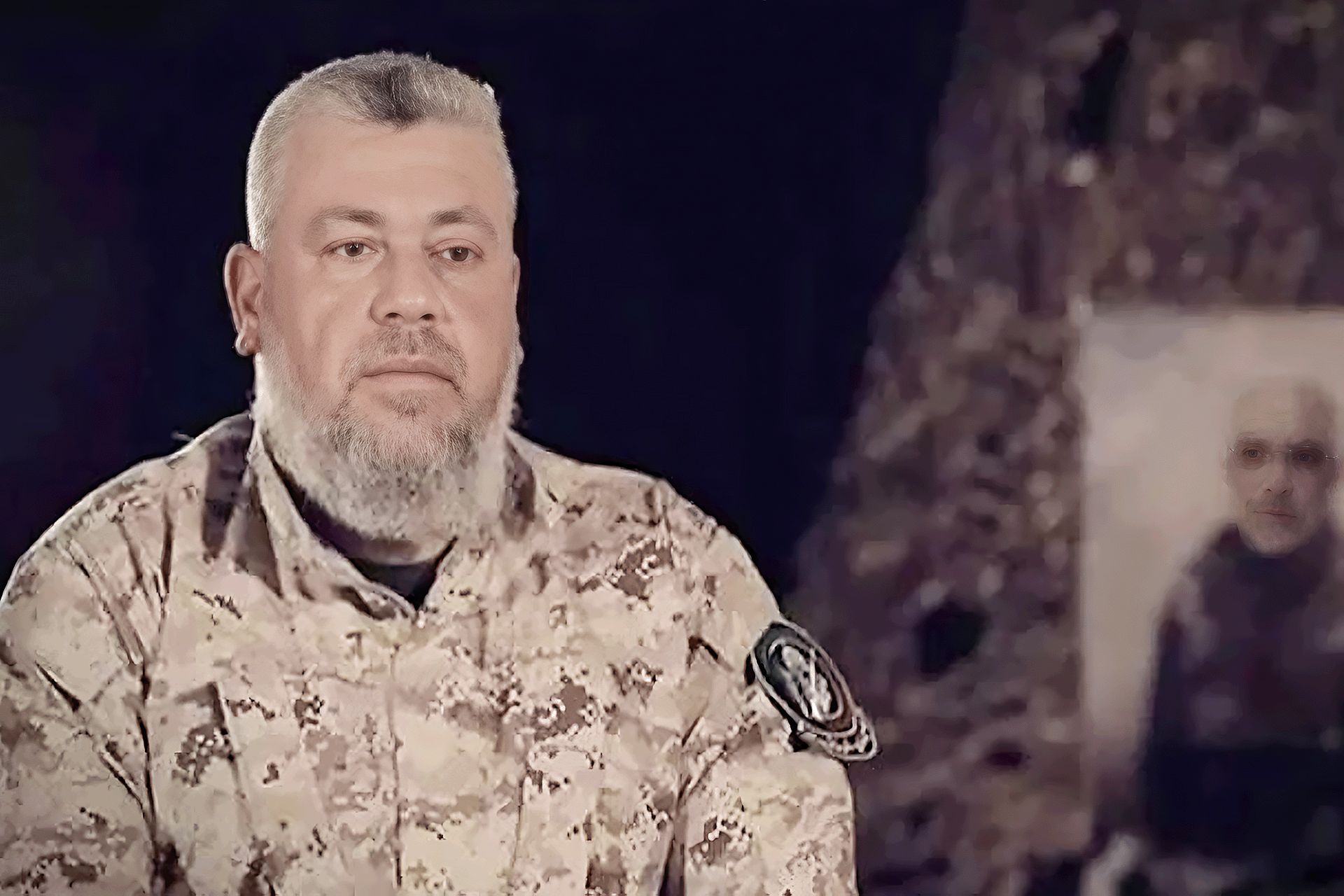

The killing of Izz al-Din al-Haddad, the recently appointed head of Qassam Brigades, the armed wing of Hamas, has dealt a symbolic blow to the Palestinian group in Gaza, but the impact on its military operations is far from certain.
Al-Haddad was killed on Friday in a sophisticated dual-strike on a residential apartment in Gaza City’s Remal neighbourhood and a vehicle attempting to flee the scene. The delivery of heavy munitions into a densely populated area, packed with displaced civilians, killed seven other Palestinians, including women and children, and wounded 50 people.
Yet, despite Israeli claims that the killing will cripple the group’s operational capacity, analysts argue that its decentralised nature is built to absorb such shocks. As the region watches to see how the resistance faction will respond, al-Haddad’s death raises critical questions about the future of the fragile “ceasefire” and who remains to lead the Qassam Brigades.
Operational impact: Will the Qassam Brigades collapse?
The killings of Qassam Brigades commanders, including Mohammed Deif, Marwan Issa, and Yahya Sinwar’s brother Mohammed, left al-Haddad as the key military figure managing the fight against Israel.
Saeed Ziad, a Palestinian political analyst, told Al Jazeera that while the loss is a “massive symbolic and moral blow” to Palestinians, the immediate operational impact on Hamas’s armed wing will be limited.
“The Qassam Brigades are not built on a hierarchical, sequential structure, but a parallel one,” Ziad explained. “Over the past two decades, Hamas has transitioned into a decentralised guerrilla force. Units operate as isolated, self-sufficient groups with their own logistical supply lines and combat doctrines.”
Advertisement
“If a brigade or battalion loses its commander, the group already knows its mission and has the resources to execute it independently,” he said. Reorganising the Qassam Brigades’ central command to cope with the loss will likely take mere days, not months.
Furthermore, al-Haddad had successfully utilised the October ceasefire with Israel to rebuild the group’s infrastructure. “Over the past 200 days, he reconstructed the resistance’s capabilities – its tunnels, weaponry and combat formations – making it capable of defending itself once again,” Ziad noted.
Who is left in the Hamas military leadership?
Israeli officials have boasted that they are close to dismantling Hamas’s central command, claiming that only two members of the military council before the pre-October 2023 attacks on Israel – Mohammed Awad and Imad Aqel – are alive.
However, analysts point out that Hamas’s military wing, which boasted roughly 50,000 fighters before the war, possesses a deep bench of cadres and a strict protocol for leadership succession that enables it to quickly recover when commanders are killed.
“The resistance typically appoints a first, second, and third deputy for every active commander, from the general commander down to the platoon leaders,” Ziad said. “Filling these voids happens rapidly.”
Hamas immediately confirmed Haddad’s death, with spokesperson Hazem Qassem officially mourning him as the “General Commander” of the Qassam Brigades. He stressed that despite his death being a “massive loss”, the group’s “long journey of resistance continues”.
The ‘Ghost’ of the Qassam Brigades
Born in the early 1970s, al-Haddad joined Hamas upon its inception in 1987. He rose through the ranks from an infantry soldier to commander of the group’s Gaza City Brigade, overseeing six battalions – each consisting of 1,000 fighters plus 4,000 support personnel.
He played a foundational role in establishing al-Majd – Hamas’s internal security apparatus designed to track down Israeli intelligence collaborators. But it was his ability to survive multiple assassination attempts – including bombings of his home in 2009, 2012, 2021, and three separate times during the current genocidal war on Gaza – that earned him the moniker “Ghost”.
Al-Haddad left an indelible strategic mark on the movement as a primary architect of the October 7, 2023 attacks. He personally oversaw the breach of the eastern fence, directed elite units that stormed the Re’im military base and the Fajja outpost. According to intelligence reports, it was al-Haddad who handed localised commanders a paper hours before the attack detailing the operation and ordering the capture of Israeli soldiers.
Advertisement
In January 2025, an Israeli air raid killed his son, Suhaib, but al-Haddad survived and continued to command operations and oversee the detention of Israeli captives until a deal was reached.
A fragile ‘ceasefire’ on the brink
Shortly after Friday’s strike, Israeli Prime Minister Benjamin Netanyahu and Defence Minister Israel Katz issued a rare joint statement, boasting that the killing was carried out under their direct orders.
Mohannad Mustafa, an analyst of Israeli affairs, said al-Haddad’s killing shows that Israel is attempting to “normalise” blatant violations of the “ceasefire” agreement, while the Netanyahu-Katz statement was an appeal to Washington to allow it to continue the killing campaign. At least 871 Palestinians have been killed since the “ceasefire” was announced on October 10, 2025, most of them civilians.
“Netanyahu is pitching this to the US administration as a necessary step to ‘disarm Hamas’ under the Trump plan,” Mustafa told Al Jazeera. “But the reality is that Israel never wanted this ceasefire. It was imposed on them.”
By systematically killing civilians, police, and military figures without offering immediate justifications for “ceasefire” breaches, Israel aims to provoke a response. “The ultimate goal is to force Hamas to retaliate, leading to the collapse of the agreement and giving Israel the green light to launch ‘Gideon 2’ – a military operation to occupy the entirety of the Gaza Strip,” Mustafa added.
With Netanyahu lacking a definitive strategic victory, such as the total surrender of Hamas, Ziad said the Israeli leadership is now leaning heavily on a “philosophy of assassinations” to project a “picture of victory” to its domestic base.
But history has shown that killings of leading military figures, such as al-Haddad, rarely have a significant long-term impact on armed Palestinian movements like Hamas.
“For the fighters and the society in Gaza, these killings create a blood covenant,” Ziad said. “It hardens their resolve. Retreating after the loss of leaders like Deif, Sinwar, or Haddad is viewed as a betrayal of that blood.”
Related News

India and UAE sign defence pacts, as Iran war tensions simmer
Afghanistan accuses Pakistan of killing three civilians in ‘war crime’
Uganda’s Yoweri Museveni sworn in for seventh term as president