
While a Hamas delegation holds talks with mediators in Cairo, discussions over Gaza’s next administrative phase are also taking place in the Cypriot coastal resort city of Ayia Napa.
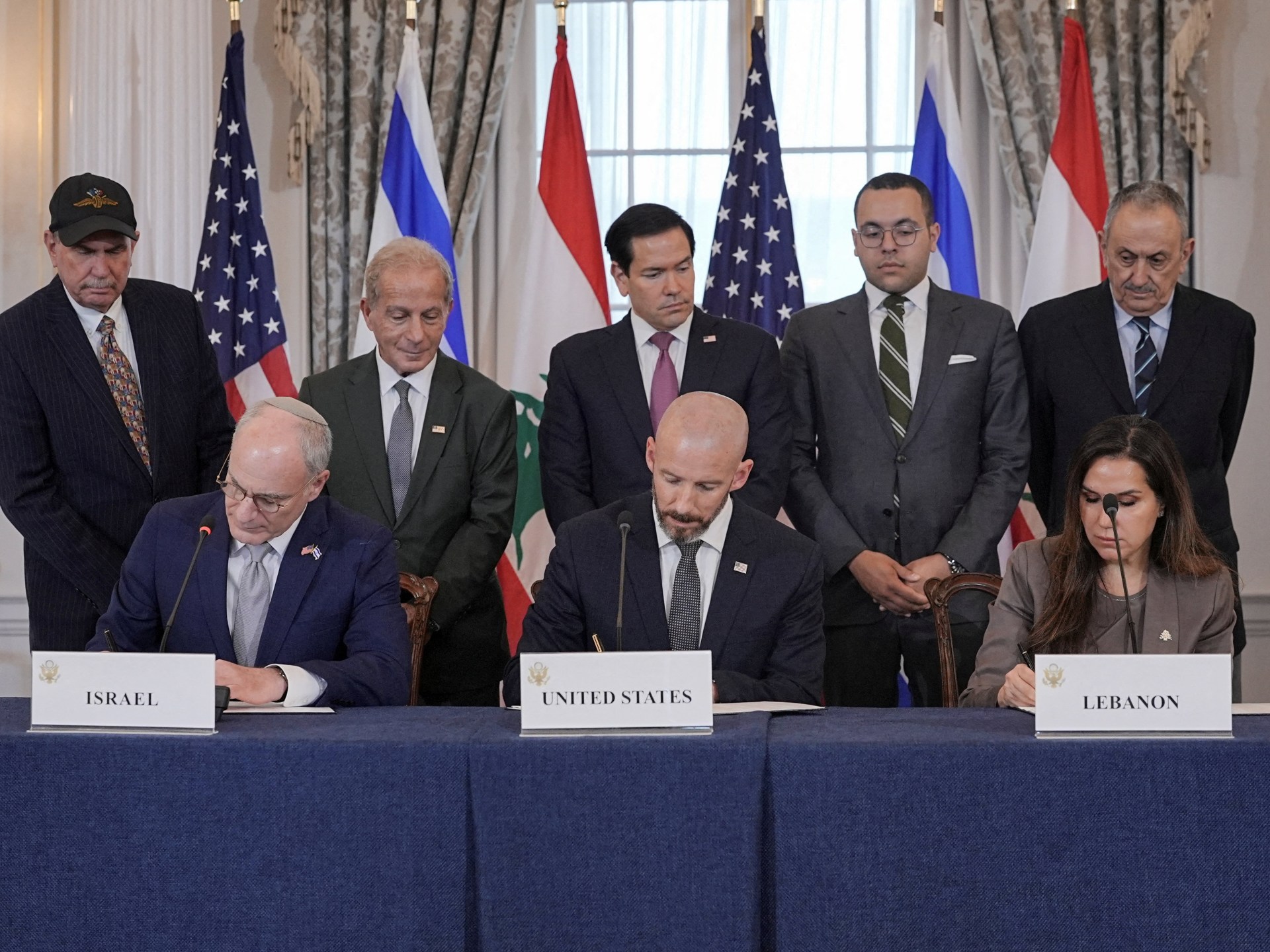
Representatives of a US-led Board of Peace – headed by prominent international figures including former British Prime Minister Tony Blair and former UN envoy Nickolay Mladenov – are convening to draw up a roadmap for the devastated enclave.
- list 1 of 3Democratic socialist Kiros defeats longtime incumbent in Colorado primary
- list 2 of 3‘Will not leave’: Is Israel killing the US-Iran MoU by staying in Lebanon?
- list 3 of 3‘We can relate’: Bosnia fans bring passion, Palestine support, to World Cup
end of list
The primary objective is to isolate Hamas from the Palestinian population and its resources through the implementation of Article 17 of US President Donald Trump’s plan to end Israel’s genocidal war on Gaza, which has now killed more than 73,000 Palestinians. However, the initiative is already buckling under the weight of financial crises, Israeli political gridlock, and legal controversies.
Article 17 and the ‘pincer movement’
Article 17 of the Trump plan paves the way for what officials describe as a “temporary reconstruction” in areas designated as free of Hamas control. Rather than pouring concrete for permanent rebuilding, the plan envisions setting up temporary structures and providing medical services for civilians settling in those areas.
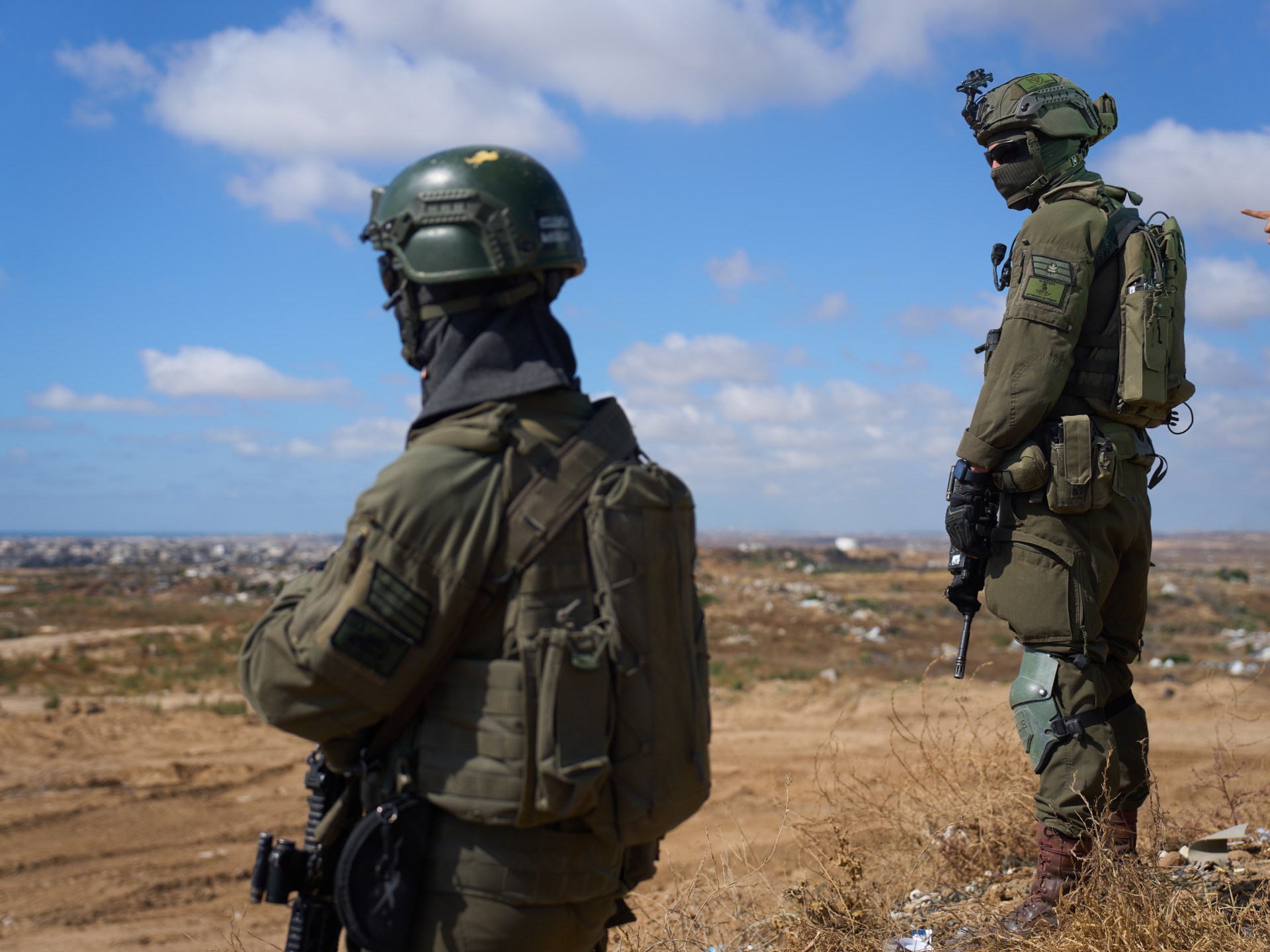
According to reports from the Israeli newspaper Israel Hayom, the Board of Peace – the organisation set up by Trump in the wake of the October Gaza ceasefire – is scheduled to launch a pilot project within weeks in one such “Hamas-free” area, Tal as-Sultan area near Rafah. The plan aims to establish humanitarian shelter compounds for “unarmed” civilians, overseen by a multinational stabilisation force stationed at Camp Amitai on the border. These multinational forces will be equipped only with batons to maintain public order, while the Israeli military fortifies its presence behind the “Yellow Line”, which separates areas of Gaza under Israeli control from those outside it.
Advertisement
The strategy effectively allows for the Israeli military – with the support of the Board of Peace – to only allow for reconstruction to take place in areas under its control. By directing reconstruction, aid distribution, and civilian shelter to areas outside of Hamas’s control, Palestinians in Gaza may increasingly relocate to those areas, ultimately leaving Hamas with “no people, no land, and no resources”.
However, the plan faces fierce resistance from within Israel. The “Israel Envelope Forum”, representing residents of settlements bordering Gaza, has warned that implementing Article 17 constitutes a major strategic gamble.
The forum argues that any “reconstruction” – even temporary structures – before the complete military and political defeat of Hamas is a strategic error that will give the group a golden opportunity to catch its breath, rebuild its tunnel networks, and recruit fighters. It maintains that past attempts at “consciousness engineering” to separate Gaza’s population from Hamas have failed, warning that international civilian administration will only perpetuate the security threat to Israeli border communities.
The Cypriot Board of Peace meetings have also been overshadowed by a leaked draft resolution published by The Guardian, which revealed that the body is seeking sweeping legal immunity for its members, forces, and contractors, shielding them from potential prosecution in Gaza’s courts. The document also reportedly outlines efforts to seize public facilities and properties inside Gaza without compensation.
While a Board of Peace official quickly dismissed the leak as misleading, the revelations have sparked alarm. Mohanad Mustafa, an expert in Israeli affairs, warned that if the document is authentic, it effectively transforms the Board of Peace into a “colonial occupation authority” rather than an administration meant for rescue and reconstruction.
“This means that any legal violations, criminal acts, or financial corruption committed by Board of Peace members would be completely shielded by legal immunity,” Mustafa told Al Jazeera, adding that seizing public facilities without legal backing violates both local and international law.
Funding collapse and the Israeli veto
Little is known about what is being discussed behind closed doors in Ayia Napa.
Al Jazeera’s correspondent in Cyprus, Mohammed al-Madhoun, reported that the Board of Peace meetings are shrouded in such secrecy that even their exact location remains undisclosed.
Advertisement
And there are few signs of progress for the Board of Peace’s plan in Gaza, with the only visible development being the release of images showing vehicles designated for the International Stabilization Force arriving near the Karem Abu Salem (known as Kerem Shalom in Israel) crossing.
Behind the scenes, the Board of Peace is struggling to resolve two massive hurdles:
Donors have reneged on $17bn in pledges made during a February donor conference, largely due to the economic fallout from the recent regional war with Iran. Without these funds, the Palestinian technocratic committee tasked with day-to-day administration of Gaza cannot function.
The Board of Peace has also adopted the Israeli narrative regarding the plan’s execution. Israel flatly refuses to allow the technocratic committee into Gaza, open border crossings, or begin reconstruction until Hamas is completely disarmed – even down to its military uniforms.
Mustafa, the Israeli affairs expert, notes that Israel is actively obstructing the plan, expanding its occupation to cover more than the 50 percent of Gaza stipulated in the first phase of the ceasefire agreement.
For Hamas, the intentions of the Board of Peace are viewed with deep suspicion. Palestinian political analyst Ahmed al-Tanani explained to Al Jazeera that Hamas recognises Israel’s attempts to exploit the vague texts of the ceasefire agreement and is demanding that mediators provide real guarantees to prevent humanitarian projects from turning into a “cover for genocide”.
Mohammad Mansour has contributed to this report.
Related News
Two UK police officers face misconduct probe in Henry Nowak murder case
Netherlands to sanction trade with illegal Israeli settlements
Somalia races to save Radio Mogadishu’s fading archive