
The United States carried out attacks against Iran for a third consecutive night late on Monday.
Iran has continued to hit targets in the Gulf in several waves of retaliatory strikes on Tuesday, including UAE‑flagged oil tankers in the Strait of Hormuz and US military facilities in Bahrain and Kuwait.
Here is a recap of what has happened on Monday night and Tuesday, and what each side has said.
Where did the US attack Iran?
US Central Command, the military’s regional command known as CENTCOM, said its latest strikes began at 4:45pm ET (20:45 GMT) on Monday and were aimed at degrading Iran’s capacity to attack “innocent civilians and commercial shipping” in the strait.
CENTCOM later announced the conclusion of its strikes and said the latest round of attacks on Iran lasted five hours. It added that US forces “successfully struck military targets across Iran including Bushehr, Chah Bahar, Jask, Konarak, Abu Musa, and Bandar Abbas”.
Iranian state television and semi-official news agencies reported explosions throughout the night across the country’s southern coast, including the port city of Bandar Abbas, and on Kish and Qeshm islands, as well as the town of Jam in Bushehr province.
A projectile that struck western Bandar Abbas caused no casualties, the Fars news agency reported, citing the regional governor’s office.
What areas did Iran target?
For its part, Iran’s Islamic Revolutionary Guard Corps (IRGC) said it had launched a wider retaliatory campaign against US allies and interests across the Gulf.
Advertisement
Iran’s Tasnim news agency reported that Iranian forces had struck several “violating” vessels in the strait, and that a US-made drone had been shot down near Bandar Abbas.
The UAE: The UAE said two of its oil tankers had been hit by Iranian cruise missiles in Omani waters in the Strait of Hormuz. The UAE added that one Indian national crew member had been killed on one of the tankers, and eight other people were wounded.
Iran’s Tasnim news agency said the IRGC hit two “offending” oil supertankers, citing an IRGC statement – apparently referring to the two UAE tankers.
Kuwait: The Iranian army said on Monday that it had carried out a drone attack on US military targets in Kuwait. In a statement posted by state broadcaster IRIB, the army said it launched drones at a US Patriot missile system, fuel tanks, a watchtower, an ammunition depot and communication systems.
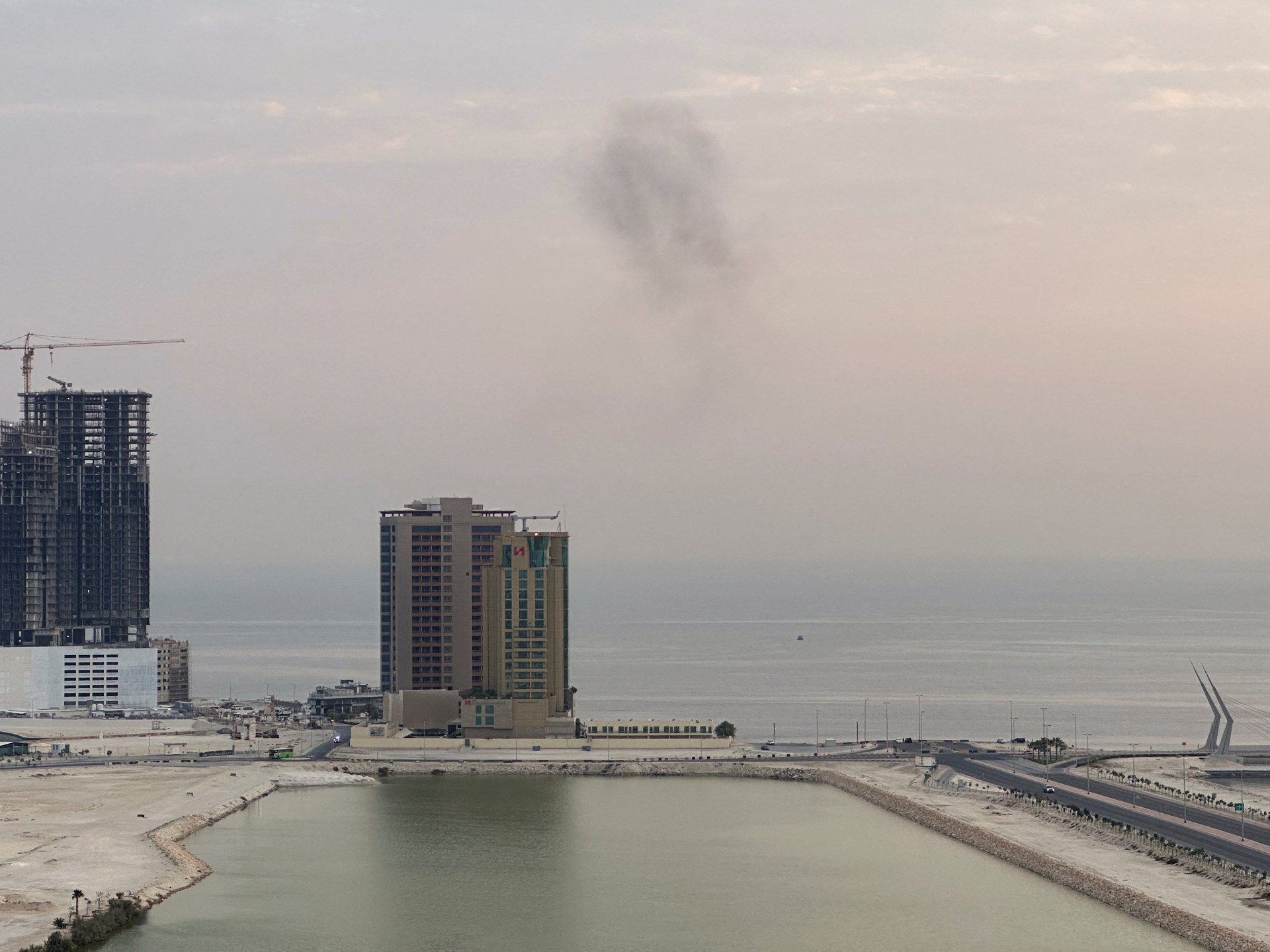
Bahrain: The IRGC said it targeted “several weapons storage depots, a satellite communications centre, and a building housing US forces” at al-Juffair Base in Bahrain. It also said it had hit the US Fifth Fleet in Bahrain with missiles and drones.
Air sirens have been heard four times in Bahrain on Tuesday so far.
Jordan: Jordan’s army said it shot down four missiles in Jordanian airspace that were fired from Iran, according to the official Petra news agency. After this, the IRGC said it launched ballistic missiles at US forces and key facilities at an airbase in Jordan.
In a message addressed directly to Jordanians, the IRGC insisted that the operation was aimed at the US military presence in the country rather than at Jordan or its citizens. “You know that we hold no animosity toward your country. On the contrary, we deeply love you, the noble people. You understand the pain and suffering of the Palestinian people better than any other nation, and you are aware of the crimes of the Zionist regime in the massacre of 70,000 Palestinians, including 20,000 children in Gaza, carried out with the direct involvement of the United States,” it said.
What have the US and Iran said?
US President Donald Trump formally notified Congress on July 10 that fighting with Iran had resumed on July 7, invoking his authority to keep US forces in combat for another 60 days without lawmakers’ approval.
At a news conference on Monday, Trump said Iran’s offensive capabilities were being dismantled, but he still thinks a “deal is possible” despite the return to open fighting.
Trump also repeated an earlier demand that Gulf nations help cover the cost of protecting shipping, saying Washington was “protecting a very rich portion of the world” and expected to be paid for it.
Advertisement
On Monday, Trump also threatened to “take out” Kuh-e Kolang Gaz La, also known as Pickaxe Mountain, a suspected nuclear site near the Natanz uranium enrichment facility in central Iran.
Meanwhile, the US blockade on Iran, confirmed by the US Navy-led Joint Maritime Information Centre (JMIC), is due to begin at 20:00 GMT on Tuesday.
The US’s blockade covers Iran’s ports and terminals along the entire southern coastline, according to JMIC.
Ebrahim Azizi, the head of the Iranian Parliament’s National Security Committee, has warned that Iran remains steadfast in defending its red lines, following the formal introduction of a bill to manage the Strait of Hormuz.
In an X post on Tuesday, Azizi wrote: “Last night, coinciding with the downing of US drones, the ‘Strategic Action for the Security and Sustainable Progress of the Strait of Hormuz and the Persian Gulf’ bill was formally introduced in Iran’s Parliament. We remain steadfast in defending our red lines, particularly regarding the management of the Strait of Hormuz.”
What is happening to shipping in Hormuz?
Oil prices rose more than 9 percent on Monday, with Brent crude climbing to about $81 a barrel, its highest level since mid-June.
Kpler, the ship-tracking firm, said crossings through the strait fell by about 52 percent between July 10 and July 12, compared with the previous week.
Related News
Trump’s border czar probes possible vetting failures after ICE shooting
Mitch McConnell releases health update, says he is ‘regaining’ strength
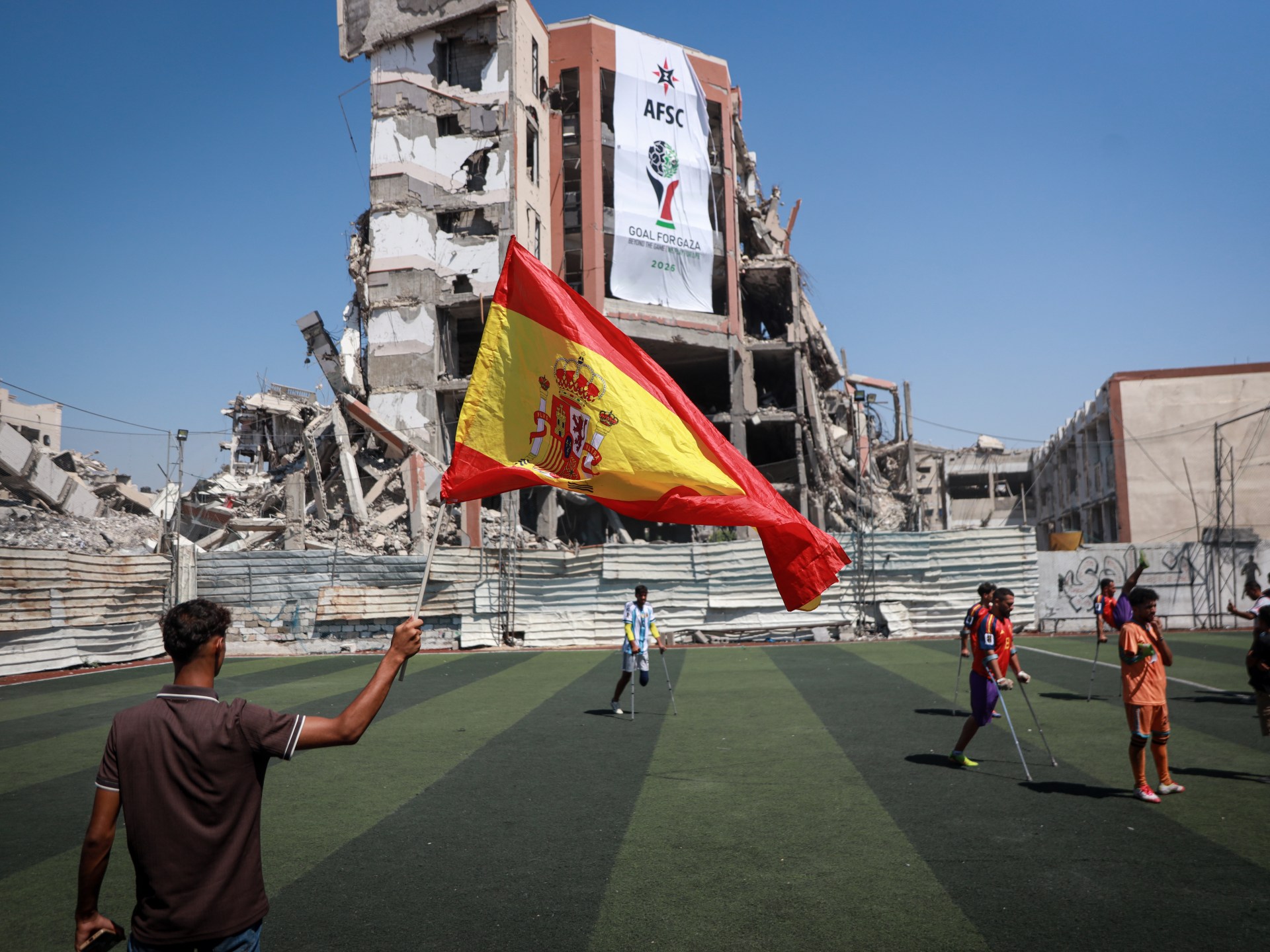
Gaza cheers for Spain as World Cup final anticipation mounts