
A sweeping package of new Russian sanctions has cleared its first hurdle in the United States Congress, and, if passed, could trigger huge tariffs for countries such as India and China which continue to buy oil from Moscow.
The bill, which was advanced in the US Senate this week, has been named for the late Lindsey Graham, whose funeral was attended by world leaders including Israeli Prime Minister Benjamin Netanyahu earlier in the week.
- list 1 of 4AFC president doubles down on FIFA, calling World Cup plan ‘unacceptable’
- list 2 of 4Israeli strikes kill at least six, including children, across Gaza Strip
- list 3 of 4How does a safe zone in Lebanon become a target three times?
- list 4 of 4England appoint Root and Fleming as Test cricket captain and coach
end of list
Here’s what we know:
What happened in the Senate?
The “Lindsey O Graham Sanctioning Russia Act of 2026” was advanced overwhelmingly by the Senate this week in a vote of 86 to 12, meaning it can now proceed to the House of Representatives for further deliberation.
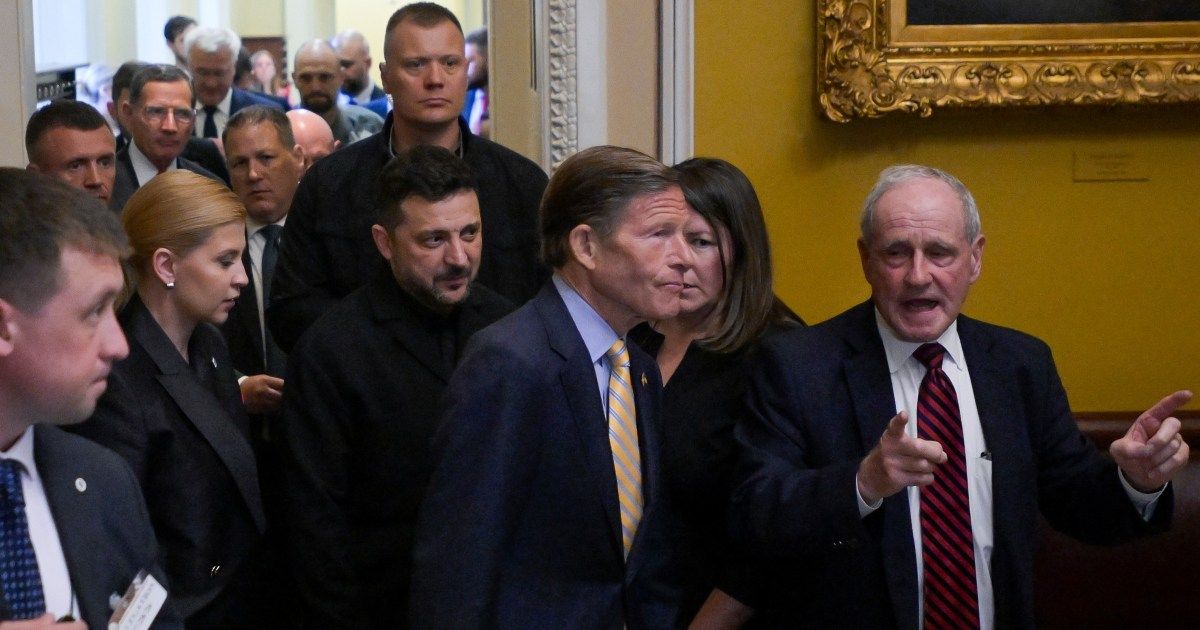
Named for the late Senator Graham, a staunch Ukraine supporter who died unexpectedly this month, the bill moved forward with the support of Ukrainian President Volodymyr Zelenskyy, who was in Washington to attend Graham’s funeral and watched the proceedings from the gallery.
“It was an honour to be present as the votes were counted – 86 senators supported the bill,” he wrote on X afterwards. “This is the first step towards implementing Lindsey [Graham]’s plans, and certainly a step towards peace. It is important that this tool works.”
After clearing the Senate, there will be a delay before the bill can move forward to the House, which is now in summer recess.
On Wednesday this week, US President Donald Trump ordered lawmakers to amend the bill to include tariffs covering Iran as well. This will likely delay the bill further if it deters Democrats from supporting it, analysts said.
Advertisement
David Smith, an associate professor at the University of Sydney’s US Studies Centre, told Al Jazeera: “One of the things they’re worried about is how the tariff power in relation to Iran is going to be expanded. They’re going to be ok with tariff powers on Russia but they’re worried about tariff power on countries buying Iranian oil, which means China. I think there are going to be a lot of Democrats that are going to say these powers should be limited to sanctions and not tariffs.”
Without the Iran addition, he said he would have expected the bill to pass once the House resumes given strong Democratic support for Ukraine.
“Democrats have been genuinely worried about the Trump administration abandoning Ukraine. Something like this, which is ramping the pressure up on Russia so much, I just think there will be a large critical mass of Democrats who will vote for this,” he said.
What’s in the bill?
The bill makes use of sanctions and tariffs to target Russia and cut off the economic pipeline that has kept the Ukraine war going.
Major provisions include new sanctions on Russian President Vladimir Putin as well as on more than 20 top officials and companies which work with the Russian defence industry. It also targets Russia’s “shadow fleet” of oil tankers and the network it uses to evade international sanctions on its energy exports.
The bill gives the president authority to impose sanctions by invoking the International Emergency Economic Powers Act (IEEPA). Under it, he would be able to apply tariffs of up to 100 percent on exports to the US from the top five purchasers of Russian energy, military equipment or countries facilitating Russian sanctions evasion.
Tariffs of up to 500 percent can also be applied to Russian imports directly into the US. The US imported $3.8bn in goods from Russia in 2025.
Which countries are likely to be targeted?
China, India and Türkiye are potential targets of the bill, as they are among the largest buyers of Russian energy, according to data compiled by the Centre for Research on Energy and Clean Air (CREA).
China has historically responded to Trump’s tariffs with tariffs of its own on US exports. Even Pay, a director at the Beijing-based consultancy Trivium China, told Al Jazeera that the US may wait to impose tariffs as Trump is due to meet Chinese President Xi Jinping later this year.
Trump would still welcome the option, she said, after the Supreme Court struck down many of his tariffs in February.
“If passed and signed into law [which is still a big if at this point], the legislation would give Trump something he’s wanted for a while, namely, the legislature’s permission to impose high tariffs on China, alongside the small handful of other countries that import Russian oil,” Pay told Al Jazeera.
Advertisement
India is in a tricky position as its attempts to diversify away from Russian energy were disrupted by the shutdown of the Strait of Hormuz, according to Maia Nikoladze, a deputy director of the Economic Statecraft Initiative at the Atlantic Council.
Due to the disruptions, it has also applied for and received US sanction waivers to continue buying Russian oil in the interim, Nikoladze wrote in a report this week, and it is expected to do the same in the future.
“India will face a trade-off between maintaining energy security and managing the risk of US tariffs, potentially prompting it to again seek waivers and exemptions,” Nikoladze said.
Critics like Senator Maggie Hassan say the bill gives Trump too much power to impose tariffs while also potentially harming both the US taxpayer and allied countries.
Turkiye, for example, buys Russian energy but it is also a US ally and NATO member, while “major non-NATO ally” Brazil and “major security cooperation partner” Singapore both buy Russian oil products, according to CREA.
In a post on X, Hassan wrote that while she supports sanctioning Russia, she does “not think tariffs, which are paid for by American businesses and consumers, will help Ukraine win”.
The bill is also opposed by lobby groups such as the US Chamber of Commerce, which also says the true cost will be passed on to US businesses and consumers, as with past tariffs.
While many of Trump’s tariffs have already been struck down by the Supreme Court, the Russia tariffs could have more staying power because they would be imposed on a stronger legal basis, according to Smith.
That’s because it is new legislation which has been crafted using the powers of the IEEPA.
“Previously what Trump has done is to go back to old pieces of legislation and invoke from those his power to use tariffs in ways they haven’t been used before and in ways courts have subsequently found less lawful, whereas this looks like new legislation that is going to lawfully expand his tariff authority,” he told Al Jazeera.
Related News

Canadian province sues OpenAI over alleged ChatGPT-linked shooting warnings
Israeli attacks on Gaza kill 14, including mourners attending funeral
Missiles and drones fired at Gulf states after night of US strikes on Iran