Exxon Guyana Chief: “It’s Not Our Job” To Build The Nation – As Company Rakes In Record Profits
 26 September 2026
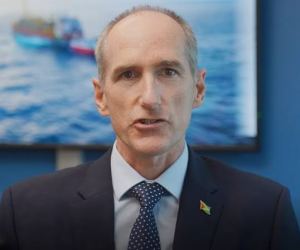


News Americas, NY, NY, Sat. Sept. 26, 2026: The man running ExxonMobil’s operations in Guyana has a message for Guyanese demanding more from the oil giant: don’t look to us. “It’s not our job,” Alistair Routledge, president of Exxon Guyana Limited, said when asked about calls for the company to do more to raise living standards in the country. “They didn’t vote for us. We are not representatives of the people.”
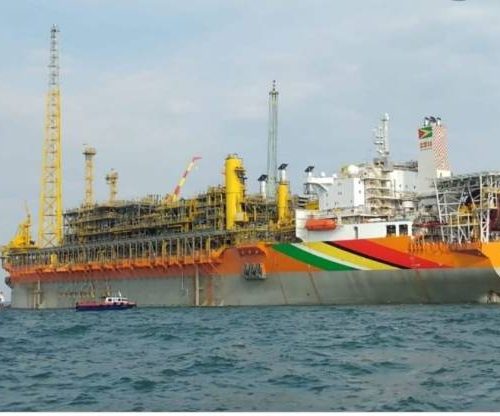
The comment, reported by The New York Times’ Simon Romero and Rebecca F. Elliott, lands at a politically combustible moment. Guyana – a former British colony of roughly 1 million people – has become the fastest-growing economy on earth since Exxon’s 2015 offshore discovery, and the country now produces nearly 1% of the world’s oil. Much of that oil is flowing to Europe, replacing supply lost to the Russia conflict.
But the boom has been just as transformative for Exxon. Guyana’s rapid production ramp-up helped push the company’s global output to its highest level in more than 40 years last year – contributing an estimated 15% of Exxon’s operating income, according to the Times’ reporting.
That imbalance is exactly what critics point to. Thomas Singh, an economist at the University of Guyana, called the arrangement “a terribly bad deal,” noting Guyana’s 14.5% share of revenue from the Exxon-led consortium falls well short of what oil-producing nations like Norway or Brazil collect. Economist Richard Rambarran put the trade-off more pointedly: “It’s often said that Exxon saved Guyana. You could also say that Guyana saved Exxon.”
Routledge has defended the contract terms, telling the Times that Exxon “assumes all the financial risk” and that Guyana’s share is set to rise now that the consortium has recouped its development costs — with revenues expected to double or more from current levels.
Exxon has funded biodiversity research, food-production support, and a $100 million workforce and healthcare initiative in Guyana. But Routledge’s “not our job” framing suggests the company intends to draw a hard line on how much further that goes — even as its Guyana bet also plays into ambitions in Trinidad and Tobago and a possible return to Venezuela, where it lost its assets in a nationalization two decades ago.
The remarks are likely to sharpen an already-tense debate in Guyana over who benefits most from the country’s oil wealth — and how much say a private, foreign operator should have in shaping national development priorities it profits enormously from but was never elected to serve.
Related News
Are Caribbean Governments Giving Away Too Much To Attract Investors?

Digital Trade Nears $90 Billion In Latin America And Caribbean As Online Exports Surge

iQor Launches Global Gaming Center of Excellence in Trinidad and Tobago