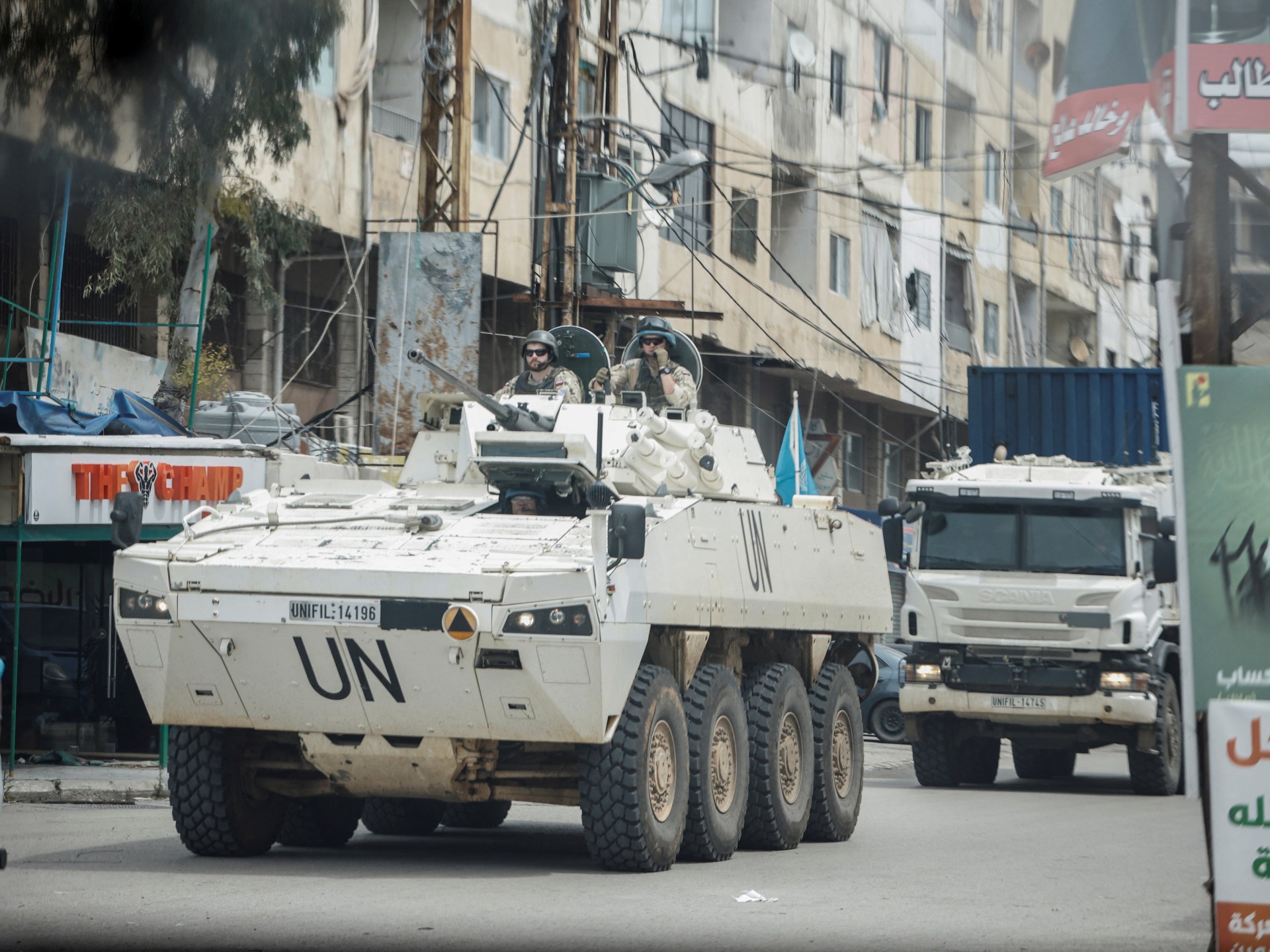

China’s ambassador to the United Nations, Fu Cong, has said there is a need to re-examine the UN Security Council’s decision to terminate the mandate of the longstanding peacekeeping mission in Lebanon, which is due to end later this year.
Speaking to reporters on Friday at the UN headquarters in New York, Ambassador Fu expressed China’s deep concern about the situation in Lebanon as Beijing assumed the council’s rotating presidency for May.
- list 1 of 3Peru probes trafficking of citizens to fight for Russia in Ukraine
- list 2 of 3Havana slams new Trump sanctions as ‘collective punishment’ of Cuban people
- list 3 of 3Iran war protester speaks to Al Jazeera from top of Washington bridge
end of list
He observed that a genuine ceasefire did not exist in Lebanon, describing the current state of conflict as merely a “lesser fire”.
“We do believe that we should revisit the decision, actually, to withdraw the UNIFIL,” Fu said, using the acronym for the UN Interim Force in Lebanon.
“I think at least the view of the overwhelming majority of the Security Council is that this is not the time to really, to withdraw the UNIFIL out of that part of the country,” Fu said.
China is waiting for a report from the UN secretariat, expected in June, “before we take our position”, he added.
Fu also said, “It is incumbent on Israel to stop this bombardment of Lebanon.”

Created to oversee the withdrawal of Israeli troops after the 1978 invasion, UNIFIL saw its mandate expanded after the 2006 war between Israel and the Lebanese group Hezbollah and was responsible for a demilitarised buffer between the opposing sides.
However, the UNSC unanimously resolved last year to begin withdrawing the UNIFIL mission’s 10,800 international peacekeepers by December 2026.
Advertisement
According to Lebanese authorities, Israeli attacks on Lebanon since March 2 have killed 2,618 people and forced more than one million to flee their homes.
The UNIFIL mission has also faced a growing number of casualties. According to UN officials, at least six peacekeepers have been killed and many others injured since Israel began its attack on March 2.
The deaths include soldiers from various contributing nations, including Indonesia and France, who have been caught in shelling incidents and roadside attacks.
UN Secretary-General Antonio Guterres has condemned these incidents, noting that the UN’s “blue helmets” have come under fire while performing essential duties, such as clearing explosive ordnance and escorting logistics convoys.

Related News
Iran shifts economic focus to essentials during war uncertainty
How long can Iran survive the US’s Hormuz blockade?
DR Congo to establish US-backed paramilitary guard for mines