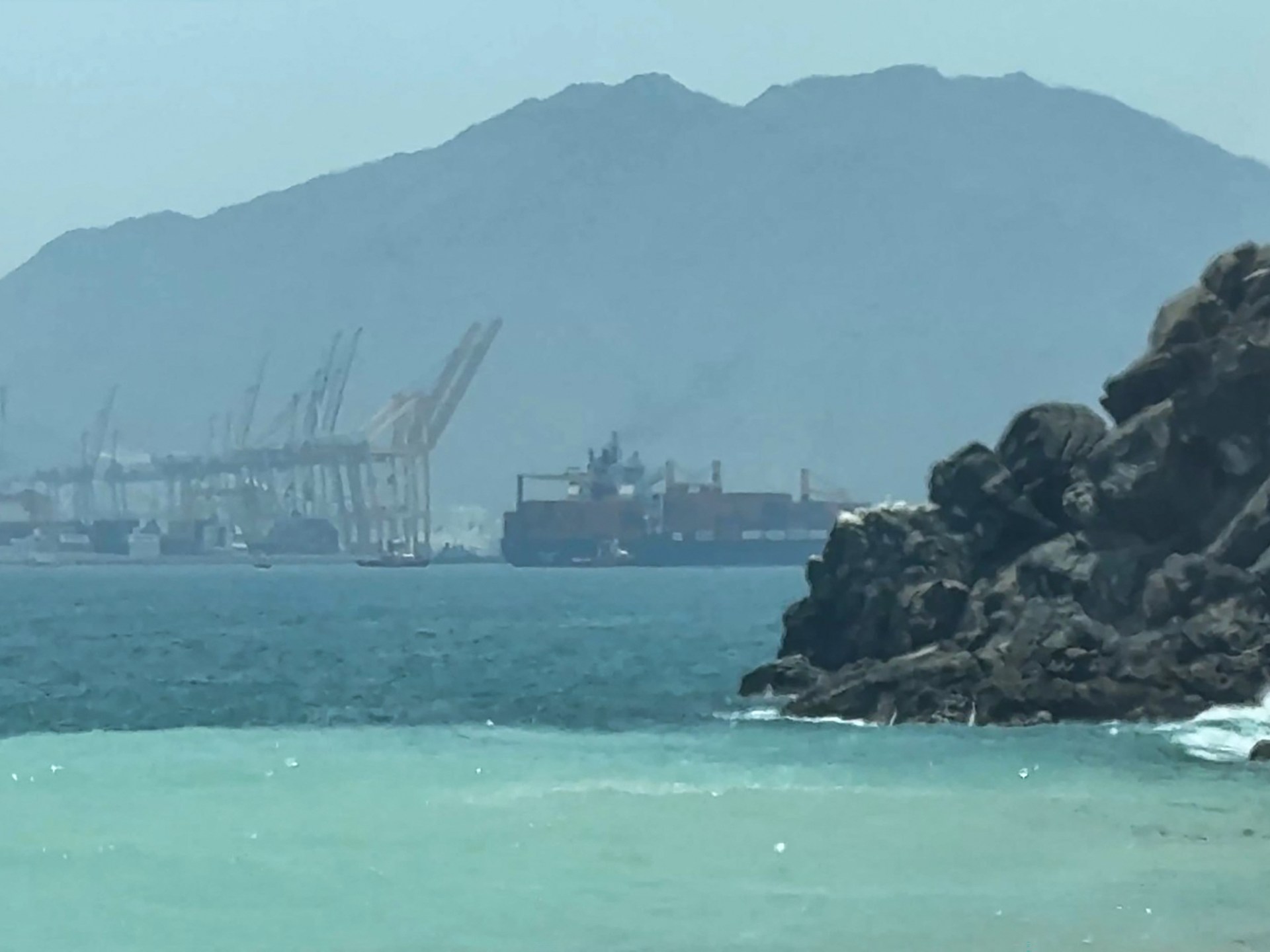

The head of the International Energy Agency has warned that global energy security is under serious threat unless efforts by the United States and Iran lead to improved oil flows through the Strait of Hormuz.
Fatih Birol said on Thursday that the world should be concerned about energy security if the situation does not improve soon.
- list 1 of 3‘Safe passage’: The fatal ambiguity at the heart of the Hormuz MoU
- list 2 of 3US or Iran — Who needs a new truce deal more?
- list 3 of 3The hardest party to manage in the Iran talks isn’t Iran
end of list
“Oil security is still a critical issue,” Birol said, speaking at an event hosted by the Council on Foreign Relations.
”We should be worried, and I am worried if the situation does not improve in the next few weeks,” he added.
Birol’s comments came after the US intensified attacks on Iran, carrying out a sixth consecutive night of strikes, hitting Bandar Abbas, Ahvaz and Iranshahr, and firing on a ship it accused of trying to break its reimposed naval blockade on Iranian ports.
Tehran retaliated by launching missiles and drones at Washington’s allies in the region, targeting Kuwait, Bahrain and Jordan. Explosions were also reported in Qatar.
The escalation has also put at risk a US-Iran memorandum of understanding (MoU), signed in Pakistan a month ago with the aim of securing a ceasefire.
Al Jazeera’s Tohid Asadi reported that US attacks on Iran’s coastal cities were increasingly targeting infrastructure, including two bridges. He also said Iran was maintaining its closure of the Strait of Hormuz, citing what it described as a lack of US commitment to the memorandum of understanding.
Iran’s Fars news agency reported that the death toll from the US attack on the Bandar-e Khamir bridge in the Hormozgan province had risen to seven. Iran’s military also confirmed a retaliatory strike on a US military base in Jordan.
Advertisement
“We insist on US not to interfere in the Strait of Hormuz, and on its withdrawal from the region,” Iranian Armed Forces spokesman Abolfazl Shekarchi said.
“The situation in the Strait of Hormuz will not return to what it was before the war,” he added.
“The Strait of Hormuz is entirely within the sovereignty of Iran and Oman, and no external party has the right to interfere in its affairs, especially the United States of America.”
Al Jazeera’s Rosiland Jordan said the US military’s Central Command (CENTCOM) had not released a formal report on its sixth night of attacks on Iran.
CENTCOM said that since the blockade on Iran was reimposed, five vessels have attempted to “run the blockade”. Three were turned around, and one was “disabled”, although CENTCOM did not explain how the military disabled it.
US Marines also boarded an oil tanker, but it was not clear whether the vessel remained under US detention.
Meanwhile, White House Press Secretary Karoline Leavitt said Iran had brought destruction on itself.
“The reason for the recent strikes is because Iran violated the MoU that we struck with them; specifically, in the MoU that they signed, they were not to fire on commercial vessels moving through the Strait of Hormuz,” Leavitt said.
Earlier in the week, US President Donald Trump still insisted that there was a diplomatic path to ending the war.
Related News
Toppled Bangladesh leader Sheikh Hasina to speak today: What we can expect
Taiwan needs to become a ‘hornet’s nest’ of drones, US diplomat says

How has the Indian government responded to ‘Cockroach’ protests?