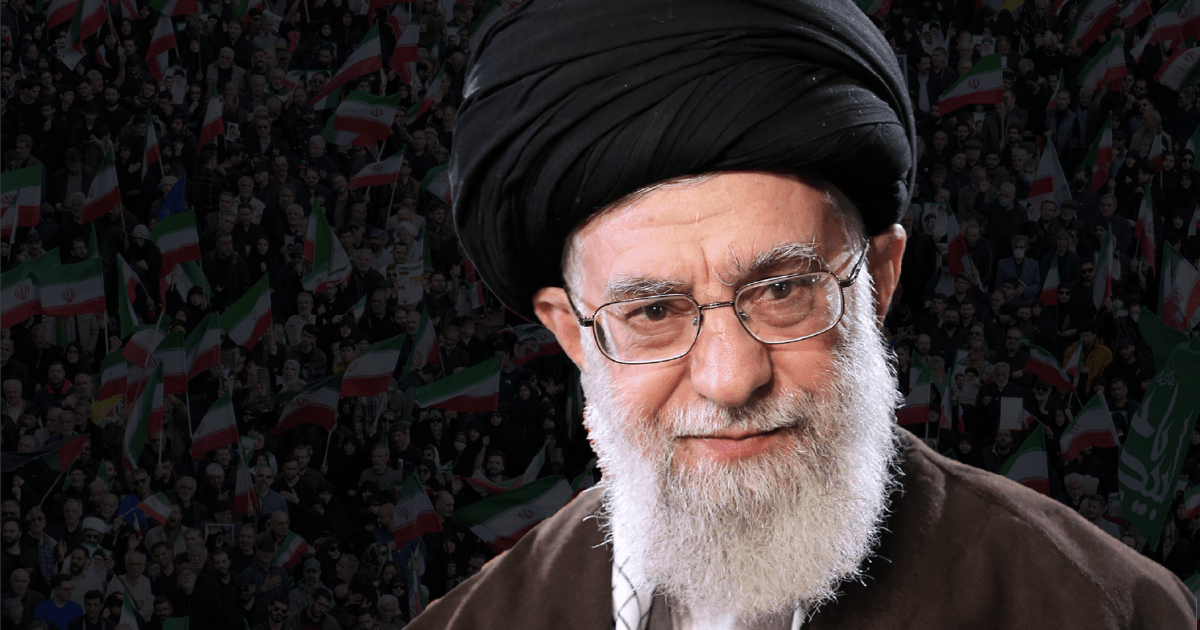

Starting on July 3, millions of mourners are expected to gather for seven days of funeral ceremonies and processions for Iran’s late Supreme Leader Ali Khamenei, with religious rites planned in cities across Iran and Iraq.
The burial, initially scheduled for March, was postponed as the US and Israeli war with Iran dragged on.
Khamenei, 86, was killed alongside several family members in a joint US-Israeli air strike on his compound on February 28, the first day of the war.

Who was Ayatollah Ali Khamenei?
Ayatollah Ali Khamenei led Iran from 1989, following the death of Ayatollah Ruhollah Khomeini, who had spearheaded the Islamic revolution a decade earlier and became the country’s first supreme leader.
While Khomeini was the ideological force behind the revolution that ended the rule of the Pahlavi monarchy, Khamenei shaped the military and paramilitary apparatus.
The funeral will also be the first major state ceremony under his successor and son, Mojtaba Khamenei, who has remained out of public view since the US-Israel war began four months ago.

Seven days of funeral rites
A seven-day funeral programme will take place across Iran and Iraq, beginning in Tehran on July 3 when global leaders, senior officials, religious figures and scholars from around the world will pay their respects.

July 4 and 5
On July 4 and 5, public funeral ceremonies will begin in Tehran. The coffin, along with those of several family members, will lie in state at the Grand Mosalla for public farewells. Built to accommodate large congregations, Grand Mosalla is one of Iran’s largest prayer complexes and has long served as a venue for major religious observances and state occasions.
![The Grand Mosalla of Tehran [2025]](https://www.aljazeera.com/wp-content/uploads/2026/07/Eid_al_Fitr_at_the_Imam_Khomeini_Mosque_2025_1404_123-1782973180.jpg?w=770&resize=770%2C513&quality=80)
July 6 and 7
On July 6 and 7, the funeral processions will move through other parts of Tehran before continuing to Qom, about 120km (75 miles) south of the capital.
Advertisement
Qom is Iran’s foremost centre of Shia Islamic scholarship and one of the holiest cities in the country. It is home to the country’s largest seminaries, where thousands of scholars study and teach, including the late Ali Khamenei.

July 8
Iranian and Iraqi officials say an official reception will be held at Najaf International Airport on July 8, followed by public processions in the Iraqi cities of Najaf and Karbala.
The Imam Ali Shrine in Najaf is one of the holiest sites for Shias, drawing millions of pilgrims each year. It is believed to contain the tomb of Imam Ali ibn Abi Talib, the cousin and son-in-law of the Prophet Muhammad and the first imam in Shia Islam.

The shrines of Imam Hussein and his half-brother Abbas in Karbala are among the holiest sites in Shia Islam. They mark the places where Imam Hussein, the grandson of the Prophet Muhammad, and Abbas were killed during the Battle of Karbala in 680 CE, an event that lies at the heart of Shia identity and religious tradition.

July 9
The body will then return to Iran for the final burial ceremony, scheduled for July 9 at the shrine of Imam Reza in Mashhad.
Mashhad is Iran’s holiest city. Imam Reza was the eighth Imam in Shia Islam.
The city also holds personal significance for Ali Khamenei, who was born in Mashhad in 1939 and spent much of his early life there. He studied at the city’s religious seminaries before continuing his education in Qom.
Burial near one of Shia Islam’s most revered figures is considered a great honour and reflects Khamenei’s dual role as both Iran’s supreme political leader and its highest religious authority.

Related News
Israel to hold national elections on October 27, parliament says

Apple iPhone 18 Pro secrets leaked in Tata Electronics hack: What we know

China and Russia to hold annual joint naval drills