Trump administration suffers double legal setback over immigration rules
 14 September 2026
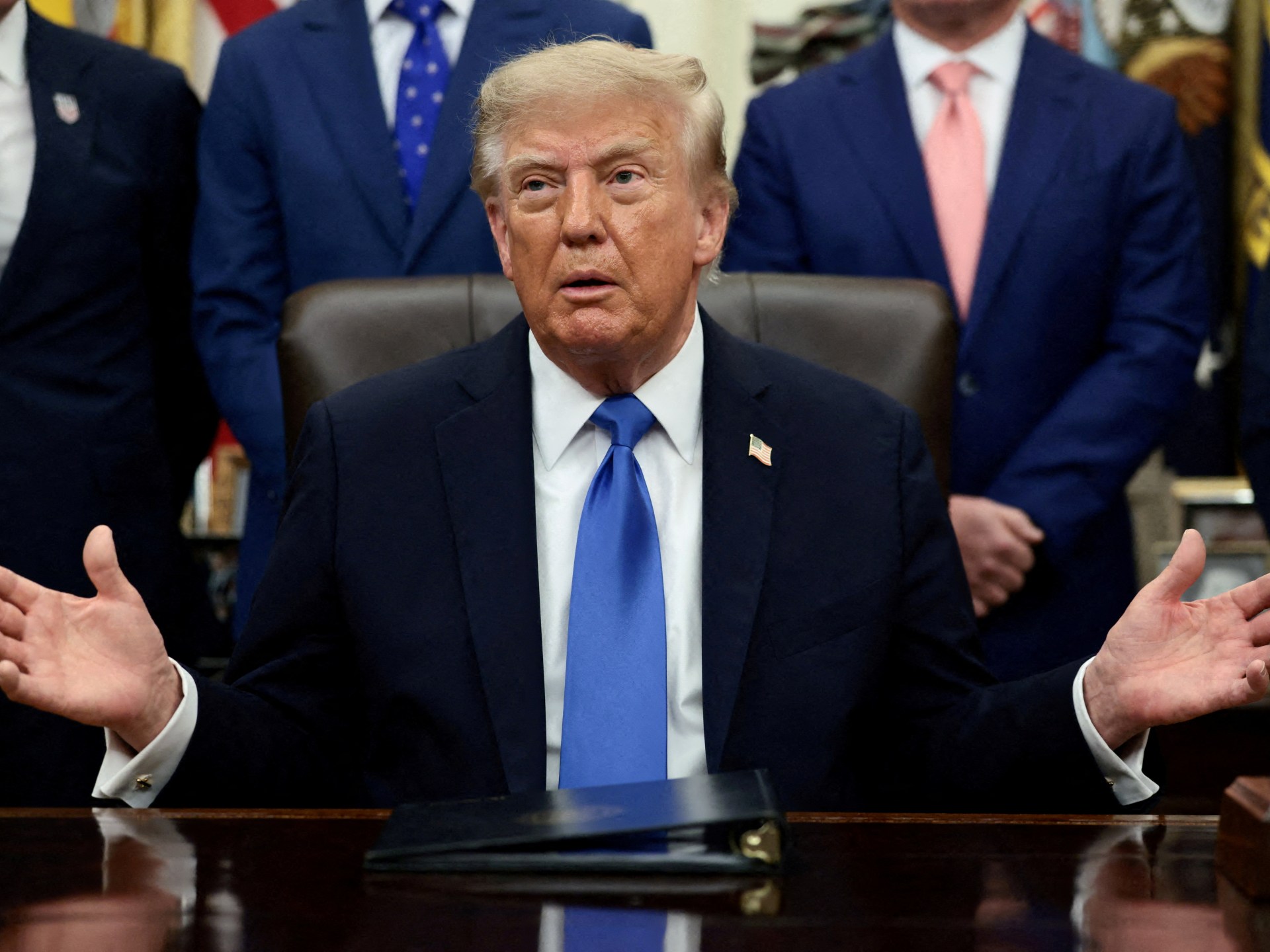

US President Donald Trump’s administration has suffered two setbacks to its immigration agenda as a federal judge halted proposed visa caps and dozens of Democratic-led states launched legal challenges against broader residency restrictions.
A US federal judge on Monday blocked the administration from imposing fixed time limits on how long foreign students and journalists can remain in the country without applying for extensions. At the same time, a broad coalition of states filed suit to stop a separate federal regulation that would allow immigration authorities to deny green cards to immigrants who make lawful use of public benefits.
- list 1 of 4US deports nearly 2,300 Mexicans to Guatemala over Mexico’s objections
- list 2 of 4Trump administration seeks to formalise H-1B fee of more than $100,000
- list 3 of 4US plans to revoke business, tourism visas of 200,000 asylum seekers
- list 4 of 4US immigration agents arrested more than 49,500 people in July
end of list
Court halts visa caps
The Department of Homeland Security (DHS) regulation was scheduled to take effect on Tuesday before US District Judge F. Dennis Saylor IV in Boston granted an injunction requested by a coalition of trade unions and higher education advocacy groups.
Under Trump’s proposed limitation, F visas for international students and J visas that allow cultural exchange programmes in the US would be capped at four years. I visas for journalists, which currently can last for years, would be limited to 240 days.
Saylor, who was appointed by Republican President George W. Bush, called the DHS’s rationale citing national security and the need to prevent fraud in the visa programme “exceptionally weak”.
He noted that the existing system has allowed tens of millions of scholars to contribute to groundbreaking research and substantial economic expansion, warning that the damage to higher education and the wider US economy would be “catastrophic”.
Advertisement
The measures would affect roughly 1.6 million international students holding F visas and about 500,000 exchange visitors on J visas.

States challenge public charge rule
Two lawsuits were filed in a Manhattan federal court on Monday to derail a DHS regulation scheduled to take effect on Friday. The measure seeks to broaden the criteria by which immigration officers can deem applicants inadmissible as a “public charge”, a legal standard historically applied to individuals likely to become primarily dependent on the government for subsistence.
New York, California and Illinois are leading a coalition of 22 states and the District of Columbia seeking to block the policy, joined by a parallel suit from six cities and counties.
Under the Biden administration, immigration officers could consider cash aid when evaluating green card applicants, but were barred from penalising the use of non-cash support such as food assistance and Medicaid. The Trump administration is now seeking to revive first-term policies that treat non-cash assistance as a disqualifying factor, while also extending scrutiny to benefits received by an applicant’s family members.
A DHS spokesperson defended the regulation, describing the plaintiffs as “left-wing leaders” who were “terrified they will lose federal funds because hundreds of thousands of illegals and noncitizens might remove themselves from American welfare programs”.
In a statement, New York City Mayor Zohran Mamdani said the rule “seeks to push immigrant families away from the programs that have kept people fed and healthy for decades”.
The lawsuits argue that the administration overstepped its legal authority by bypassing Congress, which holds the sole power to set the criteria for permanent residency.
By penalising applicants who lawfully use non-cash assistance like food stamps and Medicaid, the plaintiffs contend the administration established an unlawful restriction that contradicts federal statutes.
Related News
Hawaii braces for Hurricane Lowell
Dutch court hands life sentence to Rwandan man for genocide role

At least four civilians killed in Houthi missile strike near Yemen’s Taiz