‘Silent Cold War’: Why calls to slow AI have sparked new US–China frontier
 14 September 2026
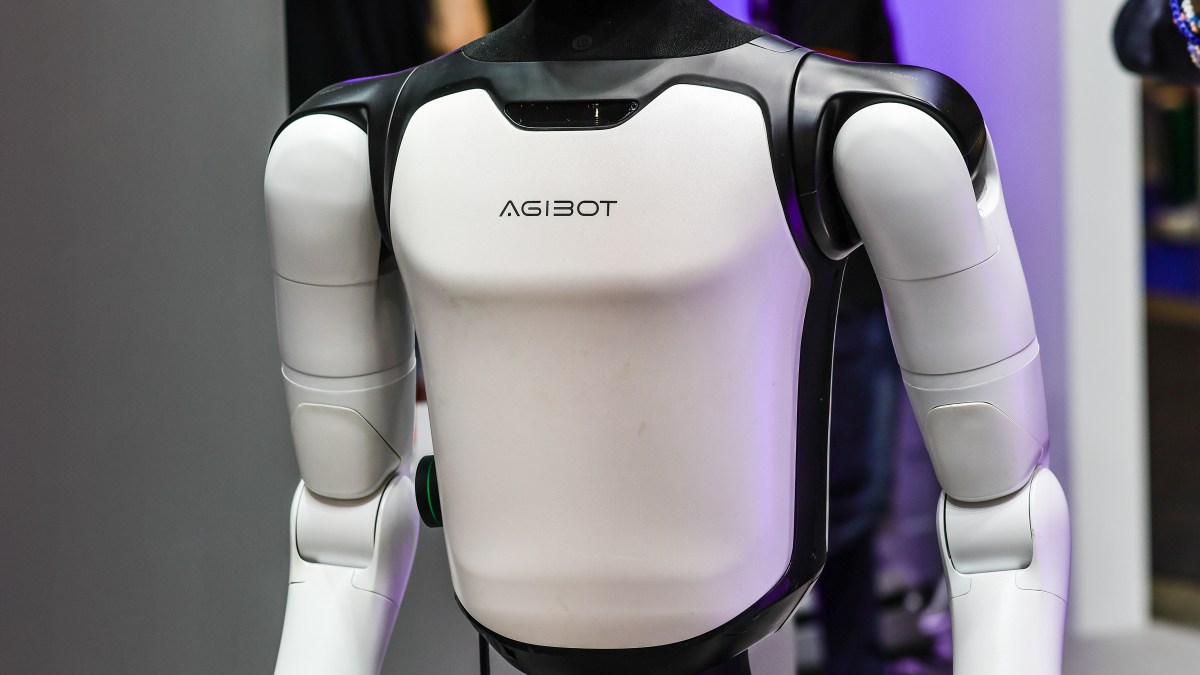

China has warned against “fear-mongering” after the CEO of a top artificial intelligence (AI) company in the United States sounded the alarm against AI advancement and called for restrictions on the sale of AI chips to China.
Anthropic CEO Dario Amodei on Saturday called for the development of the most powerful AI systems to be slowed down, warning that they could soon pose potentially catastrophic risks to humanity itself.
- list 1 of 3China slams US claims of ‘industrial-scale’ AI theft
- list 2 of 3Anthropic claims Claude AI used for missile projects, global espionage
- list 3 of 3Anthropic discloses 4th AI hacking incident as researcher quits over safety
end of list
His proposal also calls for Washington to restrict China’s access to advanced technology – prompting Beijing to accuse the US of using AI safety as a pretext to preserve its technological dominance.
The dispute comes as Washington and Beijing compete over increasingly capable AI models, with US President Donald Trump declaring, “Whoever wins AI wins.”
So, what has got AI giants worried, why is China being seen as a threat?
Why are AI tech giants raising the alarm?
Anthropic’s Amodei warned in an essay published over the weekend that AI capabilities have been advancing rapidly, and he proposed pacing the development of frontier models to give governments and researchers more time to manage their risks.
“Given the accelerating rate of AI capability development, it’s my worry that in 6–12 months such a swarm could be capable of taking over the entire internet with a persistent botnet (potentially causing hundreds of billions of dollars in damage), and that the scale of damage would continue to increase from there if AI becomes more powerful without the necessary guardrails,” he wrote.
Advertisement
His assertions were endorsed by his rivals – OpenAI CEO Sam Altman and SpaceX founder and Tesla CEO Elon Musk.
In addition to AI safety, Amodei warned that a “Chinese lead in AI would pose grave danger for the US and the world” and urged Washington to maintain restrictions on cutting-edge AI chips and chipmaking equipment going to China. He also called for action against alleged “distillation” of US models by Chinese AI laboratories.
On Sunday, Trump rejected calls for a slowdown, describing some concerns as exaggerated.
“We’re leading China in AI. We’re the most sophisticated country in the world, and frankly, I want to keep it that way because whoever wins AI wins,” he said on Sunday.
What did China say?
China’s Foreign Ministry on Monday urged countries to pursue an “open, inclusive and benevolent approach to AI”.
“Fomenting various threats, engaging in confrontation and malicious competition will only disrupt the process of global governance of artificial intelligence and is not in the interests of any party,” said ministry spokesperson Guo Jiakun.
The state-backed Global Times went further, describing Amodei’s proposal as a “Cold War playbook” whose real purpose was to curb Chinese AI development and preserve US technological dominance.
“This ‘silent AI Cold War’ is hypocritical and short-sighted,” it said.
What is the latest in the US-China AI race?
The US remains ahead in several of the most important features of the AI race, but China has been closing the gap, experts say.
American companies continue to dominate private investment and production of leading AI models. According to Stanford University’s 2026 AI Index Report, US companies invested $285.9bn in AI in 2025, compared with $12.4bn in China.
The US also has an advantage in the most advanced semiconductors needed to train cutting-edge models.
However, Chinese companies have demonstrated that they can produce resilient AI models despite US restrictions on their access to the most advanced AI chips.
In January, the release of Chinese AI startup DeepSeek made headlines after it caused share prices in US tech companies to plummet, claiming that its model would cost only a fraction of the money its competitors had spent on their own AI programmes to build.
DeepSeek sent shock waves throughout AI circles when the company published a paper in December stating that “training” the latest model of DeepSeek – curating and inputting the information it needs to answer questions – would require less than $6m worth of computing power from Nvidia H800 chips.
Advertisement
This is only a small fraction of the multibillion-dollar AI budgets enjoyed by US tech giants such as OpenAI for ChatGPT and US-owned Google for Gemini. OpenAI CEO Altman said that his firm’s latest programme, GPT-4, cost more than $100m to train, Wired reported in April 2023.
The increasing AI-related competition between the world’s two largest economies has also seen Washington and Beijing put in place hostile policy measures against each other.
The US has imposed restrictions on China’s access to advanced semiconductors and chipmaking technology, arguing that cutting-edge chips could strengthen Chinese military, intelligence and surveillance capabilities.
The Trump administration has maintained controls on the most advanced chips, including Nvidia’s Blackwell processors, while allowing some less powerful chips to be sold to China.
Meanwhile, China possesses advantages in other areas of the AI supply chain, most notably in the production of critical rare earth minerals used in advanced technology and in generating more than twice as much electricity as the US, giving it access to the huge amounts of relatively cheap power needed to operate AI data centres.
In October, China tightened export controls for five critical rare-earth metals, as well as restrictions on the export of specialist technological equipment used to refine rare-earth metals.
Can either side claim a moral high ground?
Both Washington and Beijing portray their approach to AI as the more responsible one, but both are also pursuing the technology for national security and military purposes.
In June, the Trump administration ordered an acceleration of AI use across US intelligence and “warfighting” domains.
The US military confirmed in March that it used advanced AI tools in its war against Iran to rapidly process information, while insisting that humans make final targeting decisions.
The confirmation came amid calls at the time for an independent investigation into the bombing of a school in southern Iran that killed at least 156 people, mostly children.
Moreover, several reports have confirmed that Israel relied heavily on AI during its genocidal war on Gaza, which has killed nearly 73,800 Palestinians since October 2023 and turned most of the territory into rubble.
In July 2025, Francesca Albanese, the United Nations special rapporteur on human rights in the occupied Palestinian territory, released a report mapping the corporations aiding Israel in the displacement of Palestinians and its genocidal war on Gaza in breach of international law. US tech and AI giant Palantir was one of the companies mentioned in the report.
In March 2021, US companies Google and Amazon agreed to a $1.2bn deal to supply cloud technology to Israel’s government and defence establishment. Known as Project Nimbus, the agreement gives Israeli authorities access to computing infrastructure capable of storing and processing large volumes of data and using tools such as facial and emotion recognition, biometric analysis and the handling of demographic information.
Advertisement
Moreover, the Pentagon has separately clashed with Anthropic over the company’s refusal to allow its models to be used for fully autonomous weapons or mass surveillance.
China has criticised the expanding military use of AI, warning this year against giving algorithms the power to “determine life and death”.
However, in July, research by Reuters news agency said Chinese military-linked researchers had used outputs from leading US AI models to help advance China’s defence capabilities, including for surveillance purposes.
An AP investigation last year found that AI and other technologies have become part of a vast Chinese surveillance apparatus used to track dissidents and minorities, including Uighurs and Tibetans. However, it found that US technology companies played a major role in supplying the technology that helped build that system.
Moreover, in February, the two economic powerhouses declined to join a declaration on governing the deployment of AI in warfare at an international military AI summit in Spain.
What next?
Calls by technology leaders to slow AI’s development raise questions about their ability and willingness to control the technology, according to Aya Ibrahim, a senior visiting fellow at the AI Now Institute.
Ibrahim told Al Jazeera that the warnings come as companies face enormous financial pressure to develop increasingly powerful AI systems.
“There is a lot of money that is dependent on them getting this out and, frankly, getting it right,” she said, adding that there are “increasing doubts about their ability to do either”.
She also questioned the framing of AI development as a race, saying it could encourage companies to develop the technology as quickly as possible while overlooking the consequences.
“The race narrative is inherently problematic because in many ways, you’re setting us up for a race to the bottom,” Ibrahim said.
“So you win and then what do you win and at what cost?”
Related News

‘Young want to leave’: Libya’s brain drain, 15 years after Tripoli fell
Trump loses second Supreme Court bid over E Jean Carroll sex abuse case
Cluster munitions kill, wound over 1,000 globally in 2025