
A strategically important stretch of Arctic Ocean, known as the Bear Gap, has become the latest focus of concerns about Russia’s military ambitions in the far north.
In an interview with UK’s Times newspaper on Monday, Norwegian Defence Minister Tore Sandvik warned that Moscow must not be allowed to gain control of the corridor, arguing that it would give Russia a dangerous capacity to deploy submarines and weapons.
- list 1 of 3Trump administration signals it is mulling NATO withdrawal after Iran war
- list 2 of 3‘Not for sale’: Greenland premier tells US envoy
- list 3 of 3Greenlanders protest opening of new US consulate in Nuuk
end of list
“We see what kind of weapon systems Russia is developing, and we know that if they can control the Bear Gap, they can also use hypersonic missiles against NATO … against London, against Norway, against Denmark,” he said.
“They are developing weapon systems, which tells us that we cannot let them control the Bear Gap.”
The warning comes as the Arctic rapidly becomes one of the world’s most contested regions. As melting ice opens up new shipping lanes, its vast oil and other natural resources, and the intensifying rivalry between Russia, NATO, China and the US are turning it into an increasingly important military and commercial theatre.
Six countries – Russia, Canada, the United States, Denmark, Norway and Iceland – surround the Arctic.
Russia has spent years rebuilding Arctic bases and strengthening its Northern Fleet, while NATO members have expanded their own military presence across the region.
Here is what we know:
What is the Bear Gap and why is it strategically important?
The Bear Gap is a strategic naval chokepoint in the Arctic Ocean, spanning roughly 400 miles (650 km) between the North Cape of mainland Norway and Bear Island, the southernmost tip of Norway’s Svalbard archipelago.
Advertisement
The gap lies between the Barents Sea and the Norwegian Sea, making it one of the key maritime routes through which Russian naval vessels and submarines can move from their Arctic bases into the North Atlantic.
Its location places it directly west of Russia’s Kola Peninsula, home to the bulk of Russia’s sea-based nuclear deterrent and the headquarters of its Northern Fleet.
Kristian Atland, a senior research fellow at the Norwegian Defence Research Establishment (FFI), explained that the Bear Gap “serves as a key gateway for naval movements and maritime surveillance in the High North”.
“Russia views this maritime area as integral to its so‑called ‘Bastion Defence’ strategy,” Atland told Al Jazeera. “In order to ensure the safe operation of the Northern Fleet’s ballistic missile submarines in the inner part of the bastion, that is, in the Barents Sea, Russia wants to be able to control the Bear Island gap.”
Is Russia likely to gain control of the Bear Gap?
At present, Russia does not exert control over the Gap.
The corridor lies within an area dominated by NATO members Norway, Canada and other allied states.
However, Russia maintains significant military capabilities close by. The Northern Fleet is one of Moscow’s most powerful military formations, and Russia has continued to modernise its Arctic bases, ports and airfields while increasing military activity around the region.
In light of this, Atland warned, control over this choke point could enable Russia to “limit NATO’s ability to deploy anti‑submarine warfare assets into the Barents Sea to detect, locate, and track Russian strategic submarines”.
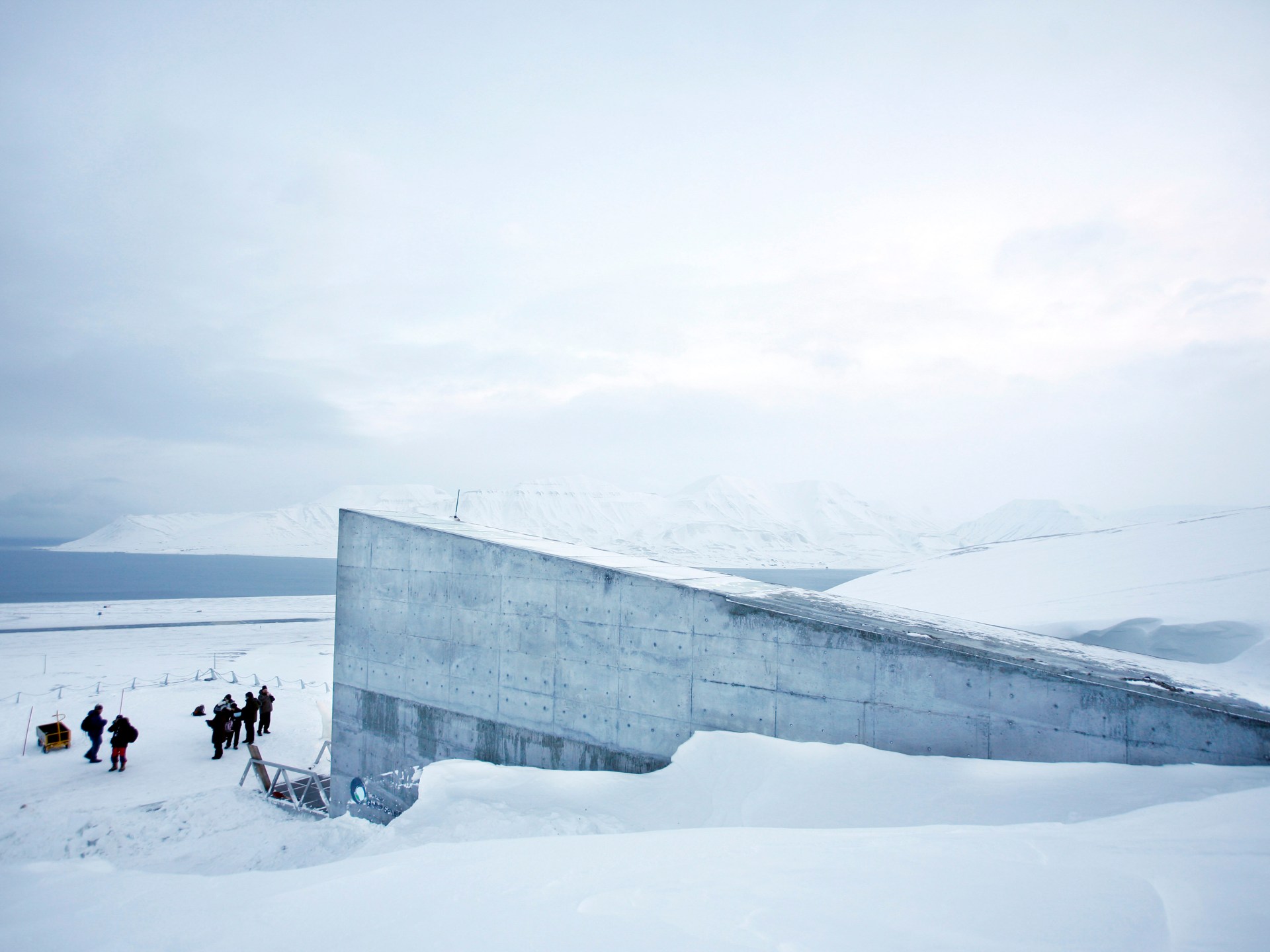
Russia also maintains a presence on Svalbard under an international treaty signed in 1920, allowing it exploit the region’s resources. However, Norway retains sovereignty over the islands.
Are any countries doing anything to counter Russia around the Bear Gap?
Not specifically. However, countries surrounding the Arctic or close to it have started to beef up their military presence in the region.
In December, the Norwegian government announced the acquisition of two German-built submarines, citing “activity of Russian forces in the North Atlantic” as the reason for the purchase.
In February, the UK said it would double the number of troops it has stationed in Norway to 2,000 over the next three years and take on what it called a “vital” role in a NATO operation in the Arctic, while also expressing growing security concerns about Russia.
“Arctic and High North security will be strengthened against rising Russian threats as Britain steps up its presence in the region,” the UK Ministry of Defence said in a statement.
Advertisement
US President Donald Trump has made no secret of his desire to acquire Greenland, which, he has said, he sees as vital for US security. Greenland is also thought to have abundant supplies of crucial rare-earth minerals necessary for the development of technology and defence systems, which have not been mined.
In January this year, Trump even went as far as to threaten additional trade tariffs on European countries that opposed him. Both Greenland and Denmark, which counts the island as an autonomous territory within its kingdom, have consistently stated that it is not for sale. In the end, Trump backed down after announcing that he had reached a “framework of a future deal” on Greenland with NATO Secretary-General Mark Rutte.
Last month, the US said the Arctic was “quickly becoming a sphere of increasing geopolitical strategic importance”.
“With Russia’s increased military activity and China’s growing strategic interest, we seek to bolster stability in the Arctic region,” a joint statement on Arctic Security by Canada, Denmark, including Greenland and the Faroe Islands, Finland, Iceland, Norway, Sweden and the US said.
Could Russia pose a risk to Northern European countries from the Bear Gap?
According to Atland, most Northern European countries would indeed be “within striking range of Russian surface vessels and attack submarines deployed to or beyond this area”, particularly given the “long-range capabilities of their increasingly sophisticated missile systems”.
Gunhild Hoogensen Gjorv, professor at The Arctic University of Norway, said the Bear Gap is the “way that they [Russia] get out into the North Atlantic”.
If Russia controlled the area, “they could then fire missiles … from sea-going vessels,” and “technically, they could probably hit the UK … Denmark, the Netherlands … never mind the Nordic countries”.
The important question, Arctic University’s Gjorv said, was whether Russia would actually decide to attack surrounding nations.
“If they decide to do that, this is all-out war. This is not just an escalation in under-threshold threats; this is full-scale war, and it is very difficult to see that Russia is prepared to think in those terms,” she added.
What long-range weapons does Russia have?
Russia possesses one of the world’s largest arsenals of long-range missiles.
Among the newest systems is the Oreshnik intercontinental ballistic missile, first publicly revealed in November 2024. Russia says it is nuclear-capable and can travel at hypersonic speeds. The missile has a range of about 5,000km (3,100 miles).
According to US officials, Oreshnik is derived from the older RS-26 Rubezh missile system. Russia says the missile can evade existing air-defence systems, a claim that analysts have raised doubts over.
Russia also possesses a range of cruise missiles, submarine-launched ballistic missiles and other long-range strike systems.
Why has the Arctic become so important?
The Arctic is becoming an increasingly important arena for “great power competition” FFI’s Atland said.
Advertisement
“As sea ice continues to recede, new opportunities are emerging for maritime transportation, resource extraction, scientific research, military operations, and geopolitical manoeuvering,” he explained.
“The renewed interest in Arctic affairs is driven by a combination of economic opportunities and strategic considerations.”
Gjorv stressed the Arctic has long been a security arena, especially during the Cold War. Following the collapse of the Soviet Union in 1994, there was “an articulated interest in having far more cooperation”, she said, including the creation of the Arctic Council in 1996.

Nevertheless, Gjorv said, Russia has kept “one foot on either side” of the line between cooperation and rivalry, particularly under the rule of President Vladimir Putin, who has combined limited cooperation with growing rhetoric about “Russian sovereignty” and aspirations for “a greater territorial dominance”. “Essentially, it’s almost like building up a type of Russian empire.”
Besides the security aspect, commercially it is vital for activities relating to climate change issues, she said.
These include key shared fisheries such as cod found in the Arctic region, “particularly those shared by Norway and Russia”, and the ongoing extraction of oil and gas, which, despite environmental concerns, “is still important to Norway and to Russia”, she added.
Which other countries are scrambling for influence in the Arctic?
Besides Donald Trump’s ambitions for Greenland, Canada is also increasing its military spending and surveillance capabilities in the Arctic.
In December 2024, Ottawa released a 37-page security strategy outlining how it intends to bolster both its military posture and diplomatic footprint in the Arctic in response to mounting risks linked to Russian and Chinese activity.
The document described Russian weapons tests and the deployment of missile systems in the region as “deeply troubling”.
It is also believed that China has been routinely sending ships into northern waters fitted with dual-use military and research technology to gather data.
Related News

US measure to deepen Israel military cooperation faces bipartisan pushback

Trump delays ‘scheduled attack’ on Iran, crediting ‘serious negotiations’
Is Russia ‘simulating diplomacy’ because of war losses in Ukraine?