
A number of people around the world have died after taking part in an ancient healing practice known as kambo, which involves ingesting frog poison.
The spiritual ritual of kambo, which is promoted among Western “wellness communities” as a one‑stop cure for a spectrum of physical and mental ailments, from anxiety to arthritis, is not backed by any scientific evidence.
In April this year, 40-year-old United Kingdom wellness coach and cancer survivor Kristian Trend was the latest to die after reportedly taking part in a “cleansing ceremony” which involved kambo, local media reported.
Trend’s mother told the UK national newspaper, The Telegraph, that she wanted the practice to be banned. While it is legal to buy frog poison for kambo in the UK, it is not considered a licensed medicine.
The practice has also been banned by other countries.
What is kambo?
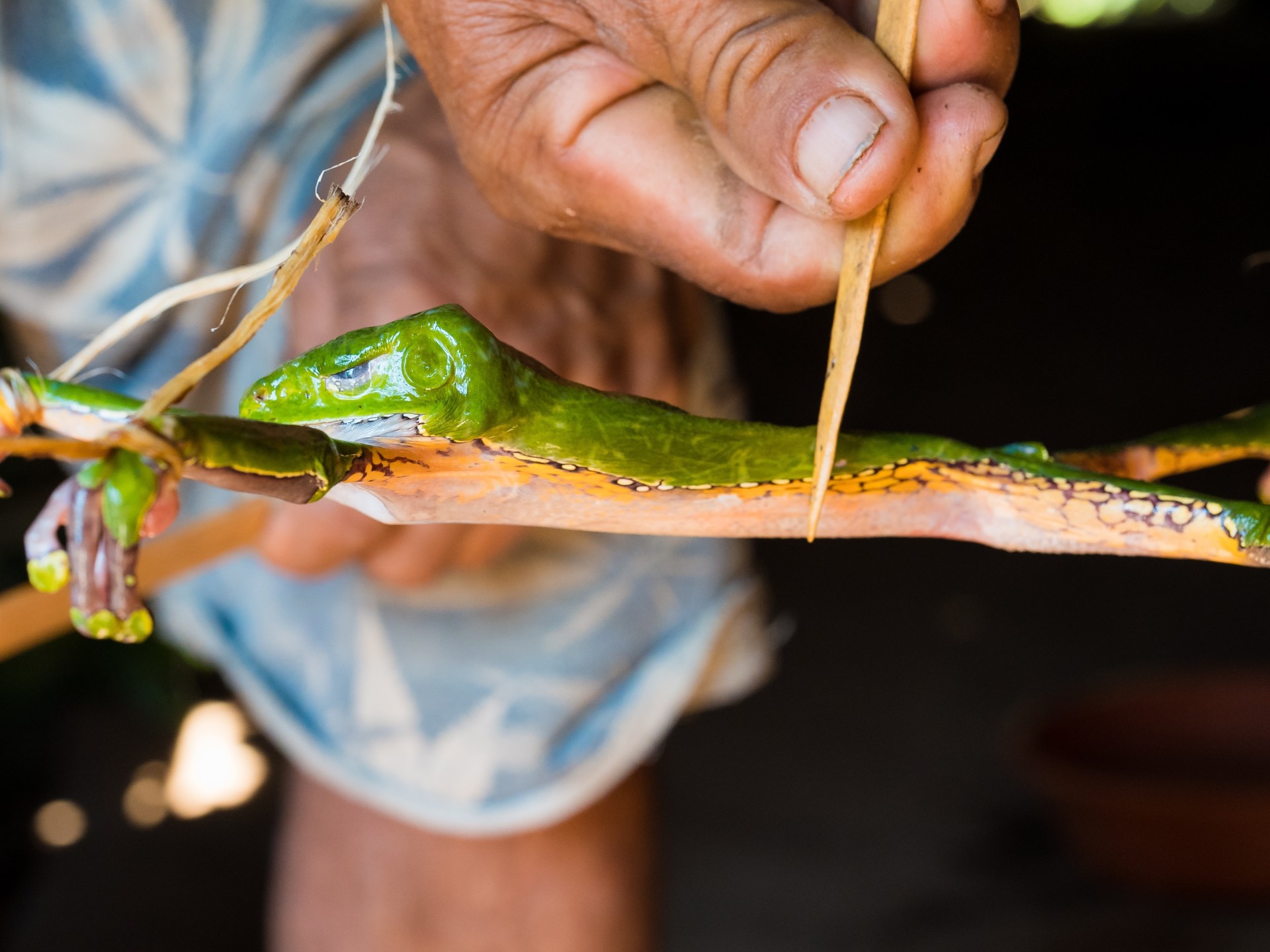
Kambo is an ancient shamanic healing ritual with its roots in traditional South American medicine. It was practised by Amazonian Indigenous tribes centuries ago. The term “kambo” refers to the secretions of the giant monkey frog (Phyllomedusa bicolor), which are applied to small burns on the skin during the ritual.
Experts say it is hard to pin down the exact origins of kambo since knowledge of the ritual was generally passed down orally, rather than being written down.
The earliest known written documentation of the practice was made in 1925, when French missionary Constant Tastevin wrote about kambo being practised in the border regions between Peru and Brazil.
Advertisement
The monkey frog actually secretes kambo to kill or harm predators that try to attack it. The secretions are also called sapo, which translates to “toad” in Spanish.
Many amphibians release such toxins. In February this year, European countries accused Russia of using a toxin made from the secretions of South American dart frogs to kill Kremlin critic Alexey Navalny.
How does kambo work?
Kambo is an ancient spiritual and healing practice traditionally carried out by a specialised practitioner called a shaman.
The frog’s secretions are collected and dried before the animal is released back into the wild. A heated rod is then used to make a series of small, superficial burns on the skin, and the dried secretion is applied to these points by the shaman, who recites hymns while waiting for the kambo to take effect.
A bucket is usually placed in front of the person receiving the treatment in anticipation of vomiting – a common reaction to the ritual. Then, the kambo is wiped off the burns.

What is the kambo poison?
Kambo is considered poisonous because it contains a complex mix of bioactive peptides – short chains of amino acids – including some that violently stimulate the digestive tract, causing intense nausea and vomiting, and others that act directly on the cardiovascular system, leading to rapid drops in blood pressure and fainting.
Some peptides have opioid‑like effects, altering breathing patterns and affecting the central nervous system. In extreme cases, this combination can trigger sudden cardiac problems or severe organ toxicity, which can be fatal.
Before the ritual, the person receiving kambo is often advised to drink large amounts of water. Combined with heavy vomiting and fluid shifts, this can lead to hyponatremia – dangerously low sodium levels in the blood, sometimes referred to as water intoxication. Severe hyponatremia can cause brain swelling, seizures, coma and, in the worst cases, brain death.
Kambo also causes the gastrointestinal tract to contract violently, which can cause the oesophagus to rupture, also resulting in death.
What is the kambo ritual for?
Kambo is known as a “cleansing” ritual, believed to detox the body and, in some traditions, to enhance fertility, virility and even bring good luck.
It is also used to treat diseases and disorders including addiction, Alzheimer’s disease, anxiety, cancer, chronic pain, depression, diabetes, hepatitis, HIV and AIDS, infections, rheumatism and vascular conditions, according to the US health information website, Healthline.
Advertisement
But doctors say there is no scientific evidence that kambo is effective at treating any of these conditions, and modern medical case reports have instead linked kambo to severe illness and death.
Healthline lists the possible side effects of kambo as nausea, vomiting, diarrhoea, abdominal pain, dizziness, heart palpitations, a sensation of a lump in the throat, difficulty swallowing, swelling of the lips, eyelids or face and even loss of bladder control.

Who has been using it?
Over the past two decades, kambo has become popular in Western and Latin American countries. It has been adopted in “wellness” circles and alternative medicine communities in Brazil, Australia, the UK and the United States.
Indigenous experts have warned against the use of kambo by non-Indigenous practitioners, however. UK media recently reported that Yamanawa leader Joaquim Luz has criticised the online sale of kambo and warned that using it without the preparation or permission of Indigenous communities puts people at risk. The Yamanawa people originate in the Brazilian Amazon state of Acre, with communities extending into Peru and Bolivia.
Who has died from kambo?
There have been at least six known deaths associated with the use of kambo worldwide in recent years.
In 2008, a 52-year-old man died in Brazil after receiving the kambo treatment.
In 2018, a man in Italy died from an abnormal heart rate while experiencing kambo. The man had obesity and ventricular hypertrophy, a condition which causes the heart’s main pumping chambers to thicken.
In 2019, Australian woman Natasha Lechner, 39, died while taking part in a kambo ceremony to cure her chronic back pain.
In October 2021, Australian man Jarrad Antonovich died after kambo was performed on him. It was suspected that he died from a perforated oesophagus after he had vomited excessively.
In 2024, Mexican actress Marcela Alcazar Rodríguez died aged 33 when she ingested kambo during a cleansing ceremony.
Then, in March this year, 40-year-old UK wellness coach Kristian Trend died after taking part in the ceremony.
A recent review published in the medical journal Cureus concluded that the practice of kambo should be more tightly regulated, after it identified several cases of severe reactions and death linked to the ritual.
In 2004, Brazil banned the sale and marketing of kambo. It is also illegal to import the frog poison used in the ritual in Chile.
More recently, in 2021, the Australian Therapeutic Goods Administration (TGA), the country’s national medicine regulator, banned the use of kambo and classified it as a poison.
Kambo is also illegal in the US, and in January 2025, the US embassy in Peru released a circular advising US citizens visiting Peru not to use it.
Related News
Rubio says Iran deal could take days after US forces launch new attacks

Trump renews petition for White House ballroom, pointing to nearby shooting
Migrants ‘feared for their lives’ as Libyan gunmen fired on rescue ship