Gulf countries back Kuwait’s sovereignty after Iraq draws new boundaries
 23 February 2026
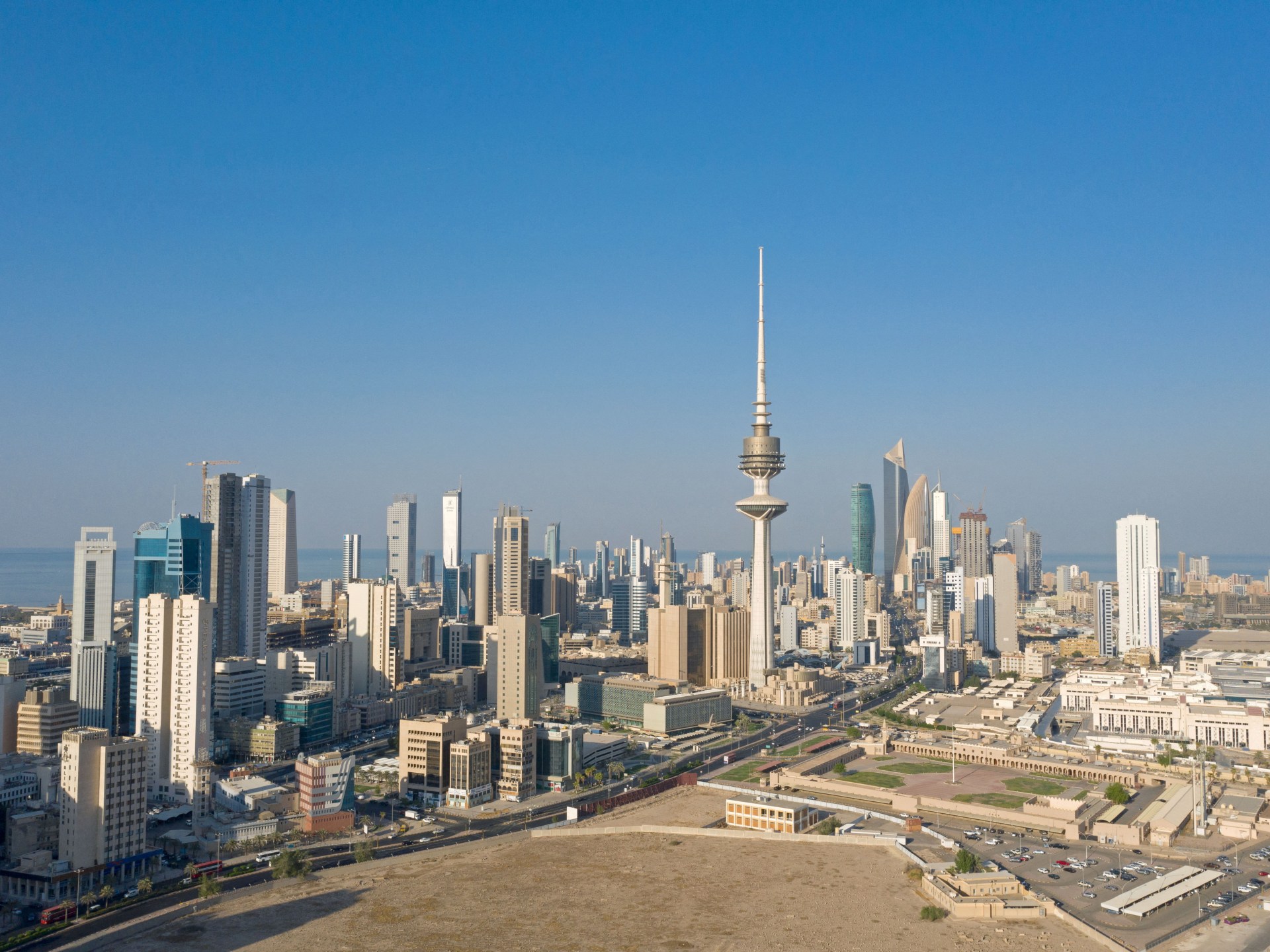

Gulf countries have pledged support for Kuwait’s sovereignty after Iraq submitted new maritime coordinates and an updated map to the United Nations.
Qatar, Bahrain, Oman, Saudi Arabia and the United Arab Emirates backed Kuwait after the emirate summoned Iraq’s charge d’affaires on Saturday to protest Baghdad’s move, calling it a violation of its sovereignty.
- list 1 of 3What are the GCC’s air defence capabilities?
- list 2 of 3The GCC and collective security
- list 3 of 3Iran-US tensions: What would blocking Strait of Hormuz mean for oil, LNG?
end of list
Iraq said it made the updates based on the lowest low-water line used to measure its territorial sea.
Kuwait’s Ministry of Foreign Affairs said the filing asserted claims over maritime zones and fixed maritime features, including Fasht al-Qaid and Fasht al-Aij. The ministry emphasised that these areas are not disputed and remain under Kuwait’s complete sovereign authority.
On Monday, Oman called on Iraq “to take into consideration the course of its historical and fraternal relations with the State of Kuwait and the principles of good neighbourliness, and the rules of international law”.
Qatar’s Ministry of Foreign Affairs said on Sunday that it was in “full solidarity” with Kuwait and Iraq’s submission infringes upon its sovereignty, urging adherence to the 1982 UN Convention on the Law of the Sea.
Saudi Arabia, meanwhile, said it is following developments with great concern, considering that Iraq’s coordinates include parts of the Saudi-Kuwaiti Divided Zone, whose natural resources are shared by the kingdom and Kuwait, according to existing agreements.
Riyadh affirmed that Baghdad’s coordinates violate Kuwait’s sovereignty over its maritime zones and watersheds, reiterating its “categorical rejection of any claims by any other party to rights in the partitioned zone with its agreed borders between Saudi Arabia and Kuwait”.
Advertisement
It stressed the necessity for Iraq to abide by UN Security Council resolutions and respect Kuwait’s sovereignty, calling for dialogue and adherence to international law.
Bahrain and the UAE also issued statements voicing support for Kuwait’s sovereignty and respect for international conventions.
The 216km (134-mile) border between Iraq and Kuwait was demarcated by the UN in 1993 after Iraq’s invasion of Kuwait, but it did not cover the length of their maritime boundaries. This was left for the two oil producers to resolve.
A maritime border agreement between the two nations was reached in 2012 and ratified by each of their legislative bodies in 2013.
In 2023, Iraq’s Federal Supreme Court ruled that the parliament’s ratification of the agreement concerning navigation in the shared Khawr Abd Allah waterway was invalid, stating that international treaties must be ratified by a law passed by two-thirds of the members of parliament.
Kuwait, meanwhile, has insisted on the necessity of completing the demarcation of the maritime border with Iraq in accordance with international laws and conventions, a position supported by the Gulf Cooperation Council.
Related News
World leaders gather in Munich for 2nd day of security conference

‘Won’t be silent’: Thousands protest Israeli president’s Australia visit

North Korea opens new housing area for families of soldiers killed overseas