‘We don’t care about politics’: Violence-hit Uvira locals just want peace
 19 December 2025
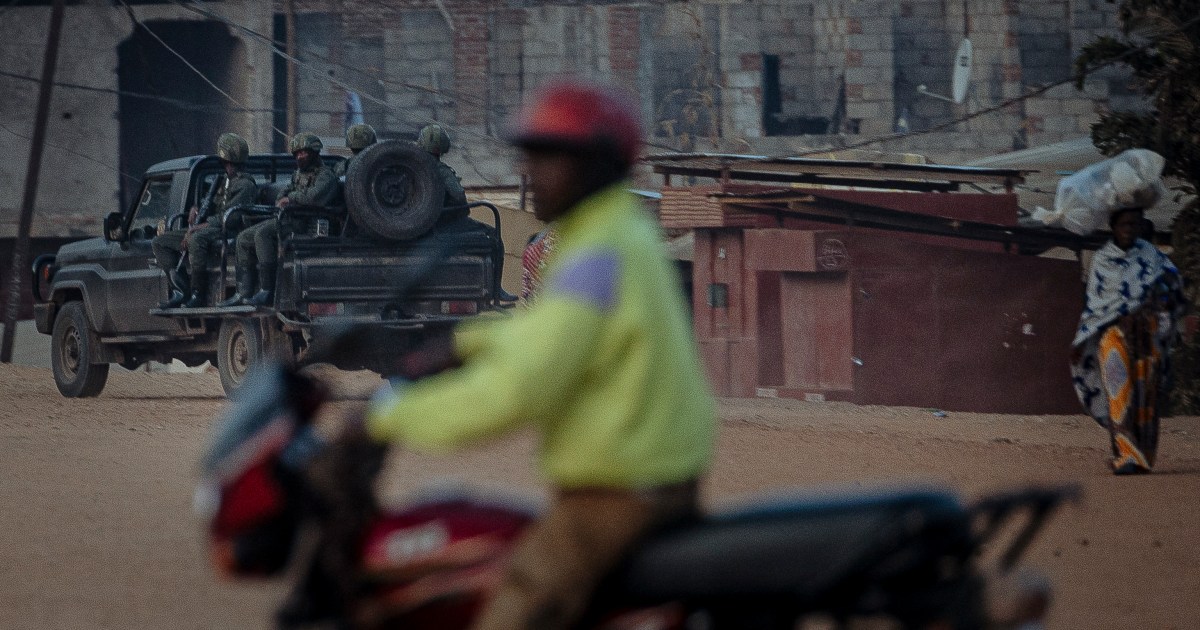

Uvira, Democratic Republic of the Congo – On the roads of the Democratic Republic of the Congo’s South Kivu province, rebels are pulling back from the key city they seized last week. But not all residents of the area they occupied appear glad to see them go.
The latest surge in violence in the DRC’s east began more than a week ago. Last Tuesday, fighters with the M23 rebel group that has waged a years-long rebellion against the government, stormed into the strategic city of Uvira – located along the border with Rwanda and Burundi, and the last real eastern stronghold of the Congolese army.
- list 1 of 3Could violence in the DRC become a regional conflict?
- list 2 of 3Residents emerge in DR Congo’s tense Uvira after M23 rebel takeover
- list 3 of 3M23 fighters withdraw from key DRC town of Uvira
end of list
The fighters, which the United Nations and United States say are backed by Rwanda, have engaged in fierce battles with Congolese soldiers and their allied “Wazalendo” militias, which had been using Uvira as a base since M23 seized other regional capitals from the government’s control earlier this year.
The M23 offensive came just days after a regional peace agreement was signed in the US between Congolese President Felix Tshisekedi and Rwanda’s Paul Kagame, and less than a month after the signing in Qatar of a separate accord to end years of fighting between M23 and the DRC government.
By last Wednesday, M23 had pushed out the army and taken control of Uvira.
One day later, we arrived in the city as the first team of international reporters to make it there since the takeover.
On the road there, we could see and smell the evidence of war: corpses strewn along the way, including soldiers and some civilians; burned-out carcasses of military vehicles; and groups of displaced people walking.
Advertisement
While some were fleeing, many we spoke to were returning from Uvira back to the towns and cities they had fled when they came under attack in the past few weeks, as M23 made its way through territories towards Uvira.
As we made our way to the city, we witnessed the devastation caused by the recent fighting. All around us were the signs of violence: trucks destroyed, some with burned bodies of soldiers still in them; emptied houses; and, in the streets, unexploded bombs.
When we finally made it into Uvira, the city was quiet, the roads empty. No cars moved along the streets, as residents milled around in front of their houses, trying to see what was happening.
Moving along different avenues, members of the Red Cross were out collecting the bodies. They said it was difficult to tell how those people had died, but residents told Al Jazeera that many were killed in the crossfire and frenzy when the army and militias were retreating as M23 stormed in.
The government said more than 400 people were killed in the violence, a number we have not been able to independently verify.

Fear versus relief
In the days following M23’s takeover, a sense of fear was palpable in Uvira. Some residents expressed worries about what the rebels’ presence meant for the city.
When the group took control of Goma, the capital of neighbouring North Kivu province, in January, and then seized South Kivu’s capital, Bukavu, in February, businesses suffered. Government workers, civil servants and others formally employed have been unable to work.
In Goma, for example, where I have been based as a reporter for four years, no banks have operated since M23 took over.
But amid the fears, there are groups of residents who just seem relieved. Many told us they felt lucky that the city had avoided a violent confrontation between M23 and the Congolese army and its militias, which might have besieged and bombarded Uvira for weeks.
By Saturday, as M23’s control of the city settled in, residents emerged from their homes. By Monday, those people who could, resumed work, shops were opened and daily life continued.
Although the residents we spoke to are aware that political discussions are taking place in Kinshasa, many are more concerned about the day-to-day challenge of getting by without the threat of violence. Some said they feel their quiet lives have been upturned less by the rebels than by the Congolese army and its militias, which began massing in the area this year to use as a base from which to tackle M23.

‘We suffered with the armed groups’
M23 was first formed more than a decade ago after a mutiny within the Congolese national army. The group, composed mainly of Tutsis, says it is fighting for the rights of people from its ethnic community who have been marginalised by the state.
Advertisement
In 2012, M23 captured Goma, before the rebels were forced back a year later by a coalition of Congolese forces, the United Nations and foreign troops.
But the group re-emerged in late 2021, fortified by, the UN says, some 4,000 Rwandan soldiers, a claim Kigali denies. This newer, stronger M23 has since made significant gains, capturing Goma again this year, followed by Bukavu and other key areas.
As M23 has advanced, the Congolese army has allied itself with other armed groups to help it fight the rebels.
But critics say the government does not have effective control over these disparate militias, with many accused of abuses in the areas they oversee.
After the M23 took Goma and Bukavu, Uvira – an important port city on the northern tip of Lake Tanganyika, directly across from Burundi’s largest city, Bujumbura – became a symbol of resistance for the government. It was a city where military heads, militia leaders and politicians from Kinshasa also gathered.
But for many residents, this has meant seven to eight months of limbo at the mercy of those soldiers and militia groups. Many people in Uvira told us they had been left traumatised by the militias, some of whom they accuse of beating and stealing from locals.
While they do not necessarily support M23 rebels either, they are grateful that when the rebels took control of the city, at least the gunshots stopped.
“We suffered here a lot with the armed groups operating under the government,” Eliza Mapendo told Al Jazeera from a market in Uvira, one among several residents blaming the army and militias for overrunning the area and sometimes harassing the community.
“For now, we feel good enough, secure, this is how we are working freely at this market. They [the armed militias] could beat without any reason and take your business away. But today it is OK here,” Mapendo said.
‘We have no problem with anyone’
Soon after the M23 seized control of Uvira, both the UN and the US called on the rebels to withdraw.
Eventually, this Wednesday, the group began pulling out in what it called a “unilateral trust-building measure” to give the peace process a chance to succeed.
Lines of thousands of fighters, with big cars, weapons and heavy machinery, moved through the city and out of it on Thursday and Friday.
Some Uvira residents were happy, as they felt the move would mean a return to administrative normality.
But others told Al Jazeera they were concerned. “When the rebels leave, will the militia groups return and crack down on us?” some wonder.
In South Kivu on Friday, the situation remained fragile, as the Congolese military resumed firing on some positions held by the M23 not far from Uvira.
Meanwhile in the city, most people don’t really mind who ends up in charge – they just want an end to the violence.
“We don’t know anything about the political process they are talking about,” one resident, Feza Mariam, told Al Jazeera. “The only thing we need is peace. Anyone able to provide us with peace is welcome here. For the rest, we as citizens, we don’t care about it.”
Advertisement
Bishi Bishala, another city resident, feels similarly.
“The rebels arrived here last week, and now they have been asked to leave as part of the peace process,” he said. “As the people of Uvira, we have no problem with anyone. What we need is peace. Whoever comes with peace is welcome here.”
Related News
Displaced Gaza families struggle as winter storm hits
Bodies of 17 people found in boat off of Greece’s Crete
Gaza, Ukraine wars in focus as global policy leaders gather for Doha Forum