Teyana Taylor Makes Golden Globe History As Second Caribbean-Rooted Black Winner
 14 January 2026

By NAN ET EDITOR
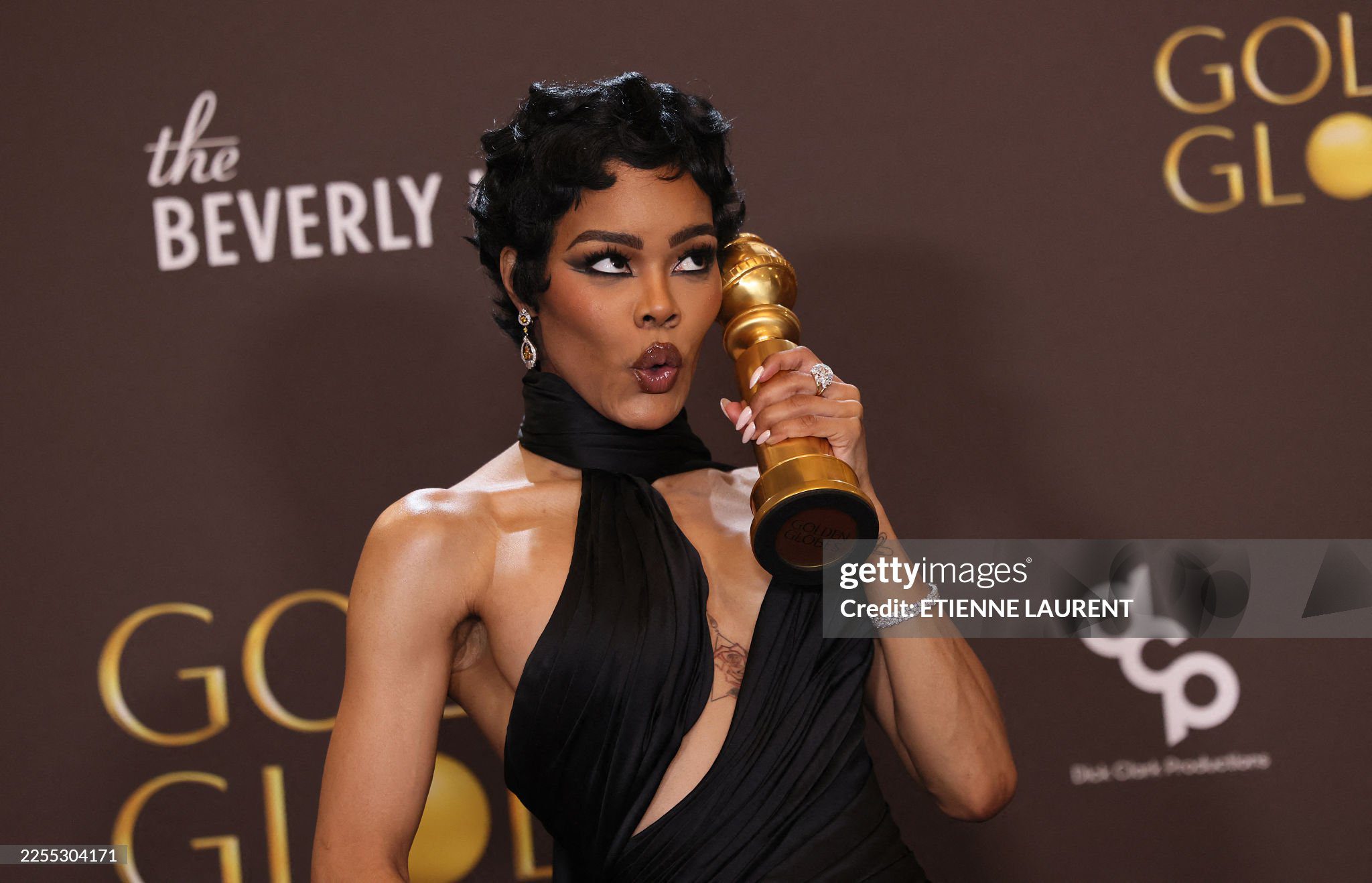
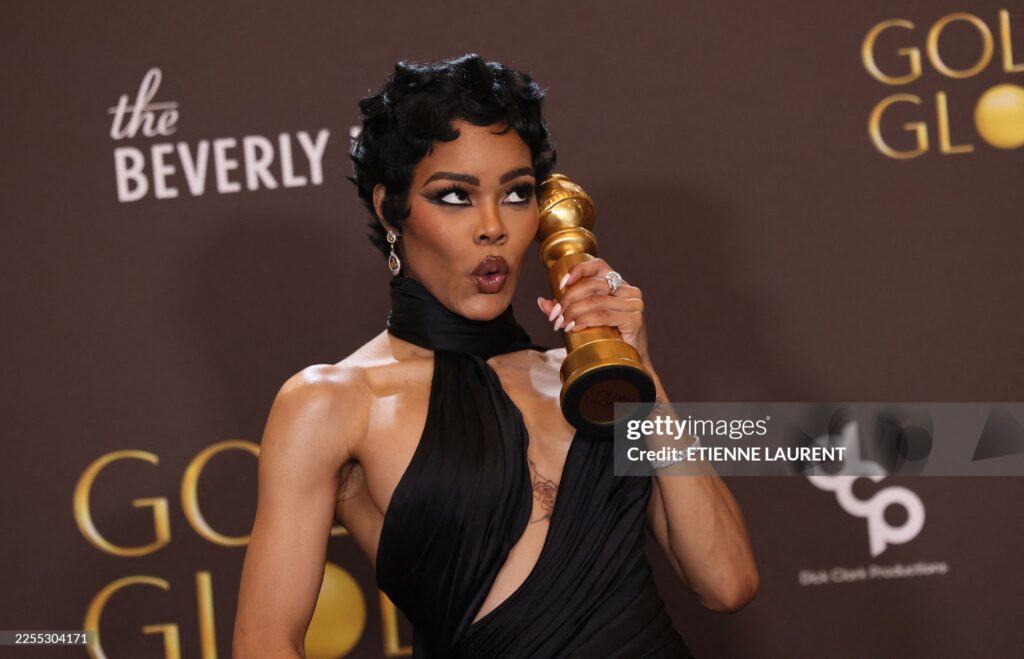
News Americas, LOS ANGELES, CA, Weds. Jan. 14, 2026: When Teyana Taylor accepted the Golden Globe for Best Supporting Actress on Jan. 11, 2026, she joined a very short and historic list. She became only the second Black actor of Caribbean heritage to win a Golden Globe, following the late Bahamian-roots film legend, Sidney Poitier. She also joined an elite group – just 1 of 17 Black actors overall to win a Golden Globe.
More than six decades after Poitier broke barriers in Hollywood, Taylor’s win marks a new chapter in Caribbean diaspora representation, connecting generations of Black excellence across film, culture, and geography. Yet, it’s a milestone that largely flew under the radar.
Born in Harlem to a Trinidadian father and an African American mother, Taylor has long embodied a layered cultural identity. While she was raised primarily by her mother in New York City, she has consistently acknowledged both sides of her heritage – an American upbringing shaped by Caribbean lineage, resilience, and influence.
A Caribbean Thread In A Harlem Story
Taylor’s father, Tito Smith, is Trinidadian, connecting her directly to the Caribbean and its diaspora that has shaped New York City for generations. Though she was raised by her mother, Nikki Taylor, in Harlem, that Caribbean lineage has always been part of her personal narrative, even if it has not been foregrounded in mainstream coverage.
In an industry where Caribbean identity is often flattened or overlooked, Taylor’s win stands out as a reminder that Caribbean influence extends far beyond music genres like reggae, soca, or dancehall – it is woven deeply into Black American cultural achievement across film, fashion, and performance.
The Woman Behind the Win
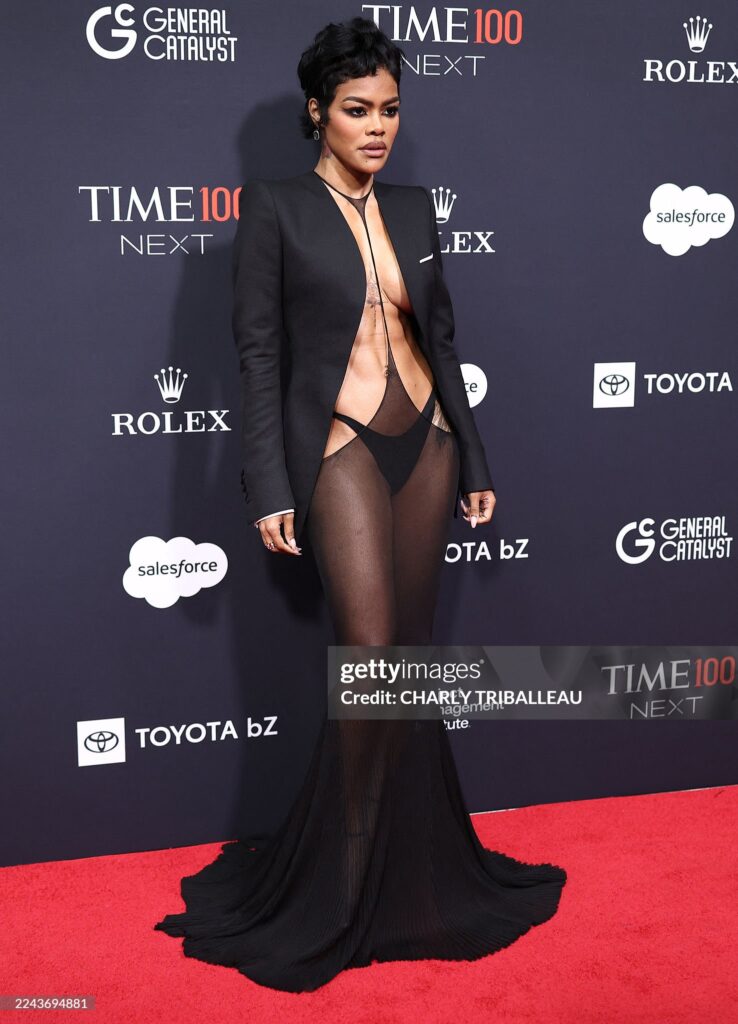
Much of Taylor’s grounding, she says, comes from her mother, who has served not only as her parent but also as her manager and stylist throughout her career. A former supermodel and television presenter, Taylor raised her daughter as a single mother in Harlem, fostering both creative freedom and discipline.
That mother-daughter partnership has been central to Teyana Taylor’s evolution from teenage dancer to award-winning actress. It is also a story that resonates strongly within Caribbean and diaspora households, where matriarchal strength often plays a defining role in shaping generational success.
From Music Prodigy to Film Powerhouse
Taylor’s rise has never followed a straight line. She entered the industry early – choreographing Beyoncé’s “Ring the Alarm” at just 15, dancing in Jay-Z’s “Blue Magic,” and later becoming a creative force within Kanye West’s artistic universe. Yet, for years, she was undervalued as a singer and boxed into narrow expectations.
Her pivot into film proved transformative.
Her breakout performance in ,A Thousand and One, earned critical acclaim, but it was her role as Perfidia in Paul Thomas Anderson’s ‘One Battle After Another,’ that redefined her public perception. Critics praised her portrayal for its emotional depth, vulnerability, and quiet intensity – qualities that stood in stark contrast to Hollywood’s usual framing of Black women as either hyper-strong or one-dimensional.
At the Golden Globes, Taylor used her acceptance speech to underscore that shift. “To my brown sisters and little brown girls watching tonight,” she said, “our softness is not a liability. Our depth is not too much. Our light does not need permission to shine.”
A Win Bigger Than One Actress
Taylor’s Golden Globe places her alongside a small, powerful group of Black winners that includes Poitier as well as Donald Glover, Halle Berry, Viola Davis, Denzel Washington, Regina King, Morgan Freeman, Mahershala Ali, Whoopi Goldberg, Jamie Foxx, Octavia Spencer, Eddie Murphy, Chadwick Boseman, Sterling K. Brown, Oprah Winfrey and Ryan Coogler.
What makes Taylor’s moment distinct is how it quietly expands that lineage to explicitly include the Caribbean diaspora – a community whose cultural contributions to global Black identity are immense, yet often uncredited in mainstream awards narratives. Her win also arrives at a time when Caribbean-descended artists are increasingly crossing boundaries between music, film, fashion and directing, refusing to be confined to a single lane.
Representation That Doesn’t Ask Permission
Teyana Taylor has never framed herself as a symbol – but symbolism followed her anyway. As a Harlem-born artist with Trinidadian roots, raised by a fiercely independent Black woman, Taylor represents a form of diaspora success that doesn’t rely on erasure or assimilation. Her Golden Globe is not just a personal triumph; it is a marker of visibility for Caribbean-descended talent operating at the highest levels of global entertainment.
In a room where history is often slow to change, her win quietly widened it. And for the Caribbean diaspora watching – from New York to Port of Spain to beyond – it was a reminder that sometimes, representation arrives not with a spotlight, but with a moment that makes history simply by existing.
RELATED: Many African Americans May Have Caribbean Roots, Says U.S. Archivist
Related News

Kes The Band To Headline Jazz At Lincoln Center’s Unity Jazz Festival In 2026
Jamaica To Host Official Celebration Honoring The Life Of Reggae Icon Jimmy Cliff

Countdown On To Star-Studded Jamaica Strong Concert In New York