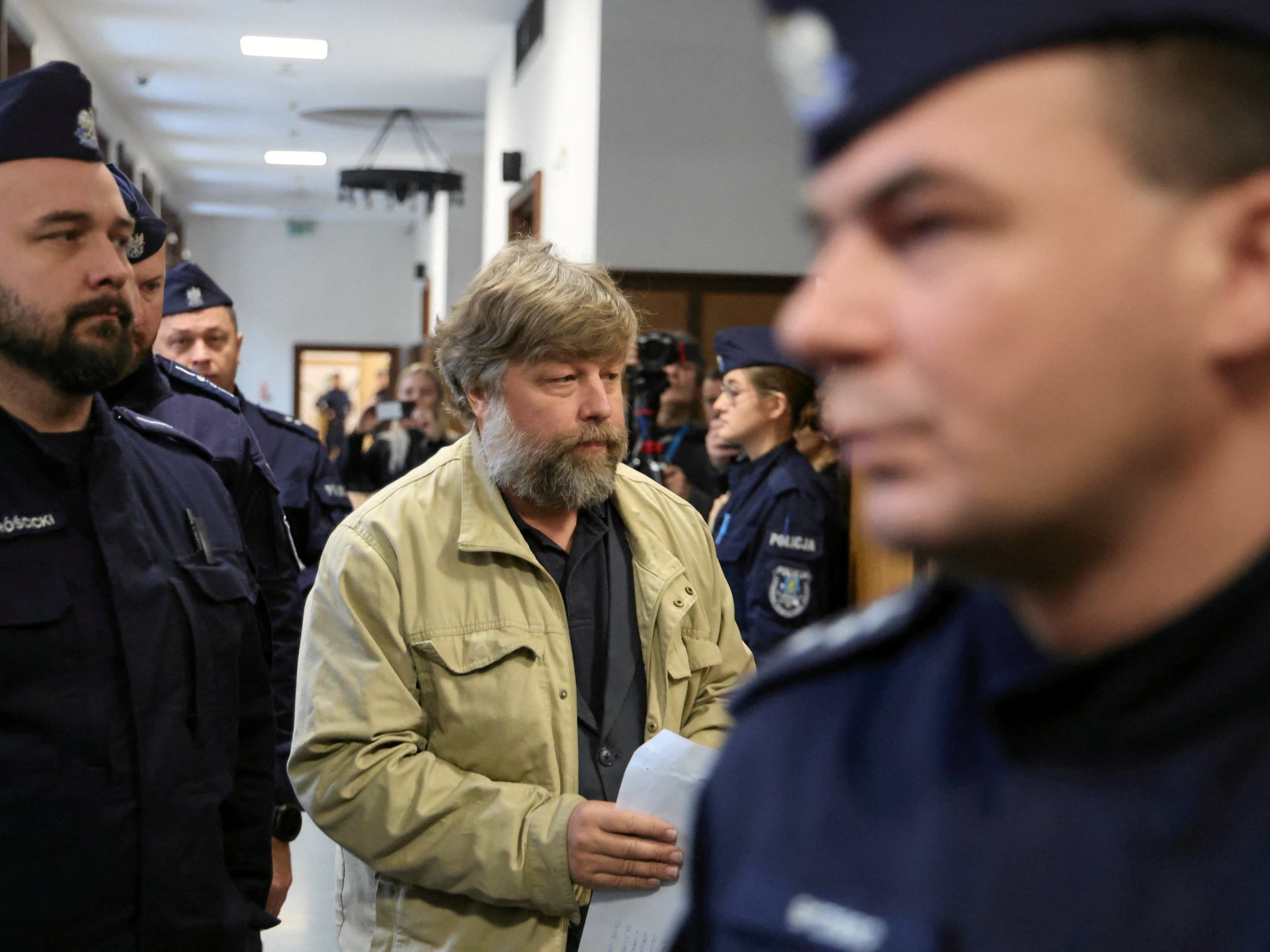

Poland is set to extradite a Russian archaeologist accused of carrying out illegal excavations in occupied Crimea to Ukraine, deepening tensions over a case that has raised questions about cultural preservation amid the war in Ukraine now in its fifth year.
Polish state media reported on Wednesday that a court in Warsaw had approved Ukraine’s extradition request for Alexander Butyagin. His lawyer, Adam Domanski, said he would appeal the decision.
- list 1 of 3Starmer, Zelenskyy urge ‘focus’ on Ukraine as Iran war diverts attention
- list 2 of 3Ukraine sends 201 military experts to counter Iranian drones in the Gulf
- list 3 of 3Actor Sean Penn gifted a special ‘Oscar’ by Ukraine’s railway company
end of list
A well-known academic with Russia’s Hermitage Museum, Butyagin had worked on archaeological digs in the Myrmekion site, located in Crimea, both before and after Russia annexed the peninsula in 2014. The work helped discover ancient artefacts, including Alexander the Great-era coins.
Poland arrested Butyagin in December on the request of Ukraine, which alleges he is responsible for the “illegal partial destruction” of an archaeological site, with damage exceeding 200 million hryvnias ($4.5m).
Kyiv also claims Butyagin seized 30 gold coins, of which 26 were inscribed with the name of Alexander the Great and four were minted during the reign of his brother Philip III Arrhidaeus.
Butyagin’s arrest provoked a furious reaction from the Kremlin, which accused Poland of “legal tyranny”. In January, Russia summoned the Polish ambassador to demand his release.
Moscow argues the charges against Butyagin are “absurd” as it views Crimea as Russian territory. It has called Warsaw’s decision to detain the archaeologist politically motivated.
If convicted in Ukraine of the “partial destruction” of the Myrmekion site, he would face up to five years in prison, according to the Polish News Agency.
Related News
Killing of Larijani will not destabilise Iranian political system: Minister
What is the PrSM missile that the US used for the first time in Iran?
Overnight Israeli attacks kill four people in Lebanon