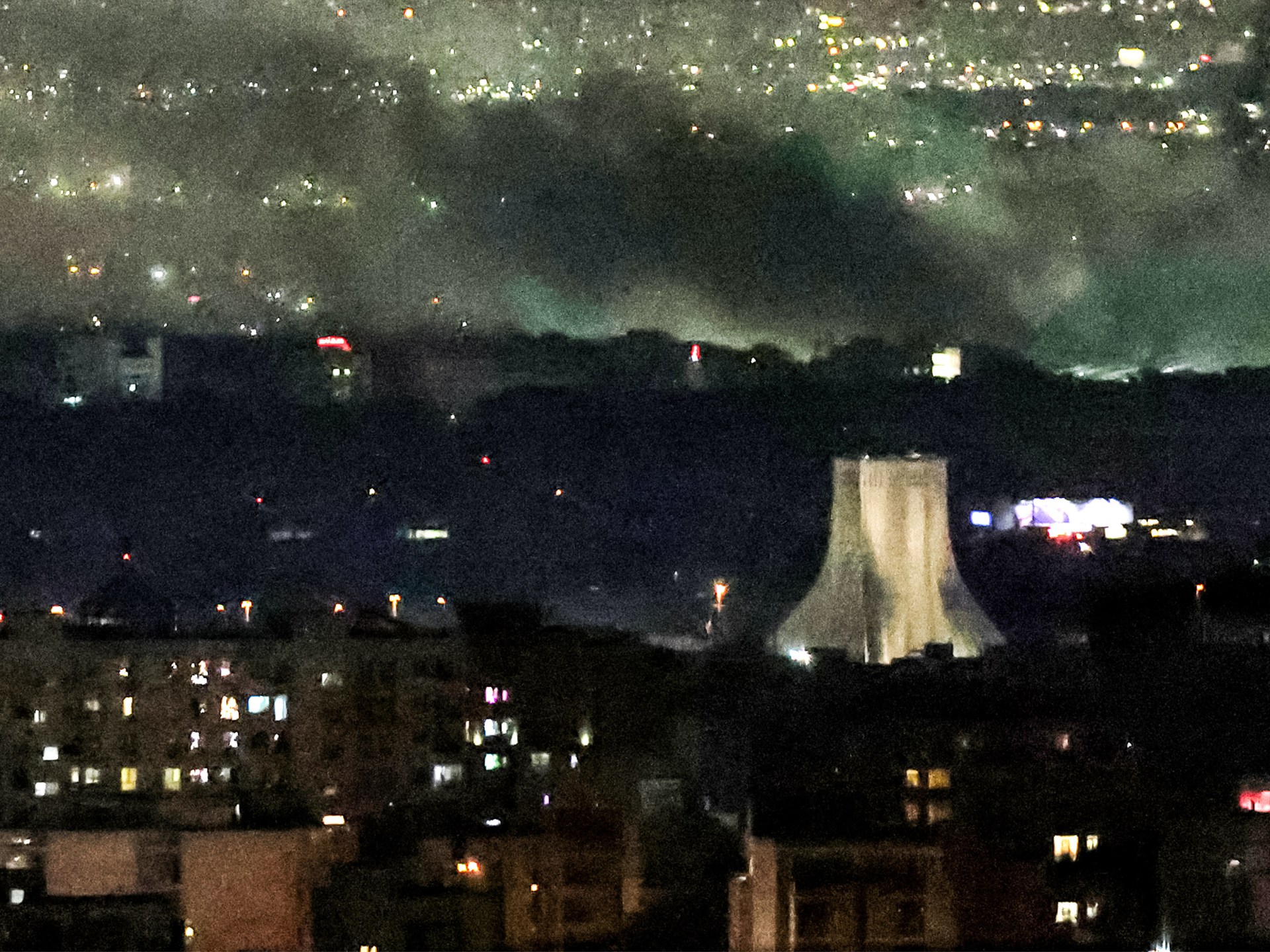

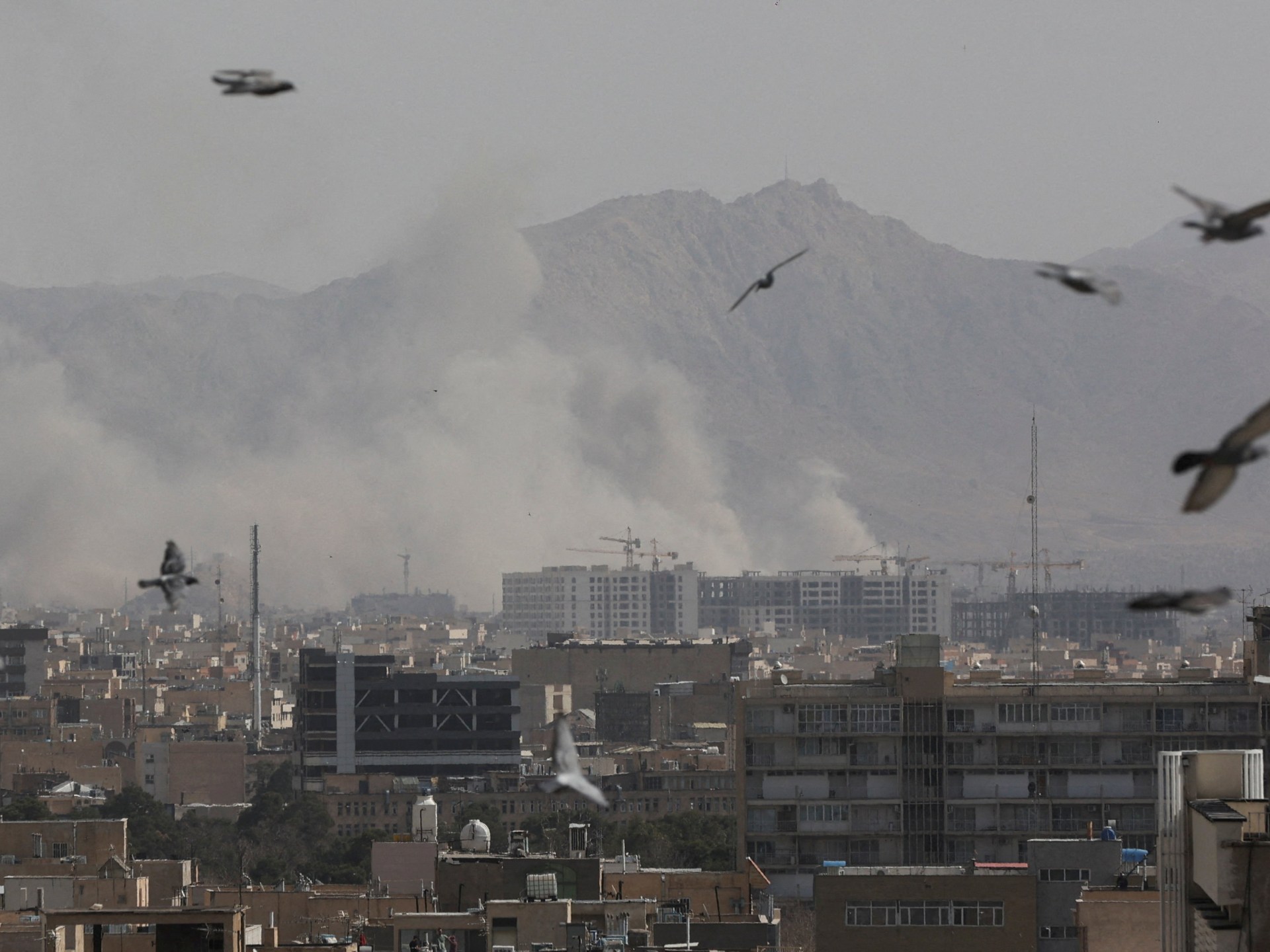
Tehran, Iran – The Iranian capital has experienced one of its most intense nights of bombardment by the United States and Israel since the start of the war 10 days ago as numerous areas of the sprawling city have been hit to devastating effect.
Warplanes flew at low altitudes over Tehran overnight into Tuesday, dropping dozens of heavy explosives that shook neighbourhoods across the city of more than 10 million people and frightened residents who have remained in their homes despite the danger.
- list 1 of 3Russia the only ‘winner’ of US-Israel war on Iran: EU Council president
- list 2 of 3Could Trump ‘take over’ the Strait of Hormuz as oil prices rise?
- list 3 of 3How will soaring oil prices caused by Iran war impact food costs?
end of list
More strikes followed during the day with local media reporting that cities like Isfahan and Karaj were also targeted. US Defense Secretary Pete Hegseth said Tuesday would be “our most intense day of strikes inside Iran”.
Sima*, a 38-year-old who lives with her family in western Tehran, said of the overnight strikes: “It felt like tens of fighter jets were flying right above our heads for 15 minutes straight at first, then a few minutes of pause before the next rounds of strikes came in.”
“The ground and the windows and our hearts were shaking, but we took shelter in our bathroom and got through it,” she said, asking for her real name not to be used due to security concerns.
Several Tehran residents who spoke to Al Jazeera said they saw bright flashes of light emanating from the intense aerial strikes that briefly turned night into day early on Tuesday. Some residents took to their rooftops or balconies to watch and record footage.
Videos circulating online showed eerie flashes of blue light in some areas that appeared to be a result of power generation outposts sustaining damage from the bombing. Electricity was cut in some areas of Tehran, but the government said it was restored within hours.
Disrupted and left in the dark
Alireza, a 25-year-old who lives by himself in a central part of the city, said he kept the front door of his apartment unlocked so he could quickly run to his building’s underground parking if necessary. Tehran lacks official shelters and early warning systems – a situation similar to the 12-day war with Israel and the US in June.
Advertisement
“I’m going crazy with how many times I’ve had to communicate with friends and family in Tehran and other cities through endless phone calls and text messages to see where and what was hit. There’s hardly any information in this damn internet shutdown,” he said.
The theocratic establishment in Iran continues to impose a near-total nationwide internet blackout for an 11th day, leaving only an intranet of local services in place and the flow of information under state control.
Virtual private networks (VPNs) and proxy connections are being sold on the black market, but the government hunts many down and shuts them off after short periods. The costs are also exorbitant, speeds are slow and vendors offer limited-data connections, several people who purchased such connections told Al Jazeera.
The global internet monitor NetBlocks said on Tuesday that the blackout “is now among the most severe government-imposed nationwide internet shutdowns on record globally”, second only to the 20-day shutdown imposed by the Iranian government during and after bloody nationwide protests in January.
The government has signalled that the blackout will be kept in place until further notice. Spokeswoman Fatemeh Mohajerani told reporters on Tuesday that “those who can help get the voice out” are being whitelisted for internet access. She did not elaborate.
Unlike in January, journalists have been allowed access this time, but reporting from the streets or impact sites requires government permits. The judiciary has warned of prosecution for people recording footage of the war without permission.
Iranian authorities have also been jamming satellite connections that allow people to watch foreign-based Persian-language television networks, which are considered “terrorist” outlets by the government. Some citizens have also reported disruptions in GPS and radio signals in Tehran.
As heavily armed paramilitary Basij forces of the Islamic Revolutionary Guard Corps (IRGC) set up checkpoints across Tehran and the country and congregate in mosques and main city squares, the judiciary has warned Iranians that anyone who sends videos of strikes to foreign-based media will be severely punished.
The judiciary has said the private property of foreign-based Iranians who oppose the establishment will be confiscated. The state also confiscated private assets during the antigovernment protests in January.
“If anyone takes any practical action that aligns with the malignant Zionist regime and the US regime, punishments have been set by law that will include execution and confiscation of assets,” judiciary spokesman Asghar Jahangir told state television on Tuesday.

Bruised economy limps on
A semblance of life and trade can be seen despite the war as some shopkeepers in downtown Tehran run limited operations and some taxi drivers and motorcycle couriers continue working to make ends meet.
Advertisement
There are still considerable queues at many petrol stations, and car washes had a busy day after Israel’s targeting of Tehran’s major fuel reserves and oil facilities on Sunday night darkened the skies throughout Monday and created a hazardous rain that was heavy with oil.
“This week, we’ve opened from morning until around lunch time to get some work done, but there are not too many customers around,” said a young man working in the capital’s Grand Bazaar.
He said his relatives take only short commutes to work or buy groceries in their neighbourhood in eastern Tehran because security and police buildings in the area have been subject to several rounds of intense bombing with the latest coming on Monday.
Iranian authorities said a large number of residential areas, hospitals, schools and historical sites have been damaged by the US and Israel and have called for action from the international community to confront civilian harm.
With the approach of Nowruz, the Iranian New Year, on March 20, the government is seeking to maximise imports of food, medicine and other essentials through bartering with neighbouring countries and other emergency mechanisms as it said negotiations with the US are off the table.
As the economy suffers under local mismanagement and corruption while under sanctions from the US and the United Nations, Iran continues to battle an inflation rate of about 70 percent. Runaway food prices are squeezing millions of Iranians.
Iranian authorities have also reported staving off a large number of significant cyberattacks during the war, similar to the situation during last year’s 12-day war with Israel when two major banks and the country’s top cryptocurrency exchange were targeted. State-affiliated outlets said brief disruptions to state-run Bank Melli and Bank Sepah were quickly fixed early on Tuesday.
*Al Jazeera changed some names due to security concerns.
Related News
Airspace closed, airlines halt flights as US, Israel attack, Iran responds
Huge northeast US snowstorm forces millions home; disrupts schools, flights
Australian PM backs removal of ex-Prince Andrew from succession line