
Islamic University of Gaza resumes classes on site amid Israeli destruction
 20 December 2025
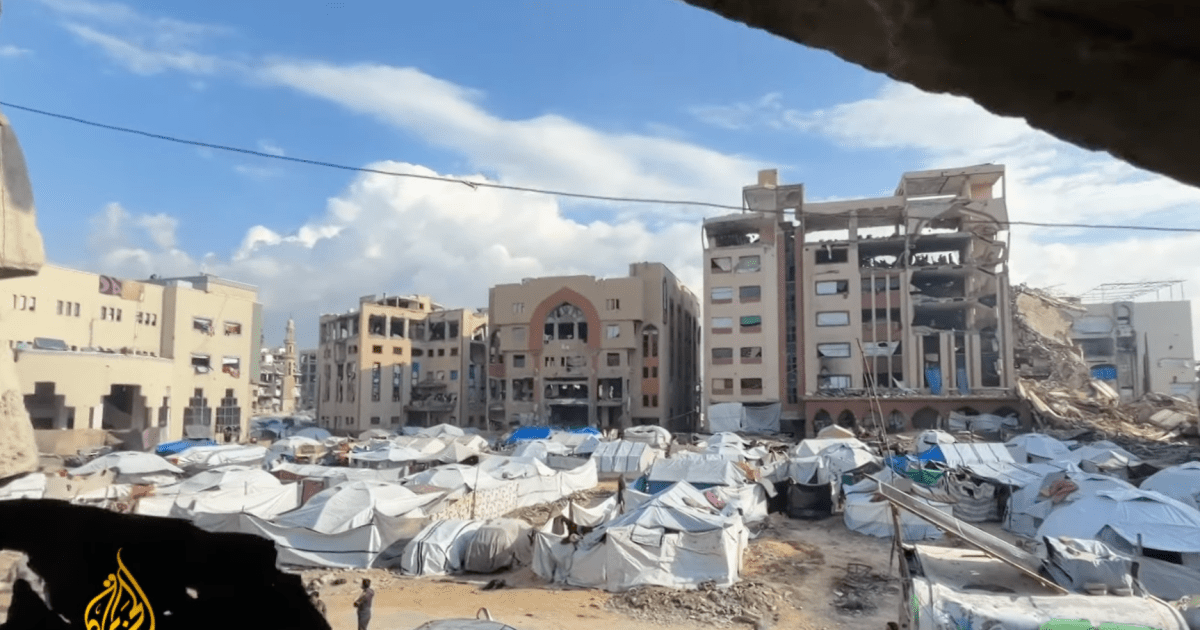

Students at the Islamic University of Gaza have returned to in-person classes for the first time in two years, navigating a campus transformed into a site of mass displacement and utter devastation as a result of Israel’s genocidal war on the besieged Palestinian enclave.
This Gaza City university, which reopened following October’s ceasefire, now hosts about 500 displaced families sheltering inside buildings reduced to hollow shells by Israel’s relentless assault.
- list 1 of 329-day-old baby boy dies of hypothermia as temperatures drop in Gaza
- list 2 of 3Five key takeaways from US State Secretary Rubio’s year-end briefing
- list 3 of 3Al-Majd Europe: The shell company involved in forced evacuations from Gaza
end of list
Tents dot the grounds where lecture halls once stood, a stark illustration of Gaza’s dual crises of homelessness and educational collapse.
“We came here after being displaced from Jabalia because we had nowhere else to go,” said Atta Siam, one of those seeking refuge on campus. “But this place is for education. It’s not meant to be a shelter – it’s a place for our children to study.”
The partial resumption of classes has rekindled hopes for thousands of students, despite conditions that bear little resemblance to a functioning university.
UNESCO estimates more than 95 percent of higher education campuses across Gaza have been severely damaged or destroyed since the war began in October 2023.
First-year medical student Youmna Albaba said she had dreamed of attending a properly equipped university.
“I need a place where I can focus, that is fully qualified in every way,” she said. “But I haven’t found what I imagined here. Still, I have hope because we are building everything from scratch.”
![Buildings across Gaza have been destroyed by Israel's bombardment. [Al Jazeera]](https://www.aljazeera.com/wp-content/uploads/2025/12/Screenshot-2025-12-20-at-10.58.35-1766217530.png?w=770&resize=770%2C405&quality=80)
What human rights groups and United Nations experts have termed “scholasticide” – the systematic obliteration of an education system – has left more than 750,000 Palestinian students without schooling for two consecutive academic years, according to the Gaza-based organisation Al Mezan Center for Human Rights.
Advertisement
Recent figures paint a devastating picture – 494 schools and universities have been partially or completely destroyed, with 137 reduced to rubble. The toll includes 12,800 students killed, along with 760 teachers and educational staff, and 150 academics and researchers, Al Mezan reported in January.
Isra University, which had been Gaza’s last remaining functioning university, was demolished by Israeli forces in January 2024.
At the Islamic University, professors are improvising with whatever resources remain amid power cuts, shortages of equipment and inadequate learning environments. Dr Adel Awadallah described covering exposed walls with plastic sheets to accommodate as many students as possible. “We’ve borrowed motors to generate electricity to operate the university equipment,” he said.
With only four classrooms operational, thousands of students are depending on these makeshift arrangements to continue their education.
UN experts warned in April 2024 that the scale of destruction may constitute a deliberate effort to dismantle Palestinian society’s foundations.
“When schools are destroyed, so too are hopes and dreams,” their statement read, calling the pattern of attacks systematic violence against educational infrastructure.
The challenges extend beyond physical destruction. Families struggling to secure food, water and medicine find supporting children’s education nearly impossible.
Remote learning initiatives by the Ministry of Education and UNRWA have been undermined by electricity blackouts, internet outages and ongoing displacement.
Yet students persist. Despite the trauma of more than two years of Israeli bombardment and the loss of family members, they have consistently identified returning to school as a top priority, a chance to reclaim normalcy and their futures.
As Youmna Albaba, the medical student, put it, “Despite all this, I am happy because I attend lectures in person. We are building everything from scratch.”
Related News
Who is Ghassan al-Duhaini, Abu Shabab’s successor?

Eurovision winner Nemo returns trophy in protest over Israel’s inclusion
Australian police say Bondi Beach attackers inspired by ISIL
