
Argentina has issued an order expelling Iran’s charge d’affaires in Buenos Aires, Mohsen Tehrani, declaring him persona non grata amid escalating tensions between the two countries.
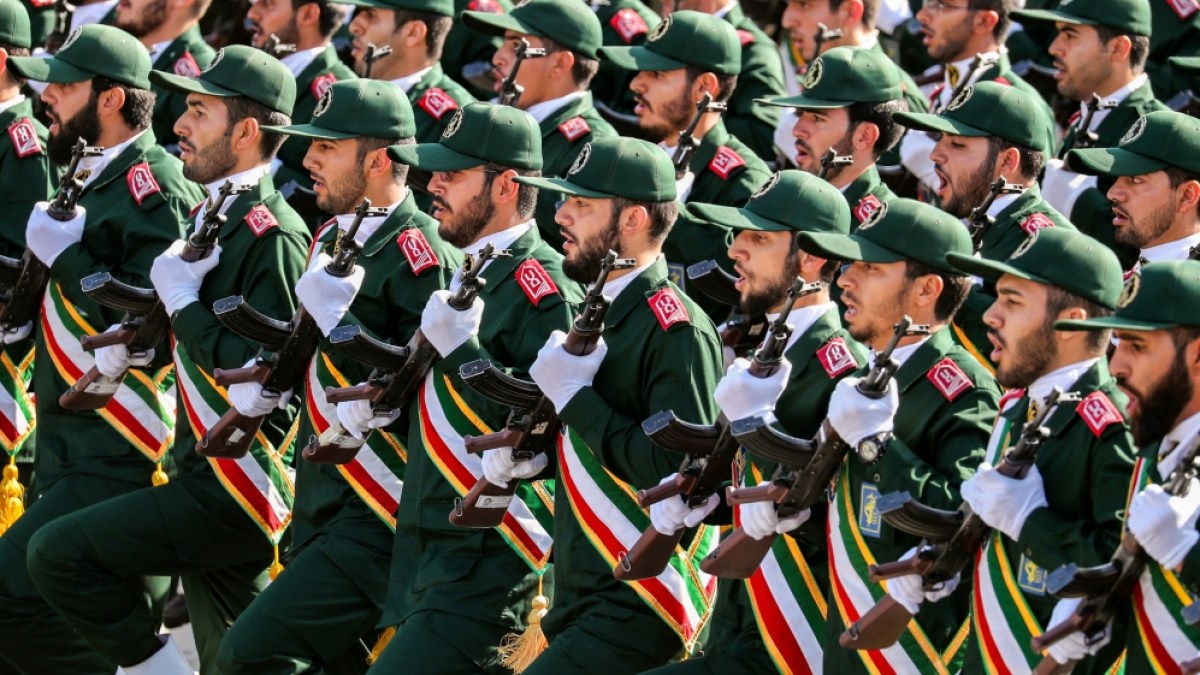
The Foreign Ministry of Argentina said on Thursday that the decision was in response to an earlier Iranian statement that rejected Buenos Aires’s designation of the Islamic Revolutionary Guard Corps (IRGC) as a “terrorist” group.
- list 1 of 3UK-led coalition of 40 countries vows action on Hormuz Strait closure
- list 2 of 3Can Starmer’s 40-nation coalition open the Strait of Hormuz?
- list 3 of 3Can the US seize Iran’s enriched uranium – and what are the risks?
end of list
The ministry said the Iranian response contained “false, offensive and unfounded accusations against the Argentinian Republic and its highest authorities”.
“These statements constitute unacceptable interference in our country’s internal affairs and a deliberate misrepresentation of decisions adopted in accordance with international law and national law,” it added.
Iran’s Foreign Ministry had condemned the move against the IRGC, calling it an “action against Iran’s security and national interests”.
Tehran said Argentina’s decision was made “under the influence of inducements and pressures from the genocidal and occupying Zionist regime”, referring to Israel.
It added that the move blacklisting the IRGC, which is part of the Iranian military, “not only inflicts serious damage on bilateral relations between Argentina and Iran but also creates a dangerous precedent in intergovernmental relations”.
The US labelled the IRGC as a “terrorist” group in 2019, a move that was followed by several other countries. The European Union also balcklisted the military organisation in January.
Argentina has taken staunchly pro-Israel positions under right-wing President Javier Milei, who recently described himself as “the most Zionist president in the world”.
Advertisement
Melei has also aligned himself with the administration of President Donald Trump in the United States, which bailed out the Argentinian economy with $20bn last year.
Israel had praised Buenos Aires’s designation of the IRGC as a “terrorist” group, saying that it “places Argentina, under his leadership, at the forefront of the free world in the fight against the Iranian regime of terror and its proxies”.
In 2024, an Argentinian court ruled that Iran was responsible for the 1994 bombing of a Jewish centre in Buenos Aires that killed dozens of people.
Iran has denied its involvement in the attack, noting the several controversies and allegations of cover-up that plagued the decades-long investigation.
Milei’s government had cited the 1994 attack in its decision to blacklist the IRGC.
On Wednesday, Iran said the Argentinian investigation into the incident has been subjected to political influence, leading to “countless questions” over the bombing remaining unresolved.
In response, the Argentinian Ministry of Foreign Affairs accused Iran of failing to cooperate with the probe or hand over suspects in the case.
“The Argentine Republic will not tolerate grievances or interference from a State that has systematically failed to comply with its international obligations and that persists in obstructing the progress of justice,” it said.
Related News
Iran hits industrial zone in southern Israel
Eid celebrations dimmed by war and displacement across Middle East
US Homeland Security shutdown to stretch on, despite Senate passing funding