‘Everyone here is corrupt’: What fuels the Balochistan separatist violence
 01 February 2026

As the dust of another deadly conflict settles over the scarred ridges of Sulaiman and Kirthar ranges in Balochistan, Pakistan’s largest but most sparsely populated province, a volatile mix of long-ignored grievances, a brutal rebellion, proxy wars and high-stakes geopolitics erupts again.
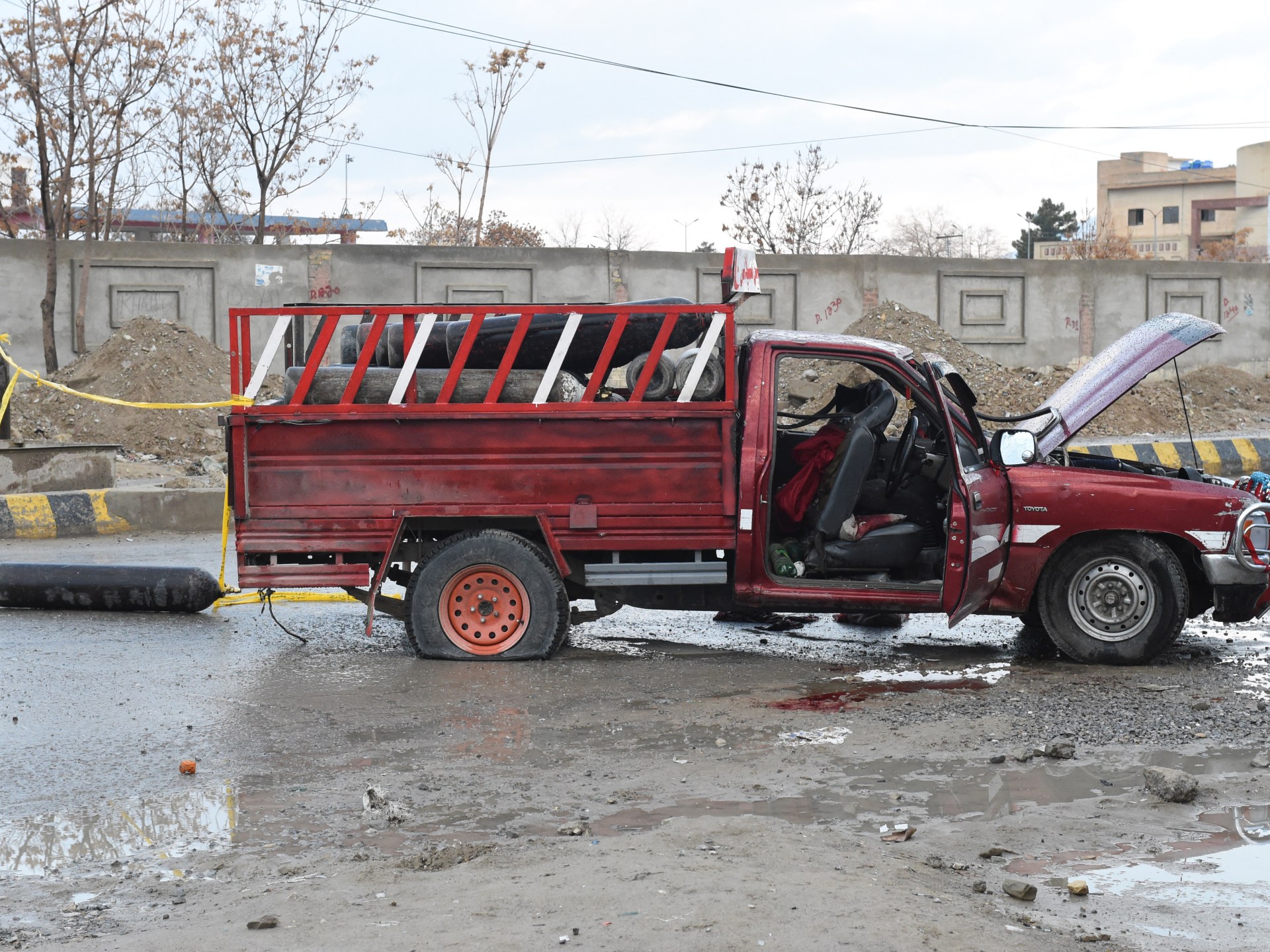
For nearly 40 hours, a fierce battle was waged in those ridges in what officials called a “desperate” wave of coordinated separatist attacks across more than a dozen locations in the southwestern province of Balochistan, claimed by the banned group Balochistan Liberation Army (BLA), which for decades has been waging a rebellion for an independent state.
- list 1 of 4At least 33 dead in coordinated attacks by alleged separatists in Pakistan
- list 2 of 4Pakistan military raids kill 41 armed fighters in Balochistan
- list 3 of 4US puts Balochistan armed group in Pakistan on ‘foreign terrorist’ list
- list 4 of 4Pakistan says ‘India proxies’ behind Islamabad bombing: What we know so far
end of list
Nearly 200 people were killed in the latest attacks, including 31 civilians, 17 security personnel, in addition to 145 BLA fighters – more than 100 of them on Saturday alone, according to the Pakistani army. It was one of the biggest and most brazen attacks carried out by Baloch separatists, whose claim, however, of killing 84 Pakistani security personnel was dismissed by the authorities.
In the provincial capital, Quetta, where the scars of the decades-old conflict could be seen over the city’s police academy, the courts and the bazaars, the official message is once again of unwavering control.
“Our security forces, personnel and officers have fought bravely,” said Information Minister Attaullah Tarar, framing the BLA attacks as the “last gasp of a cornered enemy”.
Yet, this narrative of dominance is punctuated by the sobering death toll: more than a dozen security personnel killed and civilian families caught in the crossfire. The power move – of trying to project more power than actually wielding it – feels true for both sides.
Advertisement
‘Terrorism’ a foreign plot
Islamabad’s response to separatist attacks, once meticulously framed, is now a routine occurrence. The fighters are cadres of “Fitna-al-Hindustan”, which in Urdu translates to “India’s incitement”.
This nomenclature is now the cornerstone of Pakistan’s national security narrative, linking every attack to the hand of Islamabad’s historical rival. The complex, locally-rooted Baloch grievances are subsumed into a simpler, catchier, blame-shifting story of foreign subterfuge. It echoes past government statements, which blamed “neighbouring countries” for trying to derail its key economic projects.
The narrative of blaming the neighbours also positions the Pakistani military not as a party to an internal dispute, but as a defender of Pakistan’s territorial sanctity. But it is more than a narrative.
Kulbhushan Jadhav, an Indian national arrested and sentenced to death for espionage by a Pakistani court in 2016, is a living exhibit of Pakistan’s case against external interference.
Pakistan had released a video that appeared to show Jadhav confessing to facilitating attacks in Balochistan. While India denied involvement, Jadhav’s testimony fits the strategic nationalisation of a provincial conflict.

Grievances fuelling rebellion
On the ground, the official Pakistani script reads differently.
In the hushed conversations at Quetta’s tea shops, a different, more intimate story of political marginalisation and economic injustice unfolds, as residents wonder how poverty remains entrenched despite the province’s immense mineral wealth.
The promise of the $46bn China-Pakistan Economic Corridor (CPEC), centred on the port of Gwadar in Balochistan, is viewed by locals not as a boon, but as one that might benefit Beijing and Islamabad, not the Baloch fishermen or shepherds.
“Sir, are you crazy!” exclaimed a security official at a coal mine in Spin Karez, where Al Jazeera had reached to document the plight of miners dying due to a lack of proper equipment.
“The insurgents [rebels] come in their hundreds and pick up everything, including [paramilitary] checkpoints. Who said it’s safe for you to be in this area?” he went on.
Baloch separatists have often raided mines and killed workers from other provinces who came looking for a livelihood. The encounter is one of many incidents in Balochistan as the province feels like the “Wild West” – no rules, no one really in charge.
This discontent is the oxygen that keeps the separatist movement alive.
Advertisement
As a security source told Al Jazeera: “A military can neutralise a militant, but it cannot neutralise a grievance. The state sees them as a terrorist network; many here see their sons and brothers who took up arms.”
The death of 18 civilians in the latest conflict is a tragic footnote that underscores this divide as the rebellion consumes the very people it claims to fight for.
Human cost of conflict
Balochistan is a land of haunting dualities. It is home to Gwadar, the gleaming linchpin of CPEC on the Arabian Sea, and to remote valleys where communication lines are the first casualty during any flare-up. Its porous borders with Iran and Afghanistan provide fighters with strategic depth. For Pakistan, the province is a source of strategic anxiety.
The human cost of the conflict is reflected in the region’s landscape and memory. As one recalls the raw testimony from a resident after a 2013 attack in Hazara town: “The wounded were lying here and there … we didn’t know who was who.”
Or the haunting question of a cadet after the 2016 Quetta police academy massacre: “Why were we called back in and told to stay here with no weapons?”
These statements are indictments of a persistent security failure and eroding social contract. They explain why the official claims of “unity behind security forces” sometimes feel less like a lived reality and more like an aspirational slogan.
“Everyone here is corrupt” was a startling statement from a former chief minister of Balochistan who spoke to Al Jazeera on condition of anonymity.
People in Balochistan speak of widespread corruption plaguing the impoverished province, endemic and consuming every sphere of public services. Very little money, in that case, is actually left to provide basic services such as healthcare and education. Security is a luxury many do not even believe in any more.
The recent military operations in Balochistan demonstrate Pakistan’s formidable capacity for kinetic response. Drones monitor from above, forces patrol in strength, and rebels are cleared from strongholds.
Yet, like clockwork, the “national action plan” is dusted off and reviewed after every crisis. Vows are made, and the violence eventually returns. Despite multiple “surrender of weapons” ceremonies seen in recent years, the rate of nationalistic propaganda producing more recruits is probably much higher.
True stability in Balochistan requires a calculus that transcends body counts. It requires recognising that separatism draws from a well of genuine discontent, that development must be seen as inclusion rather than just extraction, and that political dialogue is not appeasement, but necessity.
Regional implications
Balochistan – bigger than Germany in area – is critical in the power play of regional influence, which involves China’s economic ambitions, Iran’s sectarian politics, the United States’ “containment” strategies, India’s enemy-of-my-enemy strategy, and Afghanistan’s alleged role in the province.
Pakistan’s challenge is to navigate these external currents while finally addressing the internal fissures that make its largest province so perilously vulnerable. The last 48 hours have again challenged the country’s domestic security architecture.
Advertisement
As it always does, the dust will settle again. Most of the Pakistani establishment and its media will forget Balochistan, again. And armchair analysts will continue with their punditry.
But whether the dust settles over a landscape moving towards durable peace or if it is just a quiet interlude before the next storm depends on who gets to write the next chapter.
Balochistan needs political accommodation, economic inclusion, and effective regional diplomacy if, at all, there is a genuine push to change its status from a perpetual flashpoint.
Related News
Russia-Ukraine war: List of key events, day 1,424

South Korea’s former first lady sentenced to jail term in bribery case

Judge blocks US gov’t move to end deportation protections for Ethiopians