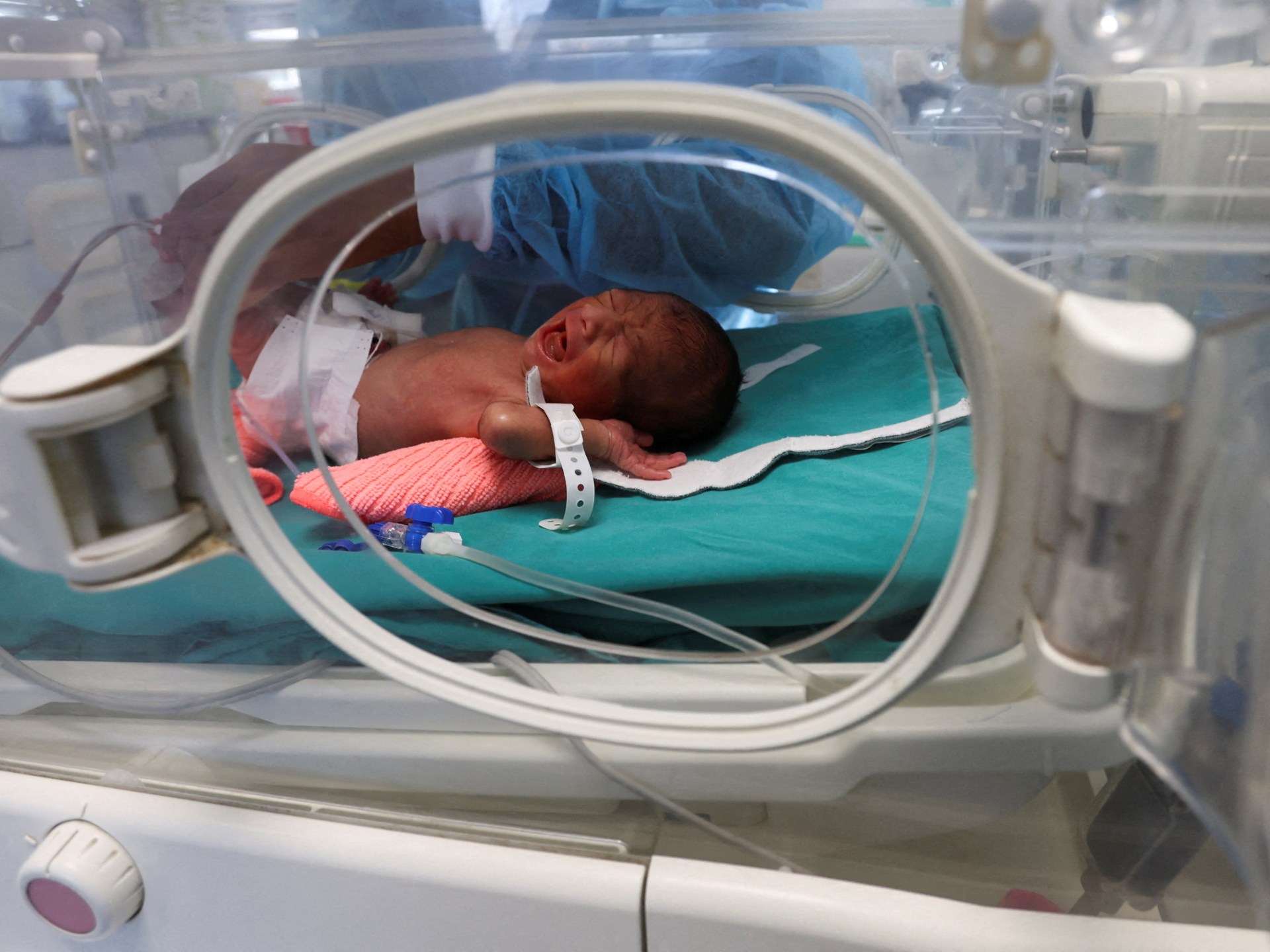

Gaza City – Maysera al-Kafarna, a Palestinian woman in Gaza, sorts through blue baby overalls brought for the child she was supposed to have.
But her dreams of motherhood have been dashed by Israel’s genocidal war on Gaza, which ravaged the enclave’s healthcare system that saves lives, as well as the fertility centres that plan them.
- list 1 of 3The Take: Inside Gaza after Israel’s last captive is found
- list 2 of 3Meet Hamza Al-Rubaie, one of Gaza’s 17,000 orphaned children
- list 3 of 3Is Trump’s ‘Board of Peace’ an effort to curtail Europe’s middle powers?
end of list
After years of trying, al-Kafarna and her husband turned to in-vitro fertilisation (IVF). Their embryos were frozen in a fertility centre, waiting for the war to end, but the clinic was attacked by Israel.
“We had four viable embryos stored there in the first months of the war. We were shocked to learn they had been destroyed when the clinic was attacked,” al-Kafarna told Al Jazeera.
“It was deeply painful. We felt like we had lost a part of ourselves. We were waiting for a chance to have our baby.”
Medical officials in Gaza say Israel has destroyed nine out of 10 fertility clinics in the territory. In addition, embryos that remain are still in danger, despite the ceasefire, due to fuel shortages and a lack of liquid nitrogen to keep them at the required temperature.
Rights advocates say Israel’s attacks on reproductive health in Gaza are a textbook implementation of genocidal policies, as defined by the United Nations.
Last year, UN investigators concluded that Israeli attacks on fertility clinics and maternity wards were part of Israel’s push to destroy the Palestinian people.
The 1948 UN Convention lists “imposing measures intended to prevent births within the group” as one of five acts it classified as genocidal.
Advertisement
In September 2024, a UN Commission of Inquiry found that Israel had engaged in four of the five acts during its war on Gaza, including efforts to prevent births.
“Attacks on healthcare facilities, including those offering sexual and reproductive healthcare and services, have affected about 545,000 women and girls who are of reproductive age in Gaza,” the UN investigators wrote in their report.
They specifically reviewed an Israeli attack on Al-Basma IVF clinic in Gaza City in December 2023 that destroyed thousands of embryos, sperm samples and other reproductive material.
“The commission found that the Israeli authorities knew that the medical centre was a fertility clinic and that they intended to destroy it,” the UN inquiry said.
“Therefore, the Commission concluded that the destruction of the Al-Basma IVF clinic was a measure intended to prevent births among Palestinians in Gaza.”
The Gaza Ministry of Health reported a 41 percent decrease in births in Gaza in the first half of 2025 compared with the previous three years.
Beyond the direct attacks on reproductive healthcare facilities, Israel’s blockade on medical supplies and food has further harmed newborns and birth rates.
“Inability to access medical care and proper nutrition harmed reproductive capacity by causing infertility, miscarriage, complications, and maternal death for women, as well as poor health outcomes for newborns,” a study by Physicians for Human Rights said.
Despite the dire conditions that persist, fertility doctor Abdel Nasser al-Kalhout said he hopes to resume his work as soon as conditions allow it.
“We hope that after the war ends, we can start again, restoring hope for people who lost their embryos and for the couples whose treatment began but couldn’t continue because of the war,” al-Kalhout told Al Jazeera.
Related News

One survivor reported, two killed in US boat strike in the Eastern Pacific

Ukraine-Russia-US talks open in Abu Dhabi with territory as key issue
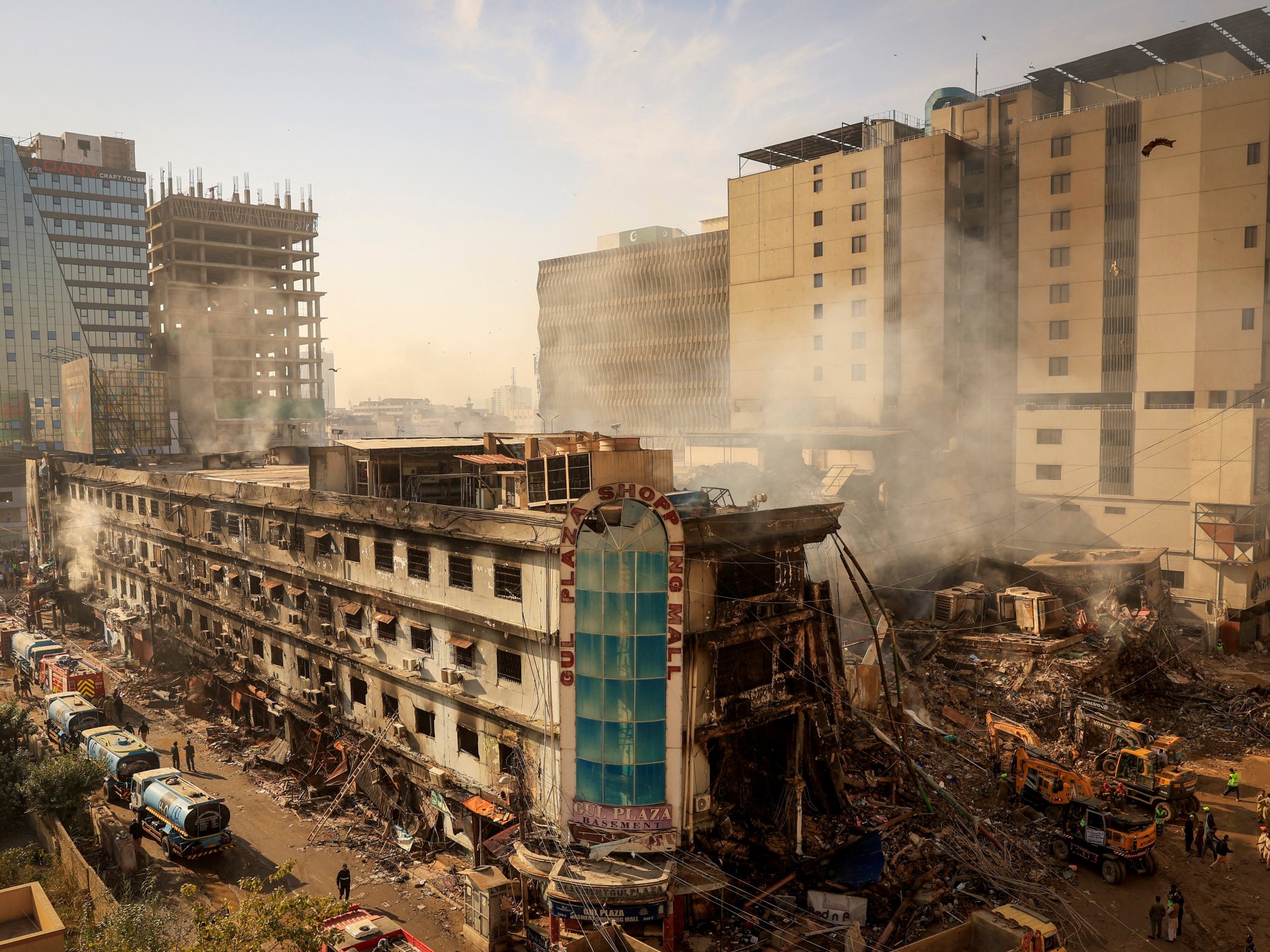
Gul Plaza fire: How a deadly inferno exposed Karachi’s safety failures