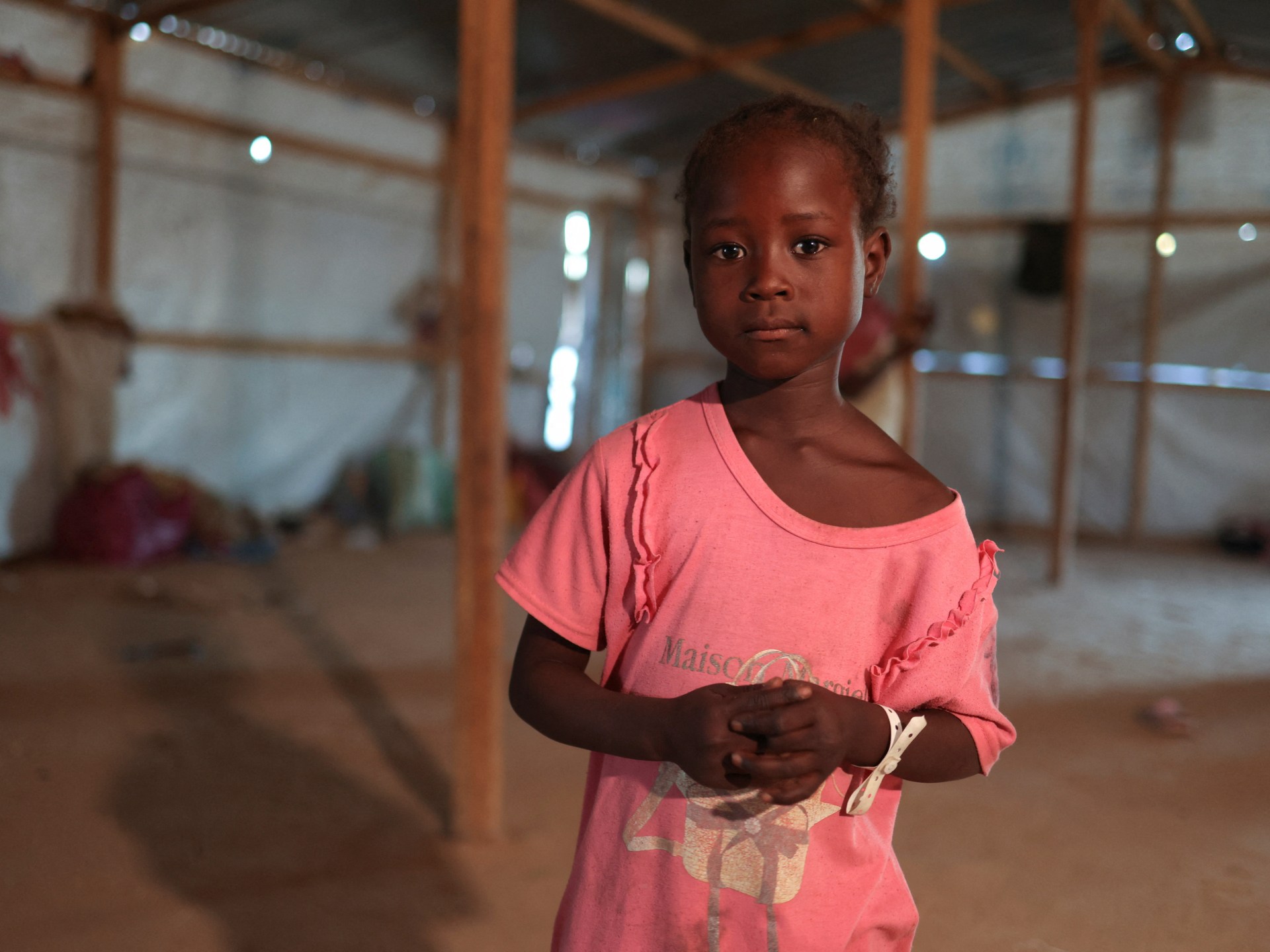

In the displacement camps of Ad-Damazin in southeastern Sudan’s Blue Nile State, the war is reshaping social norms and introducing new realities that are forcing Sudanese women into manual labour to survive.
Rasha is a displaced mother. She has ignored old boundaries and perceptions of what a man’s work is and started working as a woodcutter to feed her children.
“Carpentry is hard, … but the axe has become an extension of my hand,” Rasha told Al Jazeera Arabic. “There are no choices left.”
Her story is not unique. Thousands of Sudanese women have become their families’ sole breadwinners and work under harsh conditions. Rasha’s earnings after a day of back-breaking labour under the sun are often enough to buy only a packet of biscuits.
She spends the money on food and soap. “You want soap. You want to wash,” she said. “As for clothes, we have given up hope on that.”
The nearly three-year war between the Sudanese army and the Rapid Support Forces paramilitary group has had a catastrophic impact on the country and its people.
According to the United Nations Office for the Coordination of Humanitarian Affairs (OCHA), more than 30 million people from a population of 46.8 million are in need of humanitarian assistance.
The population is facing acute food shortages and a nutrition crisis, especially in the Darfur and Kordofan regions in western and central Sudan. At the same time, disease outbreaks are worsening the situation.
Moreover, Sudan is dealing with the world’s largest displacement crisis with an estimated 13.6 million people forced from their homes by the fighting.
Advertisement
Worse than the pandemic
The war has also destroyed many aspects of life in Sudan, and it is now threatening the future of generations to come.
Save the Children released a damning report on Thursday confirming that Sudan is enduring one of the longest school closures in the world, surpassing even the worst shutdowns of the COVID-19 pandemic.
According to the new analysis released before the International Day of Education on Saturday:
- More than eight million, or nearly half of Sudan’s school-age children, have missed about 484 days of learning since the war began in April 2023.
- This duration is 10 percent longer than the school closures during the pandemic in the Philippines, which was the last country to resume face-to-face learning.
- Unlike during the pandemic, remote learning is impossible for most Sudanese children, leaving them vulnerable to recruitment into armed groups and sexual exploitation.
‘Total breakdown’ in conflict zones
The data reveal a system on the brink of collapse, particularly in conflict hotspots.
In North Darfur State, only 3 percent of its more than 1,100 schools remain open. The situation is similarly dire in the states of South Darfur (13 percent operational) and West Kordofan (15 percent).
“Education is not a luxury. … It is a lifeline,” Inger Ashing, CEO of Save the Children, said after a visit to Sudan. “If we fail to invest in education today, we risk condemning an entire generation to a future defined by conflict rather than by opportunity.”
Adding to the crisis, many teachers have gone unpaid for months, forcing them to abandon their posts, while countless schools have been bombed or turned into shelters.
Siege and famine conditions
The collapse of education is mirrored by the collapse of food supplies. As aid funding dries up – a reality confirmed by Blue Nile Humanitarian Aid Commissioner Qisma Abdel Karim – famine is setting in.
OCHA reported this week that:
- At least 2,000 families are cut off from aid in North Darfur due to intense fighting.
- “Famine conditions” have been confirmed in the besieged city of Kadugli in South Kordofan.
- Significant gaps remain in the provision of aid as the UN has appealed for $2.9bn to fund its humanitarian response in Sudan this year.
‘Equal in misery’
Those statistics translate into hard reality on the ground.
“The war does not distinguish between a child, a woman or an elderly man,” Al Jazeera Arabic correspondent Taher Almardi said, reporting from Ad-Damazin. “Everyone is equal in misery.”
For Rasha and mothers like her, the choice is stark: break traditional norms and toil for a pittance or succumb to hunger.
Advertisement
Related News
‘Change is inevitable’: What is next for Iran?

Unsung US civil rights pioneer Claudette Colvin dies, aged 86

Japan shuts reactor at world’s biggest nuclear plant a day after restart