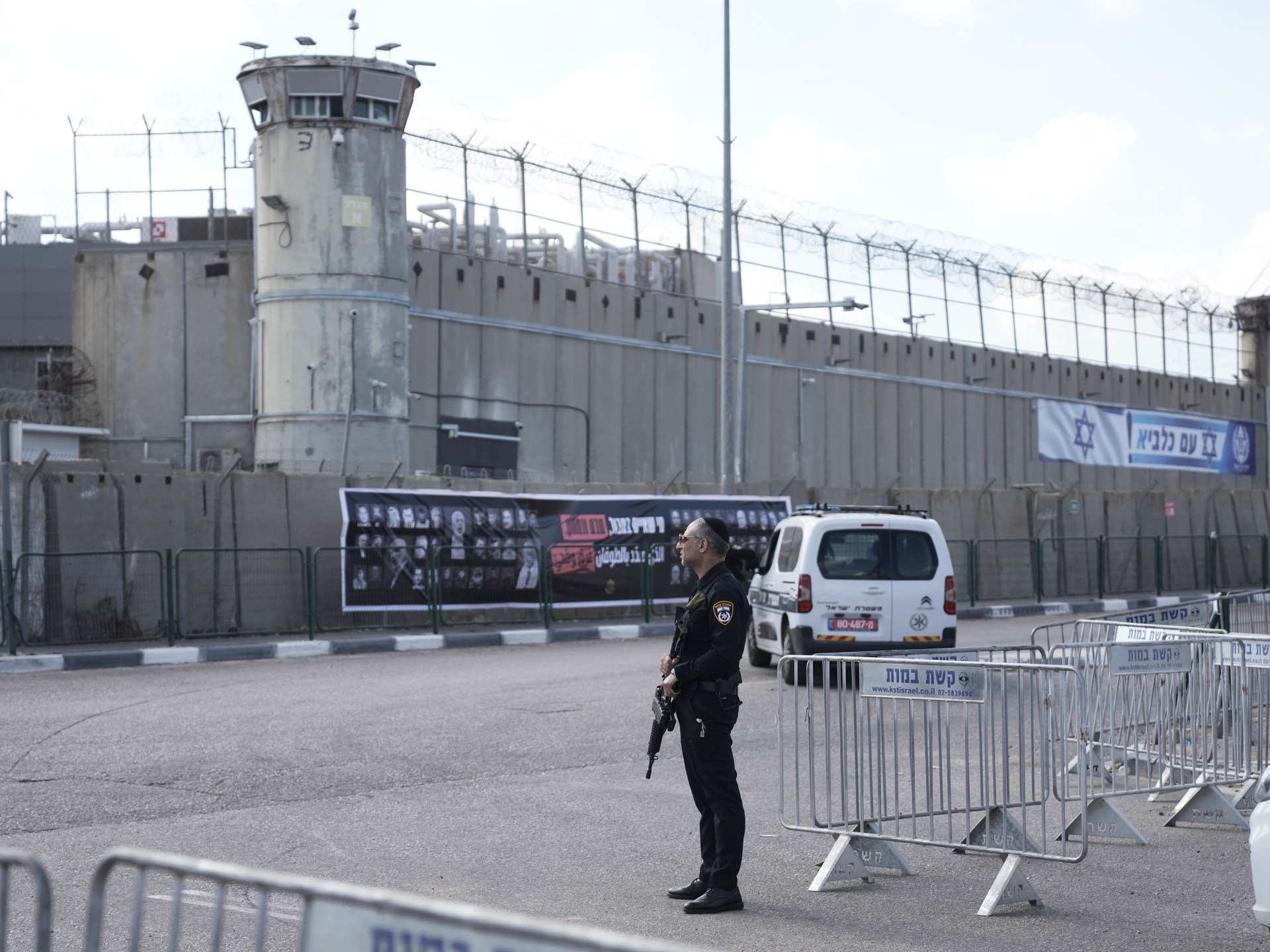

At least 84 Palestinian prisoners have died in Israeli prisons since October 2023 after being subjected to systematic abuse, including physical and psychological violence, inhuman conditions, deliberate starvation and denial of medical treatment, the Israeli human rights group B’Tselem says.
Israeli authorities were still holding 80 of their bodies and refusing to return them to their families, the organisation said in a report released on Tuesday, which listed the names of the 84 deceased prisoners, including one minor, and the facilities in which they died.
- list 1 of 3What are the hurdles to implementing phase two of Gaza ceasefire?
- list 2 of 3Ceasefire in Palestine? What ceasefire?
- list 3 of 3Peace boards and technocrats won’t stem out Palestinian resistance
end of list
Fifty of them were from the Gaza Strip, where Israel has been carrying out its genocidal war for more than two years and repeatedly violating an October ceasefire. Thirty-one were from the occupied West Bank, and three were citizens of Israel. The report noted that the numbers were likely to be higher because the organisation listed only the deaths it was able to verify.
B’Tselem Executive Director Yuli Novak said Israeli authorities had turned the prison system into a network of “torture camps” as part of “a coordinated onslaught on Palestinian society intended to destroy their existence as a collective”.
“The genocide in Gaza and the ethnic cleansing in the West Bank are the most blatant manifestations of this policy,” Novak said in a statement.
B’Tselem said its findings were based on the testimonies of 21 Palestinians released from Israeli prisons in recent months and on the work of Israeli and international human rights organisations that monitor prisons. About 9,200 Palestinians are estimated to be held in Israeli prisons.
Advertisement
Several of the interviewees described undergoing or witnessing sexual violence in custody, including sexual assault, forced stripping, severe injuries to genitals through beatings, attacks involving dogs and penetration with various objects.
Other testimonies highlighted brutality during interrogations, particularly in a room referred to as the “disco room”, where electrical shocks were administered at regular intervals while the prisoner was deprived of food and access to a toilet.
The findings confirmed a pattern of abuse already highlighted in B’Tselem’s August 2024 report Welcome to Hell. Novak said: “Despite mounting evidence and numerous reports on Israel’s torture camps, the international community continues to grant this regime full immunity – effectively legitimizing the continued torture, oppression and ethnic cleansing of Palestinians and abandoning the victims.”
An overwhelming majority of Palestinian prisoners have been arrested under a quasi-judicial process known as administrative detention, under which Palestinians are initially jailed for six months. Their detentions can then be repeatedly extended for an indefinite period without charge or trial.
Most Palestinians, including children, are tried in military courts and handed lengthy sentences in what critics call sham military trials because in many cases Palestinians are deprived of defence lawyers and due process. In comparison, Israeli citizens are tried in civil courts, highlighting a two-tier justice system that discriminates against Palestinians.
Many bodies of Palestinians returned by Israel to Gaza after the October ceasefire have shown signs of torture and execution, and families have been forced to identify their missing loved ones through photographs of decomposed and mutilated remains.
B’Tselem spokesperson Yair Dvir told Al Jazeera that “the international community must use all the tools at its disposal in the framework of international law to stop Israel from continuing to commit these crimes.”
B’Tselem’s collection of evidence was hampered by Israeli attempts to silence released prisoners through intimidation. “Israeli authorities threatened to re-arrest anyone who shared information about their experiences in prison,” the report said. “The threats were issued both before and after the prisoners were released.”
It added that such action illustrates “how Israel uses deprivation of liberty as a key means of oppressing Palestinians”.
Israeli authorities have repeatedly rejected abuse allegations, saying they act in accordance with international law, but these claims contradict evidence presented by the government’s own officials.
Advertisement
Far-right National Security Minister Itamar Ben-Gvir in November bragged about the harsh treatment of Palestinian prisoners in a video filmed next to bound prisoners lying blindfolded on the floor.
A few days later, Ben-Gvir, who is in charge of the Israeli prison system, was seen carrying sweets in the Knesset chamber after Israel’s parliament advanced a bill that would allow the death penalty for “terrorists” and is seen as targeting Palestinians.
Dvir, B’Tselem’s spokesperson, said that while Israel tries to deny the abuses, “Ben-Gvir continues to produce public relations pieces and videos from within these torture facilities, proudly showcasing the inhuman conditions and the abuse inflicted on Palestinian detainees.”
The report’s conclusion was unequivocal. “Israel is continuing its systemic, institutionalised policy of torture and abuse of Palestinian prisoners, approved and backed by the political system, the judicial system, the media and, of course, the prison authorities themselves,” it said.
“Far from being carried out in the shadows, this systematic abuse is put on public display, with no attempt to conceal or obscure it.”
Related News
Ukraine scrambling for energy as Russian strikes hit infrastructure
Mapping who controls what in Yemen in 2026

Trump envoy announces launch of ‘phase two’ of plan to end Gaza war