Tens of thousands flee DR Congo to Burundi amid rebel takeover of key city
 19 December 2025
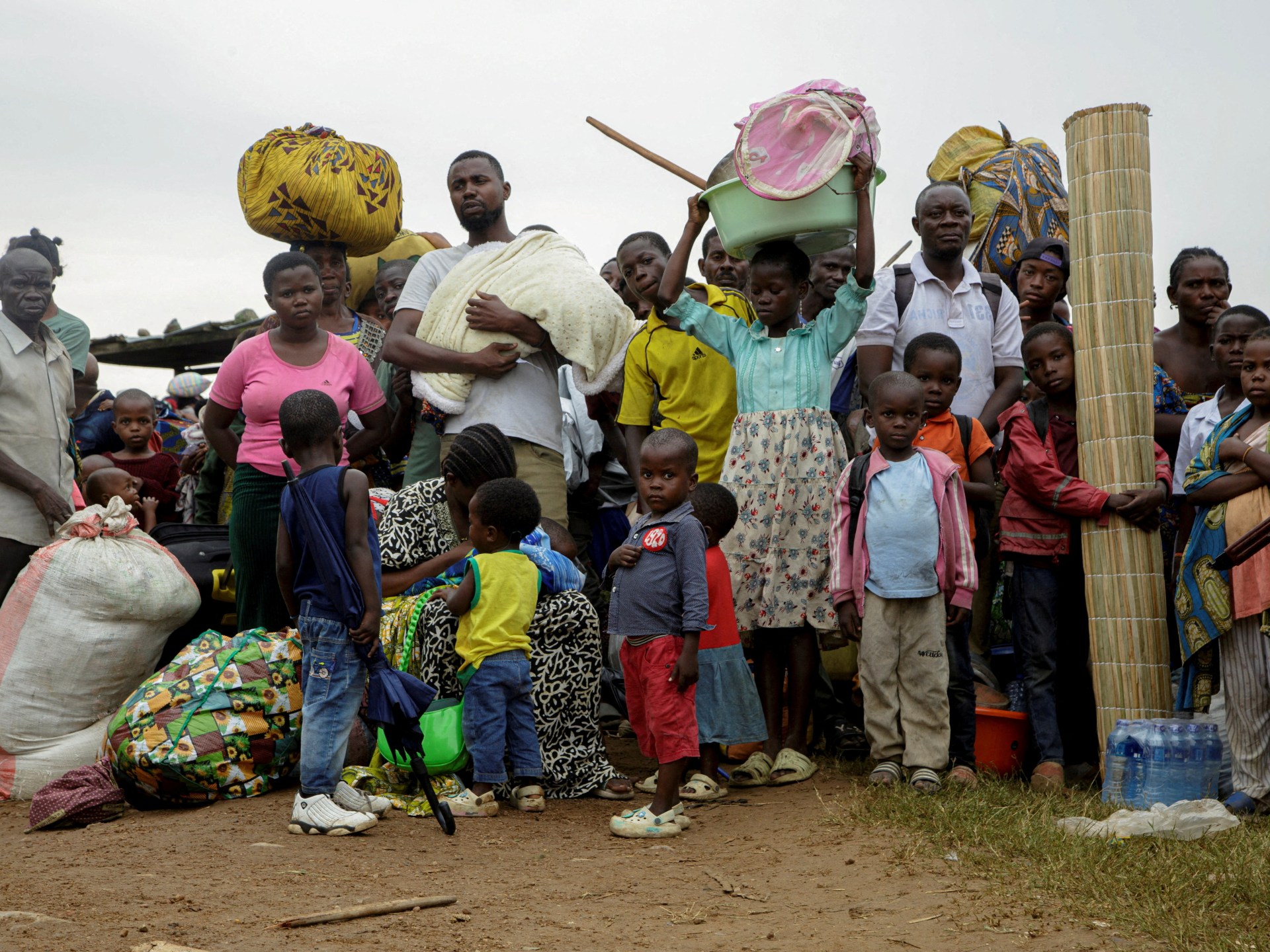

More than 84,000 people have fled to Burundi from the eastern Democratic Republic of the Congo (DRC) amid a Rwanda-backed rebel offensive near the countries’ shared border, according to the latest United Nations figures.
The UN refugee agency (UNHCR) said on Friday that Burundi had reached a “critical point” amid the influx of refugees and asylum seekers fleeing a surge in violence in the DRC’s South Kivu province.
- list 1 of 3‘We don’t care about politics’: Violence-hit Uvira locals just want peace
- list 2 of 3M23 announces exit from key DRC town as US-brokered ceasefire stutters
- list 3 of 3M23 armed group says it begins withdrawing from key DR Congo town of Uvira
end of list
“Thousands of people crossing the border on foot and by boats each day have overwhelmed local resources, creating a major humanitarian emergency that requires immediate global support,” UNHCR said, noting that more than 200,000 people had now sought refuge in Burundi.
“Women and children are particularly affected, arriving exhausted and severely traumatised, bearing the physical and psychological marks of terrifying violence. Our teams met pregnant women, who shared that they had not eaten in days.”
The exodus began in early December when the M23 rebel group launched an assault that culminated in the capture of Uvira, a strategic city in the eastern DRC that is home to hundreds of thousands of people.
Refugees started crossing into Burundi on December 5, with numbers surging after M23 seized control of Uvira on December 10. On Wednesday, M23 said it was withdrawing after international condemnation of its attack on the city.
In Burundi, displaced families face difficult conditions at transit points and makeshift camps with minimal infrastructure, the UN said.
Many have sheltered under trees without adequate protection from the elements, and a lack of clean water and proper sanitation.
Advertisement
About half of those displaced are children less than the age of 18, along with numerous women, including some who are pregnant.
Ezechiel Nibigira, the Burundian president of the Economic Community of Central African States (ECCAS), reported 25,000 refugees in Gatumba in western Burundi, and nearly 40,000 in Buganda in the northwest, most of them “completely destitute”.
Augustin Minani, the administrator in Rumonge, told the AFP news agency that the situation was “catastrophic” and said “the vast majority are dying of hunger.”
Refugees recounted witnessing bombings and artillery fire, with some seeing relatives killed and others forced to abandon elderly family members who could not continue the journey.
M23 announced earlier this week it would begin withdrawing from Uvira, with the group’s leadership calling the move a “trust-building measure” to support United States- and Qatari-led peace efforts.
However, the Congolese Communications Minister Patrick Muyaya dismissed the announcement as a “diversion”, alleging it was meant to relieve pressure on Rwanda.
Local sources reported that M23 police and intelligence personnel remained deployed in the city on Thursday.
The offensive extended M23’s territorial gains this year after the group captured the major cities of Goma in January and Bukavu in February.
The rebel advance has given M23 control over substantial territory in the mineral-rich eastern DRC and severed a critical supply route for Congolese forces along the border with Burundi.
M23 launched the Uvira offensive less than a week after the presidents of the DRC and Rwanda met with US President Donald Trump in Washington, DC, to reaffirm their commitment to a peace agreement.
The rebels’ takeover of the city drew sharp criticism from Washington, with officials warning of consequences for what they described as Rwanda’s violation of the accord. Rwanda denies backing M23.
The fighting has killed more than 400 civilians in the DRC and displaced more than 200,000 since early December, according to regional officials and humanitarian organisations.
The broader conflict across the eastern part of the country, where more than 100 armed groups operate, has displaced more than seven million people, the UN refugee agency says.
Related News
Arctic sees hottest year since 1900 as climate crisis continues

Why is Australia banning social media for teenagers?
Australia hails ‘shared vision’, as defence minister set to visit Japan