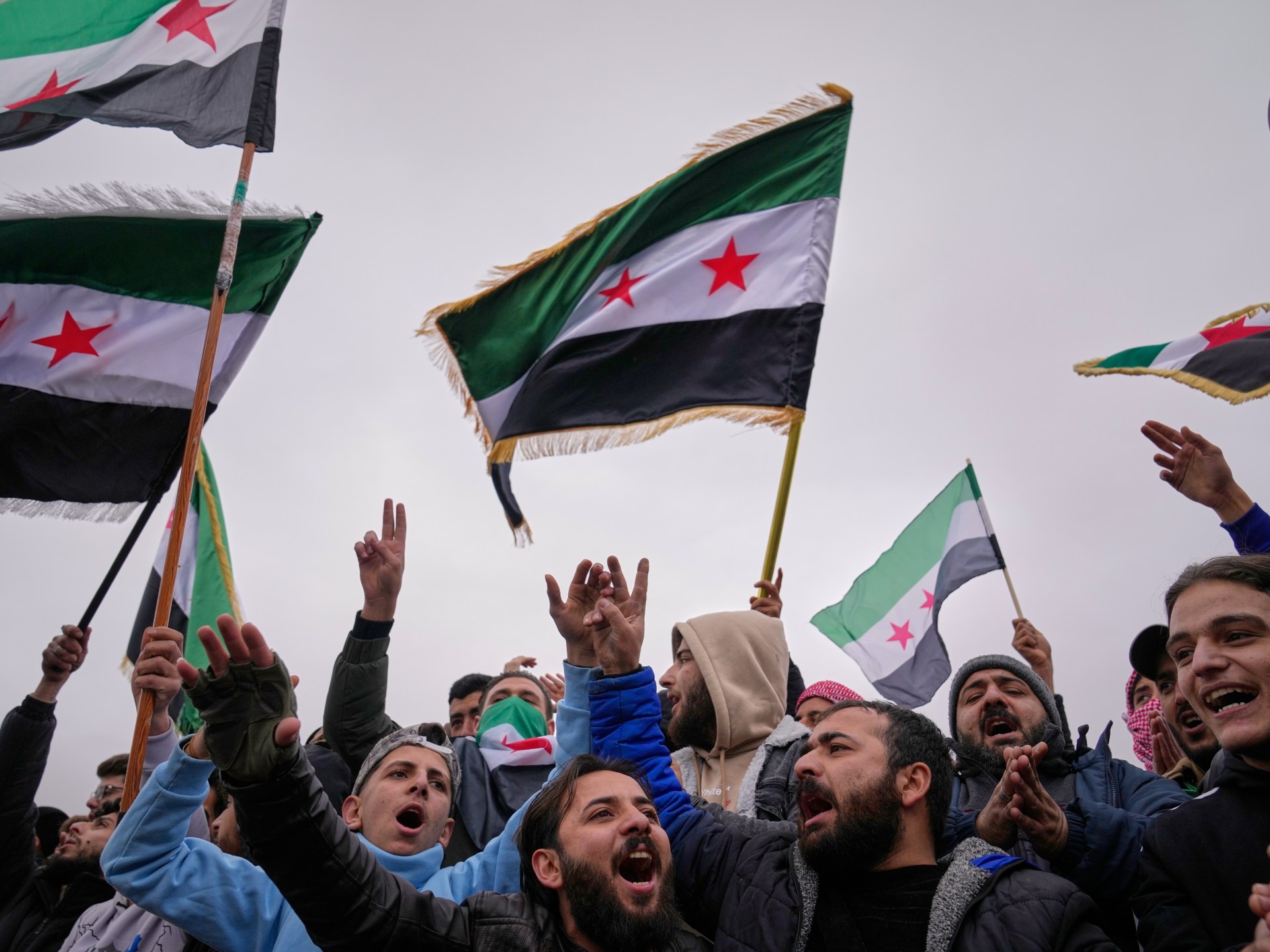

Syrians are celebrating the anniversary of the overthrow of the al-Assad dynasty’s repressive 50-year rule.
The country heralded the end of Bashar al-Assad’s reign on Monday. However, Syria is left facing a significant challenge to heal following 14 years of civil war.
Al-Assad’s downfall came as a shock, even to the rebels who unseated him.
In late November 2024, groups in the country’s northwest – led by Hayat Tahrir al-Sham, a rebel group whose then leader, Ahmed al-Sharaa, is now the country’s interim president – launched an offensive on the city of Aleppo, aiming to recapture it from the al-Assad government’s forces.
They were startled when the Syrian army collapsed with little resistance, first in Aleppo, then in the key cities of Hama and Homs. That left the road to Damascus open.
Meanwhile, rebel groups in the south mobilised to mount their own push towards the capital.
The rebels seized Damascus on December 8, while al-Assad was whisked away by Russian forces. He remains in exile in Moscow.
However, his longtime ally did not intervene militarily to defend him. Instead, Moscow has established ties with Syria’s new rulers, while maintaining its military bases on the coast.
The Syrian war that erupted in 2011 killed hundreds of thousands of people and displaced millions, driving about five million into neighbouring countries as refugees.
The United Nations refugee agency said on Monday that some 1.2 million refugees, along with 1.9 million internally displaced people, had returned home since al-Assad was toppled, but warned that a decline in global funding for UN programmes and aid agencies could deter others.
Advertisement
Still, Syria’s central bank governor said last week that the return of about 1.5 million refugees was helping to boost economic growth.
Related News
US-Venezuela tensions: Your questions answered

Trump hails ‘great day for the world’ as DRC, Rwanda finalise peace deal
Four dead after 14 people shot at child’s birthday party in California